
The most premium hoodie isn't the one with the loudest logo, it's the one that still looks sharp after a winter of abuse. That's why construction beats branding every time, because a hoodie's real value lives in its GSM, its fiber blend, and the way the seams, ribbing, and hood hold up when you wear it hard.
The market backs up that instinct. The global hoodies and sweatshirts market was valued at USD 241.11 billion in 2025 and is projected to reach USD 442.64 billion by 2034, with North America at 40.42% of the market in 2025 according to Market Data Forecast's hoodies report, which is a strong signal that this category is huge and still growing. That same report says the premium hoodies segment is projected to grow at 10.5% CAGR, faster than the broader market's 5.56% CAGR, so premium isn't niche fluff, it's a real commercial lane inside a mainstream category. For heavyweight product positioning, another report pegs the global heavyweight hoodie market at USD 4.2 billion in 2025, rising to USD 7.1 billion by 2034, and says premium hoodies priced above USD 80, sometimes past USD 200, captured 38.2% of market revenues. (Market Data Forecast hoodies market report, Global Growth Insights hoodies market report)
Table of Contents
- What Makes a Hoodie Premium
- Heavyweight Fleece and the GSM Numbers That Matter
- Cotton, Polyester, or Something In Between
- Why Embroidery Changes the Fabric You Should Choose
- Construction Details That Separate Premium From Basic
- A New York Streetwear Case Study in Premium Basics
- Your Premium Hoodie Buying Checklist
What Makes a Hoodie Premium
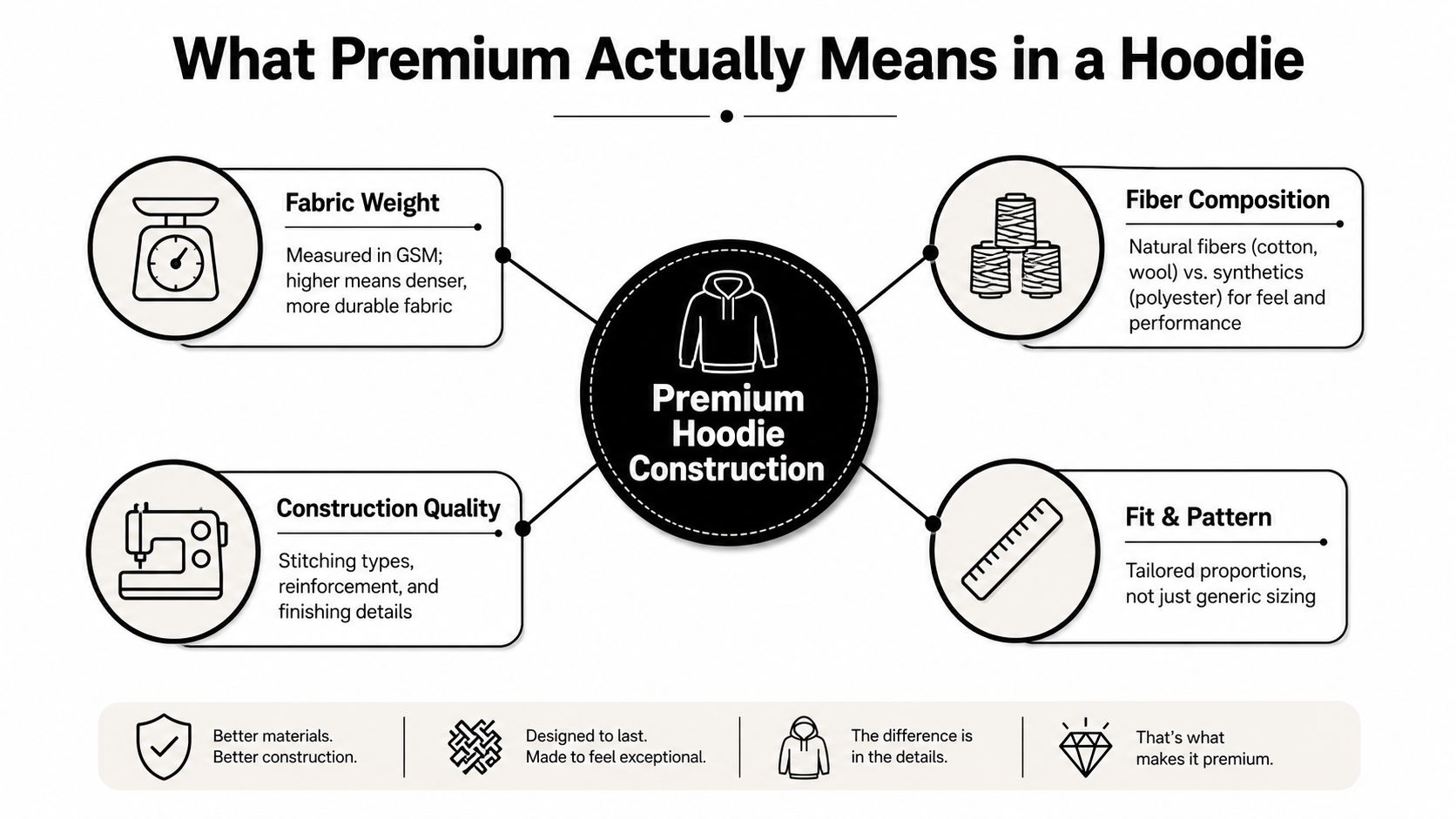
A premium hoodie is something you can verify by feel and by spec, not by the markup on the tag. If the fabric is flimsy, the collar stretches out, or the finish looks sloppy inside, it is just an overpriced sweatshirt.
The four factors that matter
Start with fabric weight. In hoodie language, GSM means grams per square meter, and higher GSM means more fabric packed into the same area. Industry guides place hoodies around 280–320 GSM as midweight, 330–380 GSM as standard premium, and 400–500 GSM as heavyweight streetwear, which is why real premium pieces usually sit above basic fleece. (Fabric GSM explained)
Then check fiber composition. Cotton-rich hoodies feel natural and breathe well, but the blend has to suit how the piece will wash, shrink, and hold shape. Polyester adds stability, while cotton-poly blends usually hit the best balance between comfort and resilience. That balance is why many better basics use them.
Practical rule: if a hoodie does not list GSM, fiber content, and finish details, the brand is selling you on vibes.
The third pillar is stitch construction. Chain stitching, coverstitching, reinforced pocket corners, and taped neck seams are not decorative details, they decide whether a hoodie keeps its shape after repeat wear or starts twisting at the collar. The fourth pillar is finish quality, which covers rib recovery, hood structure, drawcord hardware, and how clean the garment looks inside and out.
Two hoodies can carry the same MSRP and still be worlds apart. One is dense, structured, and built for abuse. The other just has nicer branding and a fatter margin. Read the garment, not the label.
Heavyweight Fleece and the GSM Numbers That Matter
GSM is where the fluff gets exposed. Higher GSM means denser fabric, and density is what gives a hoodie real body, better drape, less cuff transparency, and a longer useful life. If a hoodie feels soft but folds in on itself by lunchtime, the knit is too loose or too light for premium territory.
Read the tiers like a streetwear buyer
300 GSM sits in lightweight, mass-market territory. It can feel easy on day one, but it usually loses shape faster and pills earlier if the knit is open. Fine for a thin layer, not fine if you want a hoodie that holds up.
400 to 450 GSM is the sweet spot. The hoodie starts behaving like a proper garment, not a throwaway layer. You get structure, warmth, and the outerwear-like silhouette people are paying for. If you want a benchmark heavyweight blank, the DM-Flexwear Signature Bull Heavyweight T-Shirting sits in the kind of build range that signals real intent, not marketing fog. (DM-Flexwear Signature Bull Heavyweight T-Shirting)
500+ GSM is ultra-heavy territory. That is specialty fleece, heritage-inspired shaping, and heavyweight streetwear that can stand on its own. The feel is substantial right away, and the drape gets more rigid and architectural.
| GSM Range | Hand-Feel | Durability | Typical Price |
|---|---|---|---|
| 300 GSM | Soft, light, easy drape | Mid-tier | Lower |
| 400 to 450 GSM | Dense, structured, warm | High | Premium |
| 500+ GSM | Very heavy, rigid, outerwear-like | Very high | Higher |
Most print-on-demand blanks top out around the 400 to 450 GSM range. That matters. Once a brand goes heavier, it usually has to source from specialty mills or commit to a more deliberate build instead of grabbing a standard blank.
Embroidery changes the math a bit. Guidance for embroidery-friendly hoodies puts a premium window around 280–350 GSM, with 320–380 GSM and 400+ GSM positioned as premium-heavyweight or streetwear-heavyweight. That tracks, because embroidery needs fabric body that will not pucker or collapse around the stitch. For an all-around premium hoodie, I still want 400 GSM minimum if the goal is real longevity and a stronger silhouette. (Printful embroidery hoodie guide, Heavyweight hoodie GSM comparison)
Bottom line: if the tag does not get you to 400 GSM or more for a heavyweight look, you are probably paying for branding, not build.
Cotton, Polyester, or Something In Between
The fiber choice decides how the hoodie behaves after a few washes, and that's where a lot of “premium” claims fall apart. A hoodie can feel sharp on the rack and still lose its shape fast if the blend does not match how you wear it.
Cotton gives feel, polyester gives stability
100% combed ring-spun cotton is the soft, breathable pick. It feels better against bare skin and usually has the most natural hand, but it can shrink and pill faster under heat and aggressive washing. In the brief, cotton shrinkage is listed at 3 to 8% under aggressive laundering, so this is the option for people who wash cold and air-dry.
100% polyester is the stability play. It usually shows under 2% shrinkage, which helps it hold dimensions and resist pilling better than cotton, but it can feel synthetic and trap heat. That tradeoff matters if comfort matters as much as wear life.
The best compromise is the 80/20 cotton-poly blend. It usually shrinks around 2 to 3%, keeps its shape better than pure cotton, and still has enough natural-fiber comfort to feel like a real hoodie instead of gym gear. It also makes sense for embroidery and print because the fabric stays more consistent under stitching and repeated washing.
Don't confuse drape with durability
Tri-blends, usually cotton, polyester, and rayon, can look great on day one because they drape with a soft vintage hand. They are a style decision, not my first pick for durability. If your goal is a hoodie that stays in rotation, tri-blends are more about mood than toughness.
If you wash cold and hang dry, cotton can make sense. If you throw everything in the dryer and do not want to baby the garment, go 80/20 cotton-poly and move on. That is the blend I would trust most for daily wear.
Why Embroidery Changes the Fabric You Should Choose
Embroidery makes a hoodie look premium fast, but it also exposes cheap fabric faster than any print ever will. If the base knit is too loose or too thin, the thread starts sinking, puckering, or telegraphing backing through the garment. That is not premium. That is bad substrate with expensive decoration on top.
Face weight matters more than hype
For embroidery, the face fabric has to do the work. Printful's hoodie guidance places a practical embroidery range at 170–220 GSM, and anything under 180 GSM is more likely to show backing and edge puckering. That is the floor, not the flex. For a chest crest with tight satin stitching, I want a denser face in the 320 GSM and up range so the design sits clean instead of fighting the knit. (Printful embroidery hoodie guide)
The tell is face weight, not just the number on the spec sheet. A hoodie can be heavy overall and still behave badly if the face knit is loose. Even a thick loopwheel can need careful stitch planning, the right backing, and a sane design size. Heavy thread on a sloppy face pulls the garment out of shape.
Stitch size and placement change the result
Big chest crests are the hardest test. They need more fabric support, and heavyweight fleece handles that strain better because the hoodie keeps its shape around the embroidery. Sleeve hits are easier to execute, so mid-weight pieces can work there if the logo stays small and the stitch count stays controlled.
The same logic shows up in this embroidered crewneck sweatshirt guide. The decoration can look sharp on the wrong base for a minute, then turn cheap once the fabric relaxes or the seams start to distort. Dense fleece and a stable face are what keep streetwear embroidery looking intentional.
| Decoration Method | Minimum GSM | Best Face Weight | Recommended Design Size |
|---|---|---|---|
| Embroidery | 170 to 220 GSM | Dense, stable face fabric | Small to medium for control |
| Heavy chest embroidery | 320+ GSM | Heavyweight fleece | Medium to large crest |
| Lower possible | Less dependent on face density | Flexible |
If a brand sells embroidery as proof of quality, check the fabric first. Good thread on weak fleece still looks cheap.
Construction Details That Separate Premium From Basic
Price tags lie. Stitch count doesn't. The easiest way to judge a hoodie is to put your hands on it and look for the parts that take stress every time you wear, wash, and pull it on.
Run the tactile checklist
Start at the pocket corners. You want bar tacks, not just a single loose straight stitch. Bar tacks reinforce stress points, so the kangaroo pocket doesn't start tearing away from the body after a few months of use.
Check the hem and cuffs next. Double-needle topstitching is a strong signal because it keeps seams cleaner and usually holds better over time than sloppy single-needle finishes. Then flip the inside and feel the neckline. A taped or twill neck tape helps stop the collar from curling, and that matters more than many realize because collar collapse makes a hoodie look tired early.
Practical rule: the inside tells on the brand faster than the front does.
Ribbing is the next tell. A tighter 2x2 rib with a 1x1 spandex ratio tends to hold shape longer than the plain 1x1 rib you see on many mid-tier pieces. If the cuff stretches out and stays stretched after a tug, the hoodie's already telling you it'll age badly.
The drawcord matters too. Metal aglets and tipped woven cords outlast plastic ends and heat-cut strings every time. Cheap drawcords don't just feel flimsy, they also make the whole neckline look lower-rent. The kangaroo pocket should be lined and set in with real reinforcement, not slapped on like an afterthought.
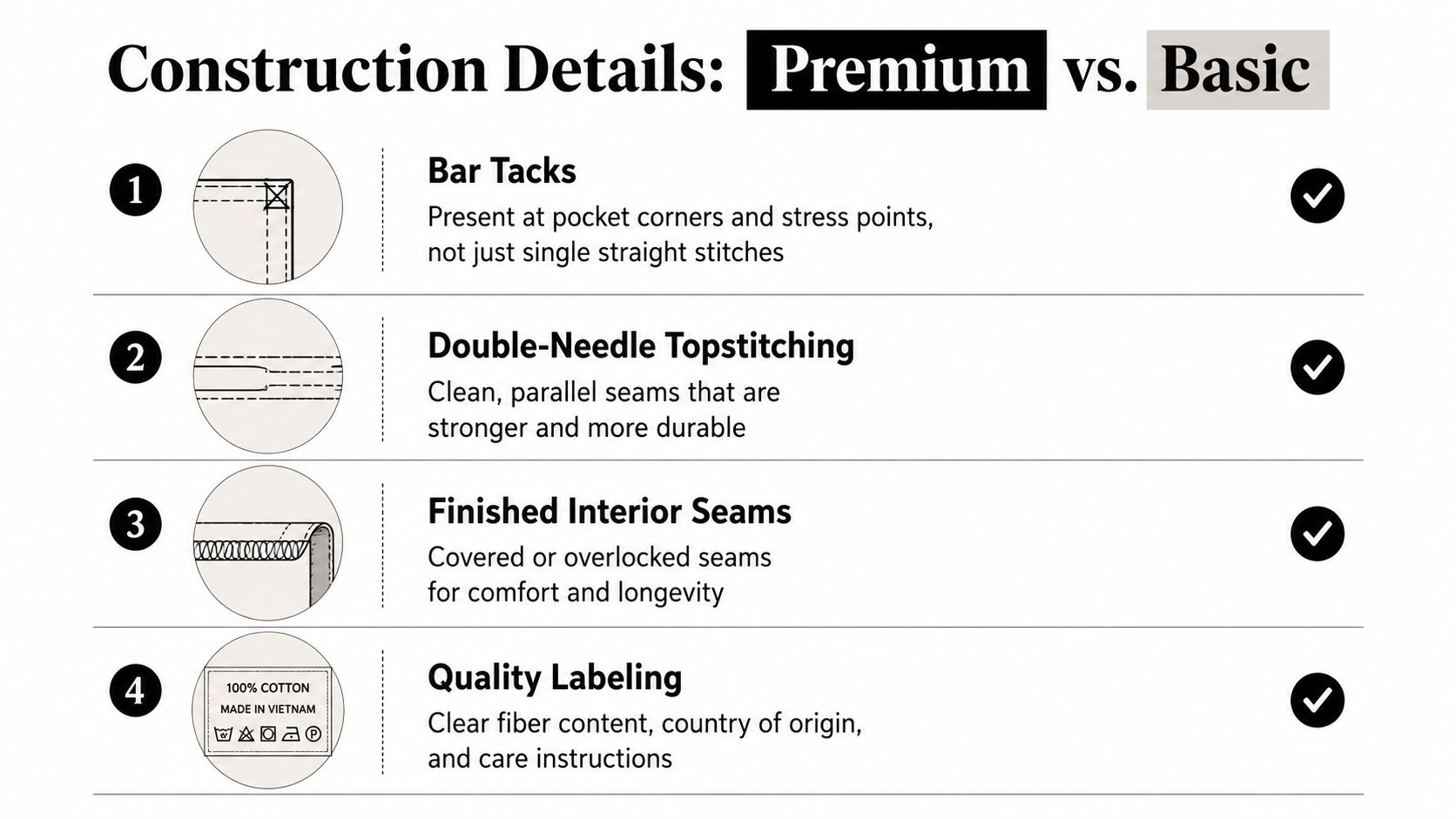
Do the five-second stretch test on the cuff and hem. Premium rib snaps back fast. Basic rib hangs there like it's tired.
A New York Streetwear Case Study in Premium Basics
A hoodie becomes convincing when every spec lines up. The NY Crown Crest Hoodie is a clean example because it leans on heavyweight construction instead of pretending a print job can carry the whole garment.
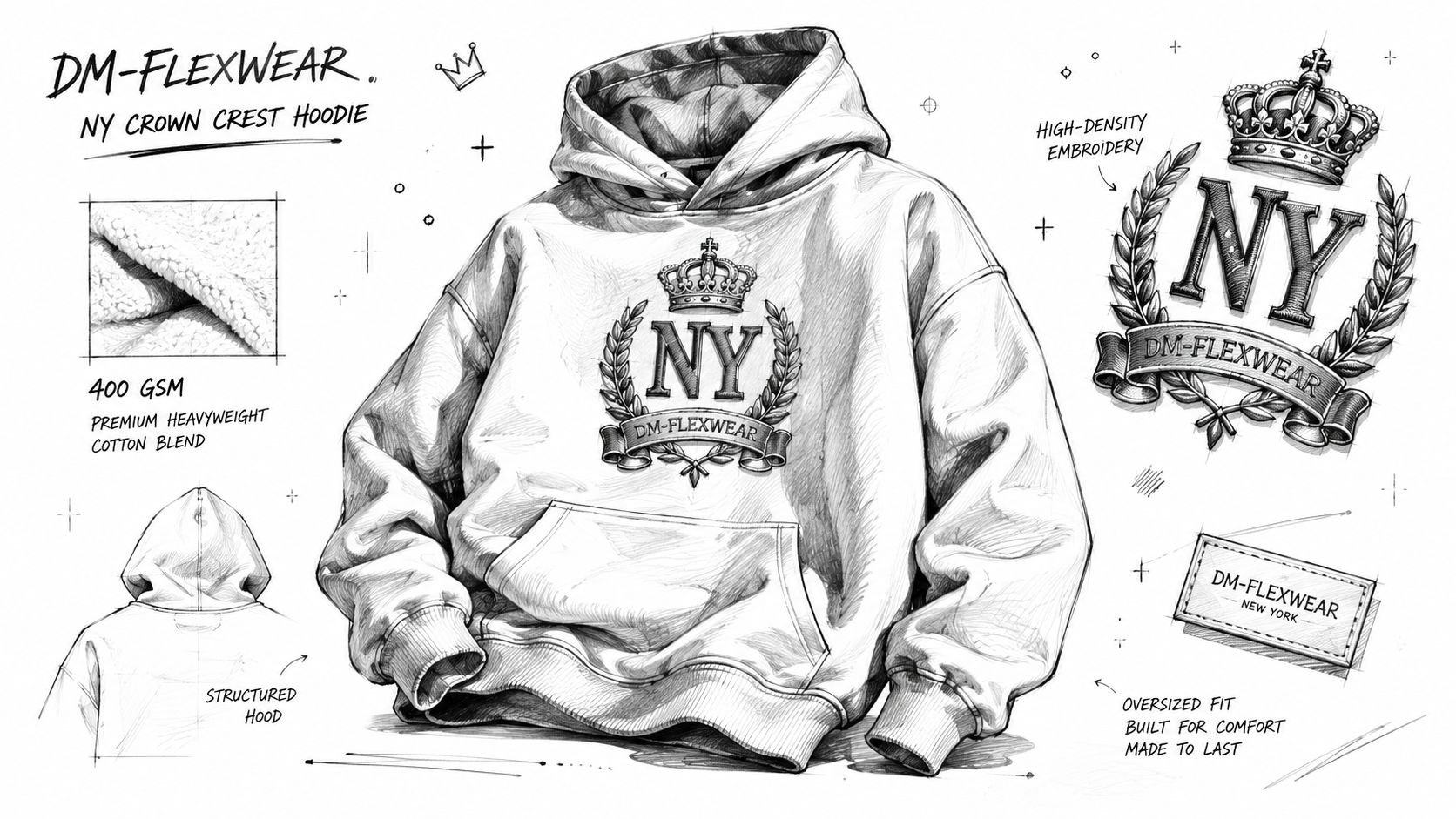
The build starts with 400 GSM heavyweight fleece, which is exactly where a premium hoodie starts feeling right. On a cold walk through SoHo, that weight would read as substantial without becoming stiff or costume-like. It has enough body to hold shape under a coat, and enough density to keep the silhouette from slouching into basic-sweatshirt territory.
The embroidered NY Crown Crest changes the whole read of the piece. Because the fabric is dense, the satin-stitch logo can sit raised and clean instead of sinking into a flimsy face. That's the same logic covered earlier, a heavy, stable base lets embroidery look intentional rather than decorative.
The fit matters too. A relaxed, slightly dropped shoulder looks designed when the pattern is right, and it reads very differently from just sizing up a cheaper hoodie. Add double-needle hems, ribbed cuffs, and twill neck tape, and you've got the exact construction checklist that separates a premium streetwear staple from a merch hoodie.
That's why New York-rooted basics brands keep gravitating toward heavyweight embroidered hoodies. They survive styling cycles around NYFW, they work in a daily rotation, and they still feel appropriate after repeated wear. The best version of this category doesn't scream luxury, it earns it through structure, texture, and durability.
Your Premium Hoodie Buying Checklist
You do not need a runway stylist to spot a good hoodie. You need two minutes, decent light, and a sharp eye for the parts cheap brands bury under branding.
Start with the hand feel. Heavyweight fabric should feel dense and controlled, not airy or papery. Pull the ribbing, it should snap back fast. Turn it inside out and look for clean interior seams, not loose threads or raw edges. Pocket corners should have reinforcement, ideally bar tacks. Drawcords should finish cleanly, with metal grommets and proper aglets instead of punched holes and heat-cut string ends.
Then check the label and the shape. Fiber content tells you how the hoodie will age, and if it's mostly cotton, some first-wash shrink is normal, so size with that in mind or choose pre-shrunk construction. If you want a sharper streetwear fit, use this unisex sweatshirt sizing guide before you guess.
The best premium hoodie earns its spot in a rotation built for NYC winters, NYFW street style, and repeat wear without losing shape. If it can't handle that schedule, it's not premium, it's just overpriced casualwear.
Price follows construction, not hype. Straight seams, stable ribbing, reinforced stress points, and a fit that holds after washing are what justify the tag.