

You're standing in the baby aisle or staring at a registry tab, and the same question keeps coming back, what counts as gender neutral baby clothes? The labels blur together fast. One rack says unisex, another says neutral, and a third is just beige with a truck on it, which doesn't exactly solve the problem.
The good news is that neutral dressing isn't a mystery or a style compromise. It's a system, and the system is simple once you see it through a streetwear lens, core colors, clean graphics, smart sizing, and fabrics that can survive real life. That's the logic behind NYC layering culture too, where the best pieces do more than one job, and where a staple should work for siblings, gifts, photos, and hand-me-downs without looking dated.
Table of Contents
- Introduction to Gender Neutral Baby Clothes Today
- What Gender Neutral Baby Clothing Really Means
- A Brief History of Baby Clothes and Color Codes
- How to Spot Truly Neutral Colors and Graphics
- Sizing and Safety Foundations for Neutral Baby Wear
- Building a Streetwear Inspired Neutral Capsule With Examples
- Final Takeaways for Choosing Gender Neutral Baby Clothes
Introduction to Gender Neutral Baby Clothes Today
Neutral baby dressing fits the way modern families shop. Parents want clothes that mix easily, gift buyers want something safe and versatile, and a lot of people want fewer outfit decisions at 7 a.m. That's why the category keeps showing up in broader apparel conversations, including the fact that the global baby apparel market is estimated at USD 44.5 billion in 2024, rising to USD 46.4 billion in 2025 and USD 71.4 billion by 2034 in one industry report, while unisex clothing represented nearly 20% of new baby fashion lines in 2024 (Global Market Insights).
Why the neutral look feels current
NYC streetwear has always liked clothing that reads flexible instead of fixed. A clean tee, a crewneck, a hoodie, these pieces don't ask for a gendered story, they just need to layer well and hold up. Baby wardrobes work the same way, except the stakes are more practical, because parents need softness, easy access for diaper changes, and pieces that can move between stroller, crib, and car seat without fuss.
That's why a brand like DM-FlexWear makes sense as a reference point. Its NY Crown Crest idea translates well across baby and adult sizes, which is exactly how family matching works now, same visual language, different body size, no costume feeling. The point isn't to turn babies into tiny adults, it's to give families a coordinated base that still feels easy and wearable.
Practical rule: If a piece works for gifting, hand-me-downs, and everyday wear, it's doing the job neutral baby clothes are supposed to do.
What this guide focuses on
The best neutral pieces aren't just “not pink” and “not blue.” They balance three things, visual neutrality, safe fabric choices, and sizing that follows growth, not gender codes. Once you can spot those three, shopping gets a lot calmer, whether you're building a nursery wardrobe or choosing one gift that won't sit in the closet.
What Gender Neutral Baby Clothing Really Means
A lot of shoppers treat neutral baby clothes like a color filter. That's too narrow. In practice, gender neutrality is mostly about palette, graphics, and whether the garment reads as open to any baby, not locked into one stereotype.
Start with the palette
Think about streetwear basics first. A core tee, hoodie, or crewneck works because the silhouette is simple and the color story stays versatile. Baby clothing follows the same logic. Muted earth tones, cream, oat, slate, sage, mustard, and terracotta usually read calmer and more flexible than highly coded pastel pinks or baby blues, especially when the goal is reuse across siblings or families.
The confusing part is that a garment can still be “neutral” in measurements while looking gendered in design. Research on infant sizing found no gender-based size differentiation from baby sizes 50 to 92 across nine providers, which means fit is often built around developmental body dimensions rather than boy/girl blocks (Haller study summary). So the fit can stay neutral even if the print doesn't.
Graphics matter as much as cut
A slogan can re-gender a neutral garment instantly. So can a truck print, “little princess” script, or a sports-heavy graphic that sends the wrong signal. That's why many neutral pieces lean on stripes, abstract motifs, botanicals, or plain solids. They don't crowd the baby with a message. They let the baby be the baby.
Here's the clean distinction:
| Feature | Reads Neutral | Reads Gendered |
|---|---|---|
| Color | Oat, grey, cream, sage, muted yellow | Bright pink, baby blue, highly coded pastels |
| Graphic | Stripes, botanicals, abstract shapes | Slogans, trucks, princess text, sporty clichés |
| Fit logic | Shared size block, easy layering | Different sizing by sex, or styling that forces a gendered read |
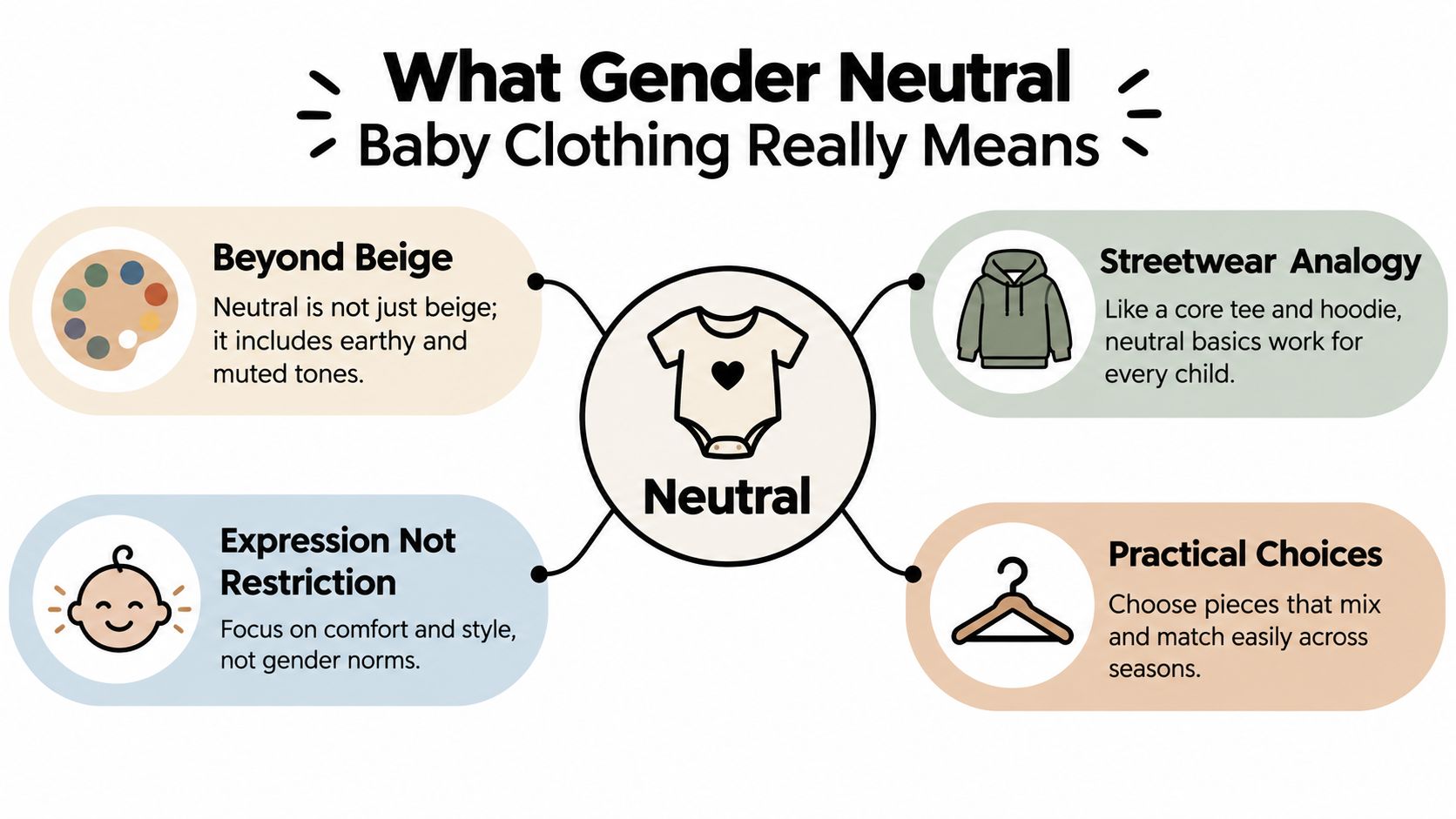
Neutral isn't a special cut. It's a visual system that keeps the garment usable across children, seasons, and family settings.
A Brief History of Baby Clothes and Color Codes
The pink-for-girls, blue-for-boys setup feels old because it's everywhere now, but it's pretty recent. CBC reports that until the early 20th century, baby boys commonly wore dresses alongside baby girls for practical reasons, and many infant garments were white so they could be used by either sex. The same source says the pink-and-blue convention intensified around World War II, which makes modern gendered baby clothing look less like tradition and more like a marketing habit that hardened into common sense (CBC).
Practical roots beat rigid codes
White infant clothing made sense because it was washable and reusable. Families weren't building wardrobes around identity labels, they were building around what lasted and what could be cleaned. That logic lines up with how modern parents shop when they're thinking clearly, especially when they want one set of pieces that can pass between siblings or move through a group chat baby shower without causing awkwardness.
The fashion angle matters too. NYC style has always borrowed from utility, and NYFW runway looks often simplify down to a few repeatable codes, shape, texture, proportion. Baby clothes work the same way at a smaller scale. A neutral sleeper or crewneck doesn't need a gendered script to feel intentional.
Why this history matters now
Once you realize the color divide is historical, not natural, neutral dressing stops looking radical. It starts looking practical. Parents can choose a cream onesie, an oat sleeper, or a slate gray set because those choices make sense for wear, reuse, and gifting, not because they're trying to make a statement. That's a big mental shift, and it frees shoppers from assuming that any break from pink and blue is somehow unusual.
How to Spot Truly Neutral Colors and Graphics
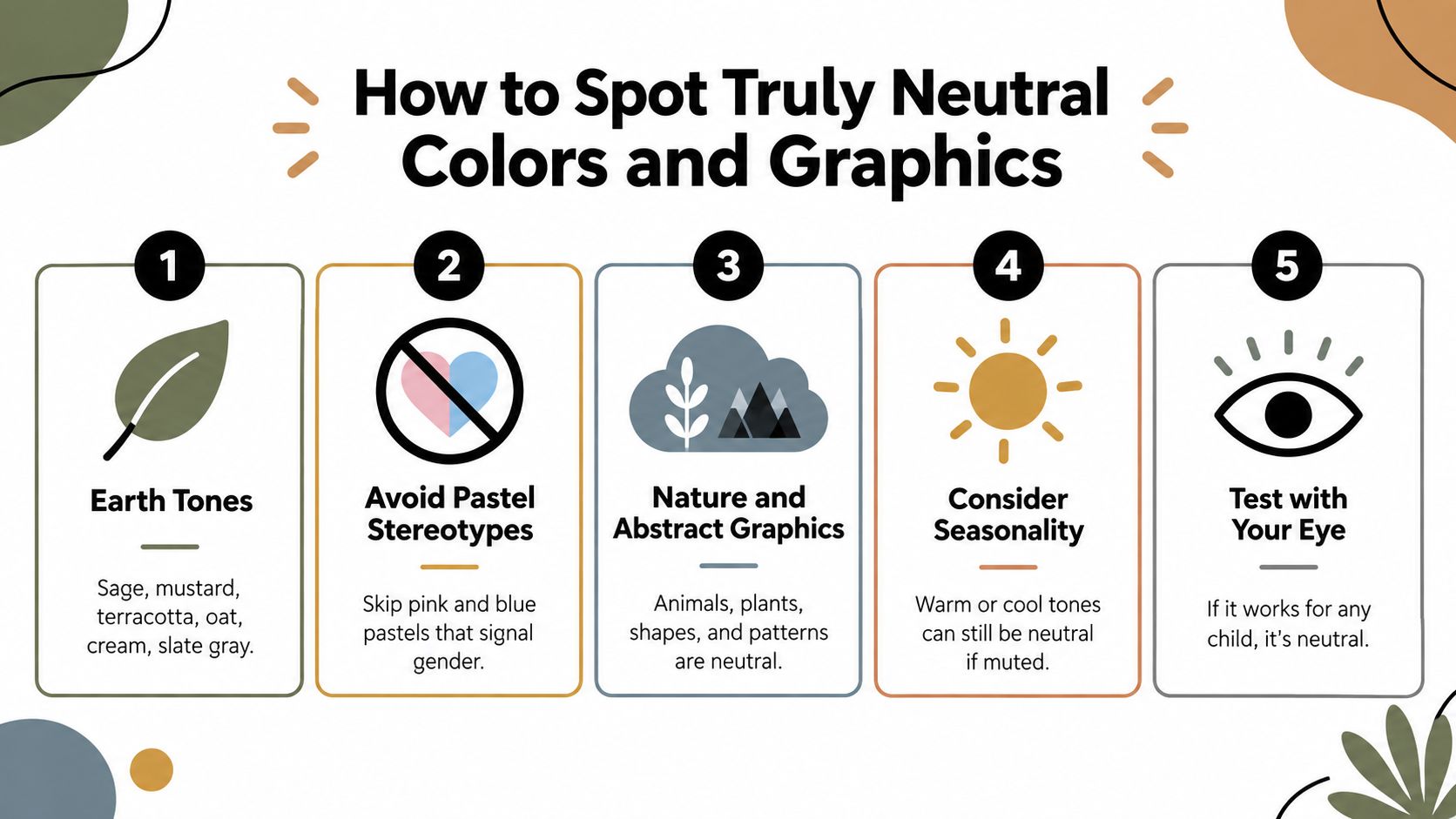
Neutral baby clothes should read calm at a glance. That doesn't mean they have to be plain, and it definitely doesn't mean they have to be beige. It means the palette and graphic language don't steer the eye toward a gender stereotype.
Compare the look, not the label
Pastel pink and pastel blue can still read gendered, even when a brand calls them unisex. Muted tones tend to work better when you want hand-me-down value, photo flexibility, and family matching that doesn't feel forced. If you're shopping for a capsule, think like you're building a mini streetwear rack, choose colors that sit together with ease.
The strongest neutral options are usually:
- Sage and olive, because they behave like modern neutrals without feeling flat.
- Mustard and terracotta, because they add warmth and still mix with white, grey, or navy.
- Oat, cream, and slate gray, because they anchor a wardrobe and don't fight with layers.
- Muted yellow, because it adds brightness without locking the outfit into a gender code.
Use graphics like a filter
A neutral print shouldn't tell the viewer what kind of baby they're looking at. It should just give texture. That's why animals, plants, clouds, stars, stripes, and abstract forms usually land better than slogans or character prints that feel overly coded.
| Neutral or Not Decision Matrix | ||
|---|---|---|
| Feature | Reads Neutral | Reads Gendered |
| Palette | Earth tones, slate, cream, muted yellow | Bright pastel pink, baby blue, flashy contrast blocks |
| Stripes, botanicals, simple icons | Slogans, trucks, “little man” text, princess graphics | |
| Rewear potential | Easy to pass down and remix | Often feels tied to one child or one mood |
| Family photos | Blends across siblings and adults | Can clash when mixed with other wardrobes |
The cleanest shopping test is simple. If the item could move through a sibling closet, a gift bag, and a family photo without looking out of place, it's probably neutral enough to earn the label.
A lot of shoppers also care about how the garment is finished. If you're deciding between embellishment methods, this breakdown on screen print versus embroidery is a useful design reference, because the finish can change how long a piece feels fresh.
Sizing and Safety Foundations for Neutral Baby Wear
A neutral baby outfit can look right and still fail in the closet. If the neckline sags, the legs ride up, or the fabric scratches, parents will skip it. Fit needs to support movement first, then the palette can do its work.
Size logic should follow growth
Shared size blocks work better than sex-based sizing for infants. Retail labels usually follow age or height bands, then build in ease so babies can kick, sit, and wriggle without the garment pulling at the wrong spots. That logic matches how babies grow, quickly, unevenly, and with plenty of variation in the torso, thighs, and diaper area.
A major retailer's size ladder shows how broad this category is, moving from NB and 0–3 months through 3–6 months, 6–12 months, 12–18 months, 18–24 months, then 2T, 3T, and 4T (Caden Lane). For parents comparing options, unisex sweatshirt sizing follows the same idea, a shared size block that can be worn, layered, and handed down without feeling boxed into one child's wardrobe.
Safety beats styling every time
For infants 36 months and under, China's mandatory GB 31701-2015 standard classifies garments as Class A, with formaldehyde limited to 20 mg/kg and pH kept between 4.0 and 7.5. It also prohibits carcinogenic aromatic amine dyes (Oreate AI guidance).
OEKO-TEX Standard 100 Class I is a useful screen for baby products because it tests against baby-specific limits for harmful substances. White, natural, and pastel options often start from lower-processing defaults, which can make them easier to choose for newborn wear.
Practical rule: For baby clothes, certification and wash safety matter more than whether the print feels cute in the cart.
Decoration should hold up to real wear
Embroidery is popular for a reason. Because the design is stitched into the fabric, it usually holds up better than decoration sitting on top of the garment, and one apparel source says embroidered designs can last many years and often the lifetime of the garment with proper care (Zoe Ware). That matters for neutral pieces, because the goal is to keep them in circulation.
Building a Streetwear Inspired Neutral Capsule With Examples
A strong baby capsule works like a city uniform. You want pieces that layer cleanly, photograph well, and still look worth passing down after plenty of wear. Neutral baby clothes do that especially well, because they avoid the “this was obviously for one kid” problem.
Build around repeatable basics
Use the same logic you would use for adult streetwear. Start with a tee, a crewneck, a hoodie, and a few colorways that play well together. The NY Crown Crest Baby Crewneck Tee in Pink, White, Blue, Grey, and Yellow shows how one motif can shift across different moods without breaking the capsule. Paired with adult tees, hoodies, or crewnecks, the result feels coordinated instead of matchy-matchy, which is the right balance for family dressing.
That same logic helps with gifts. A neutral piece in the right size range is usually smarter than a novelty item for a baby shower. It can be worn now, layered later, and passed along when the baby outgrows it. Neutral wardrobes age well because they keep a closet from getting split into boy and girl lanes.
Use colorways like a styling system
Grey, White, and Navy work as the backbone. Add Yellow or Blue as a controlled accent. A baby can wear a grey tee under a navy layer, or a white top with a softer color on the outside, and the outfit still reads as intentional.
Here's a simple formula:
- Everyday look: White base layer, Grey outer layer, soft colored accessory.
- Photo-ready look: Cream or White top, Navy layer, one accent color only.
- Gift-safe look: Stick to Grey, White, or Navy when you do not know the nursery palette.
- Sibling-matching look: Keep the motif consistent, then vary the colorway by age.
A focused capsule does more with less. The pieces repeat, the colors stay calm, and the wardrobe keeps its shape as the baby grows. That is the same rhythm you see in New York streetwear, repeat the good pieces, rotate the color, and let the silhouette do the work.
Final Takeaways for Choosing Gender Neutral Baby Clothes
Neutral baby clothing is most useful when it does three things at once, looks visually open, fits by development instead of gender coding, and uses fabrics or finishes that are safe and durable. If one of those pieces is missing, the garment might still be cute, but it won't really function as a true neutral staple.
The smartest buying mindset is not “Is this neutral enough?” It's “Will this get worn, washed, handed down, and worn again?” That question shifts the focus toward softness, layering, and durability, which is where value lives. Neutral style supports reuse and hand-me-down economics because it stays flexible across siblings, families, and seasons.
Use this quick filter before you buy:
- Visual test: Does the color or print still work without a gender script?
- Fit test: Is the sizing based on growth and comfort?
- Safety test: Does the product clearly prioritize safe fabrics, dyeing, and finishing?
A neutral baby wardrobe doesn't have to be bland. Done right, it feels deliberate, modern, and easy to live with. That's the point, it gives families more room, not less.
DM-Flexwear.com offers a clean edit of NY Crown Crest staples, including baby and adult pieces that make coordinated dressing feel easy instead of forced. If you're building a neutral wardrobe with streetwear edge and everyday practicality, visit DM-Flexwear.com to explore the collection and see how the same visual language works across sizes.