

You've probably had this happen. You grab a tee that looked solid on the hanger, wear it once, and by the time you've moved through a subway ride, a coffee stop, and one wash cycle, it feels thin, twists at the seams, or starts showing the outline of what's underneath. That's usually the moment people realize they didn't need another basic tee, they needed a heavyweight T shirt that holds its shape and earns a place in the rotation.
Table of Contents
- Why Your Old Tees Keep Letting You Down
- What Heavyweight Actually Means in Numbers
- The Anatomy of a Heavyweight T Shirt
- Choosing the Right Weight for Your Wardrobe
- Streetwear Style and the NY Crown Crest Heavyweight Tee
- Why Embroidery Makes Hoodies and Crewnecks Last Longer
- Caring for Heavyweight Cotton So It Earns Its Keep
- Your Quick Heavyweight Tee Buying Checklist
Why Your Old Tees Keep Letting You Down
The disappointment usually starts with the fabric, not the fit. A lot of mass-market tees are built from lighter jersey, often in the 4 to 5 oz range, with looser knitting and finishing shortcuts that keep cost down but leave the shirt vulnerable to stretch, shear, and early wear. The result is a tee that can look fine in the store, then turn flimsy at the chest, sag at the collar, or pill before it ever feels broken in.
What the shirt is really missing
A lightweight tee can work for heat and quick layering, but it doesn't give the same body, opacity, or clean line that a stronger basic can deliver. In retail terms, the problem isn't just “cheap cotton,” it's the way the whole garment is built to prioritize low weight over structure. That's why shoppers often feel let down by tees that are technically wearable, but never really satisfying.
Practical rule: if a tee looks good only when it's freshly pressed and newly unpacked, it probably isn't built for repeat wear.
A heavyweight T shirt is the fix because it changes the starting point. Instead of trying to mimic softness by thinning the fabric out, it leans into density, drape, and long-term shape retention. That's why the rest of this guide focuses less on hype and more on how to read the shirt the way a buyer, cutter, or streetwear nerd would.
What Heavyweight Actually Means in Numbers
Heavyweight gets tossed around like a vibe, but the useful version starts with fabric weight. In apparel guidance, a heavyweight tee is commonly defined at at least 5.5 oz per square yard, and many guides split the category into 5.5 to 6.0 oz as entry heavyweight, 6.1 to 7.0 oz as true heavyweight, and 7.1 oz and above as super heavyweight. In metric terms, major retail and sourcing guides place heavyweight tees roughly in the 180 to 254 g/m² range, while streetwear-focused guidance often describes heavyweight as 180 to 200 GSM and premium or oversized fits as 200 to 280+ GSM. Heavyweight weight thresholds and category ranges
How to picture the difference on body
Think of it this way. A standard tee behaves more like a thin bedsheet, it moves easily, but it also reveals more and collapses faster. A heavyweight tee feels closer to a folded towel, it has more body, more presence, and a cleaner fall from shoulder to hem.
Industry guides also show that everyday tees are often clustered around 150 to 180 GSM, while heavyweight styles sit at 180 to 220 GSM or higher. One sourcing guide notes that moving from a standard 150 GSM tee to a 240 to 300 GSM premium tee reflects a broader market shift toward thicker, more structured garments, especially in North America, Europe, and Korea. Another retail guide places heavyweight tees at 6.5 to 8 oz, or 184 to 227 g, which helps explain why they feel so much more substantial in hand. Wholesale manufacturing weight standards for T shirts
| Heavyweight T-Shirt Weight Categories | |||
|---|---|---|---|
| Tier | GSM Range | Ounces (oz/yd²) | On-Body Feel |
| Entry Heavyweight | About 180 to 220 GSM | About 5.5 to 6.5 oz | Structured, still easy to layer |
| True Heavyweight | About 230 to 260 GSM | About 7.0 to 7.5 oz | Noticeably dense, clean drape |
| Super Heavyweight | 280 GSM and above | 8 oz+ | Very substantial, more rigid and warm |
Weight alone doesn't guarantee quality, but it does set the baseline. Once you understand the number, you can judge whether the tee is meant to feel airy, sturdy, or almost sweatshirt-adjacent.
The Anatomy of a Heavyweight T Shirt
Fabric and yarn choice do most of the work
A premium heavyweight tee starts with the cotton, not the logo. Long-staple ring-spun or combed cotton tends to hold yarn strength better at higher weights, which matters because denser fabric can expose weak spinning or sloppy knitting faster than a lighter jersey. If the yarn isn't stable, the shirt can still twist, lose its line, or feel coarse even when the GSM sounds impressive.
Stitch density matters just as much. Tighter stitches on sturdy seams help stop the collar from rippling and reduce the twisting and blowouts people associate with cheaper tees. That's why two shirts can share a similar weight number and still wear very differently, one stays crisp, the other goes limp.
A heavyweight tee should feel solid, not bulky. If the construction gets in the way of movement, the shirt is too stiff for the role it's trying to play.
Finishing details decide how it ages
Pre-shrunk finishing and untreated jersey behave differently after a wash. Independent fabric guidance notes that pre-shrunk cotton jersey typically shrinks about 3 to 5% after the first wash, while untreated cotton can shrink 5 to 10% or even 8 to 12% depending on construction and tension. Reading a fabric spec sheet and shrinkage behavior
That's why heavyweight tees are often cut with more room or built from pre-shrunk cloth. Reinforced collars, taped necklines, and side-seam construction help the shirt keep its shape instead of rolling, stretching, or skewing after repeated wear. If you want a tee that feels like a deliberate garment, not a disposable blank, those details matter more than a flashy product description.
Choosing the Right Weight for Your Wardrobe
Match the weight to the job
The smartest way to buy a heavyweight tee is to ask what you want it to do. Around 200 to 240 GSM works well as an entry-level heavyweight, because it gives more structure than a typical everyday tee without getting too stiff for daily wear. It layers easily and stays readable in a clean outfit, which is why a lot of shoppers land there first.
A true heavyweight, around 240 to 280 GSM, shifts the silhouette more clearly. It holds a cleaner streetwear shape, works confidently under an open overshirt or light jacket, and gives embroidery a firm base. Above roughly 280 GSM, you're in super-heavy territory, where the shirt becomes very opaque and more architectural, but movement tightens and drying takes longer.
| Heavyweight T Shirt Weight by Use Case | ||
|---|---|---|
| Weight | Typical Use | What to Expect |
| About 200 to 240 GSM | Daily rotation, layering, easy street basics | Structured, wearable, not overly stiff |
| About 240 to 280 GSM | Streetwear silhouettes, embroidered graphics, overshirts | Cleaner drape, stronger presence |
| 280 GSM and above | Cold-weather layering, maximum opacity | Very substantial, more rigid feel |
Fit changes the whole equation
A roomy cut can make a 240 GSM shirt look intentional and relaxed, while the same fabric in a close fit can feel much firmer on body. That's why garment measurements matter more than size labels, especially when you're shopping unisex or oversized styles. Cotton-rich jersey is the most forgiving choice if you want the traditional heavyweight tee experience, while blends can add softness or stretch at the expense of that classic all-cotton feel.
If you're building a simple wardrobe, use the weight as a filter, then use fit to decide the mood. That's how you get a tee that looks street-ready instead of just heavy.
Streetwear Style and the NY Crown Crest Heavyweight Tee
A heavyweight tee changes the visual language of a basic, and that's where a piece like the NY Crown Crest shirt makes sense. The denser cotton body gives the tee a boxier drape, so the chest and shoulders read cleanly whether it's worn solo or underneath an open hoodie. That structure also gives crest embroidery a stable foundation, which helps the design feel raised and built into the garment instead of sitting on top of a thin surface.
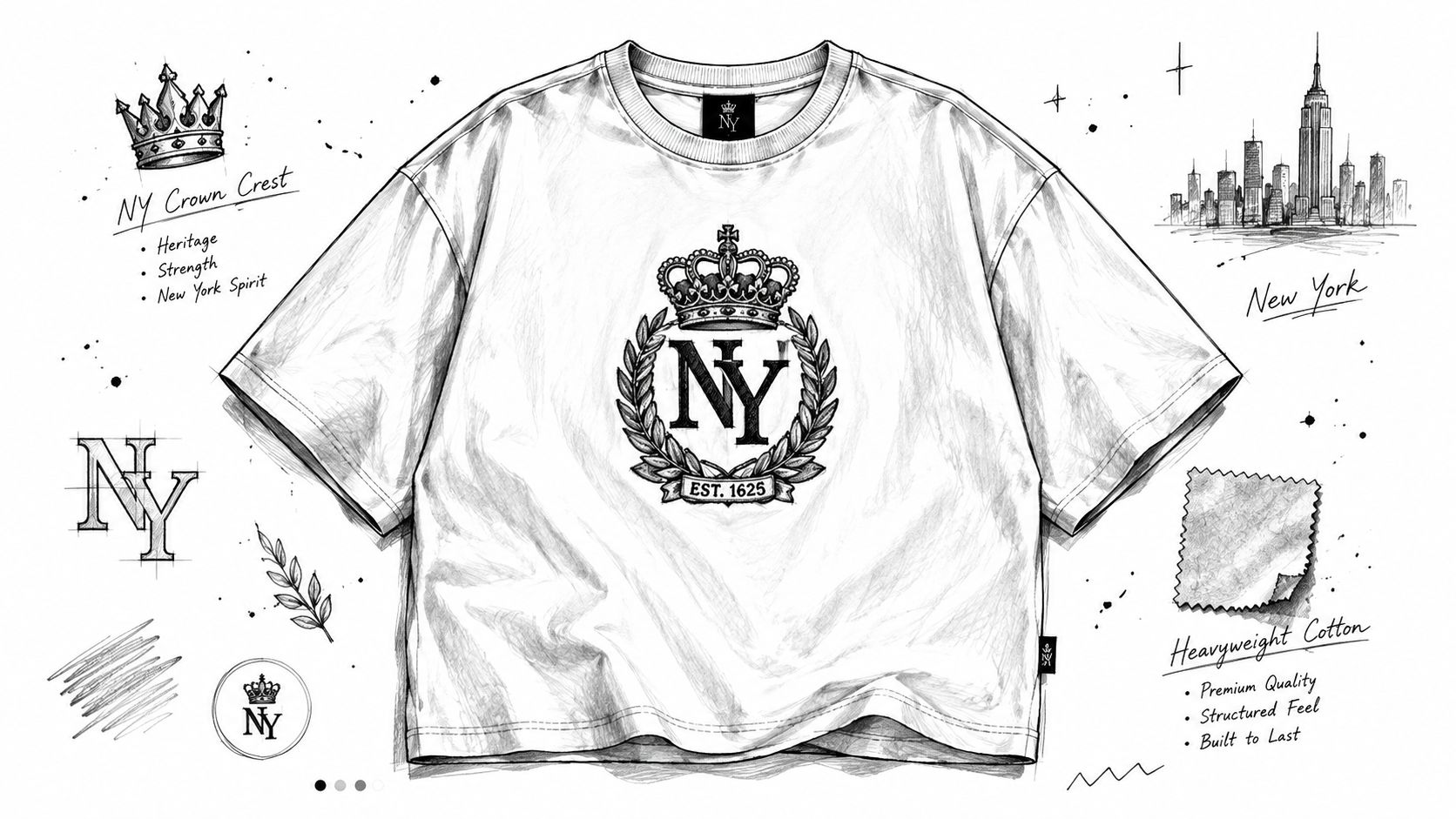
Color does a lot of the storytelling here. Black and charcoal lean into a restrained NYC-uniform feel, while white makes the jersey weight and surface texture easier to see. Forest green and deep red can work as statement neutrals, especially when the crest stays simple and the thread contrast does most of the talking.
Unisex sizing changes the silhouette on purpose. Size up if you want the dropped-shoulder, streetwear-heavy look, or stay closer to true size if you want a cleaner base layer. The key is balance, shoulder width, body length, and sleeve opening should work together so the shirt layers without bunching and keeps its shape after repeated wear.
For a concrete example of that approach, the DM-FlexWear NY Crown Crest heavyweight unisex tee shows how a crest motif, color selection, and a structured cotton body can turn a staple into a recognizable part of the outfit.
Why Embroidery Makes Hoodies and Crewnecks Last Longer
Embroidery earns its reputation because the thread becomes part of the garment's structure instead of sitting as ink on the surface. Screen prints can fade, crack, or peel as cotton flexes through wear and washing, while properly executed embroidery moves with the fabric and keeps its shape for a very long time. One garment-care guide says embroidered designs can last for many years and, with proper care, often for the lifetime of the garment. How long embroidery lasts on garments
What makes the finish durable
The backing matters as much as the visible logo. Cutaway or tear-away stabilizer supports dense stitch areas during production, and clean thread ends help stop loose strands from becoming the first point of failure. A clear polyester film can also sit beneath larger satin-stitched shapes to keep thread from pulling through knit loops, though that can create a firmer hand feel.
That tradeoff is worth understanding. If you want the softest possible sweatshirt, you may prefer a smaller embroidered mark. If you want a logo that reads like part of the garment, heavyweight cotton gives the thread a more stable base and makes the whole piece feel more premium.
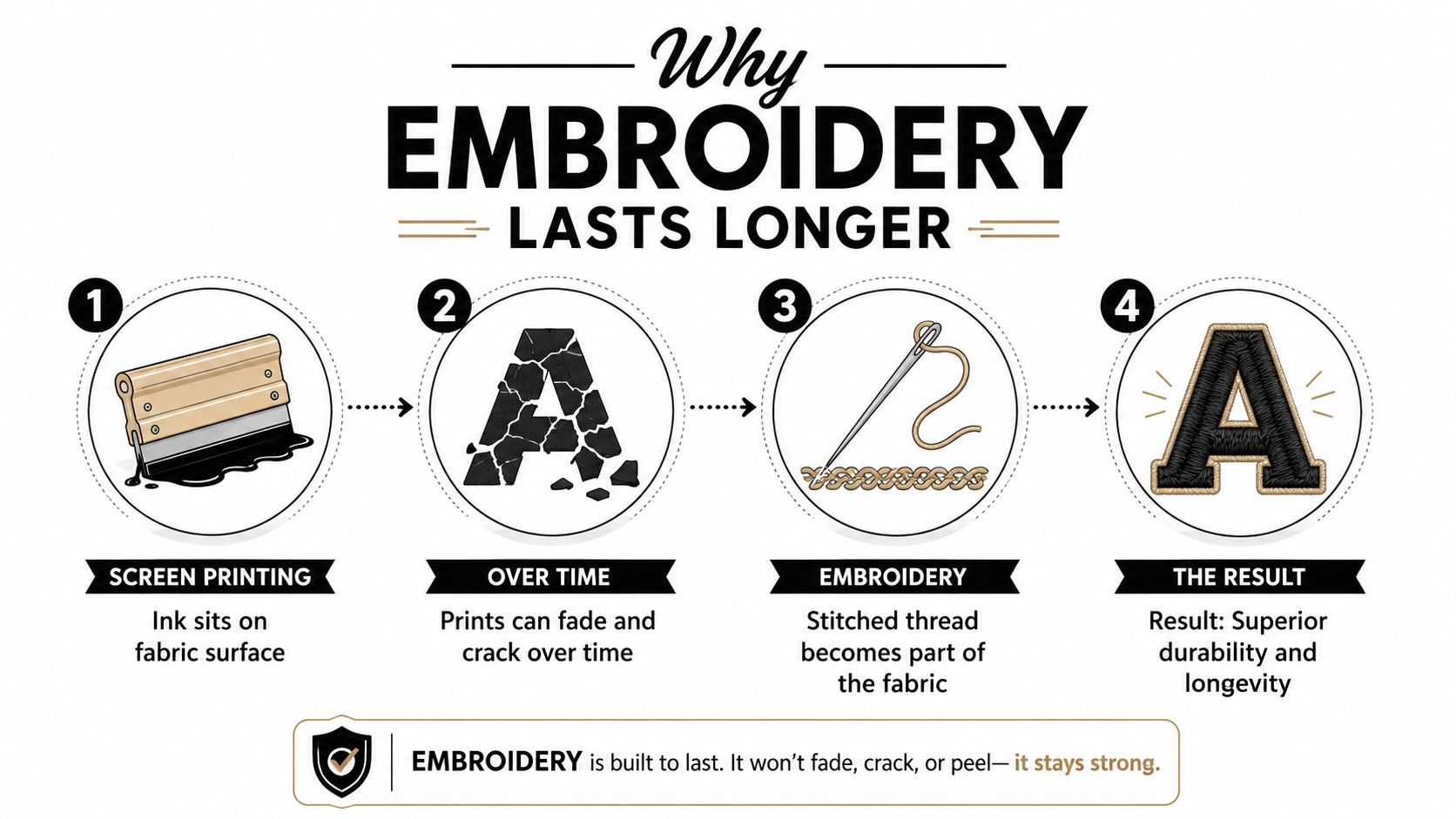
The same logic carries into hoodies and crewnecks. A raised crest on a structured fleece or cotton blend feels deliberate, especially in New York-inspired basics where texture does as much work as color. If you want a closer look at that kind of finish, the embroidered crewneck sweatshirt overview is a useful reference point.
Caring for Heavyweight Cotton So It Earns Its Keep
Heavyweight cotton lasts longer when you treat it like a structured garment, not a throwaway tee. Wash it in cold water on a gentle cycle, skip chlorine bleach, and keep heat low so the fibers don't get hammered unnecessarily. The goal is simple, preserve the shape you paid for.
A routine that protects shape
Hang drying is the safest default for shape retention, especially if the shirt has a boxy cut or a reinforced neckline. A short, low-heat tumble at the end can soften stiffness without pushing the fabric toward avoidable shrinkage. That makes sense for tees you want to feel broken in, not cooked.
Untreated heavyweight cotton can still contract enough to change the fit, which is why pre-shrunk fabric is so useful. As noted earlier, treated jersey stays closer to tagged measurements, while untreated cotton can shift more after wash cycles. Heavyweight T-shirt care and fabric specs
Practical rule: if you want a heavyweight tee to hold its line, give it time to dry naturally and don't overload the washer with abrasive laundry.
For storage, folding usually beats hanging because it prevents shoulder stretch in boxy silhouettes. Rotation matters too. Wearing the same heavyweight tee two days in a row leaves less time for the cotton to release moisture and rebound, so a simple rotation can help the shirt keep its texture and body.
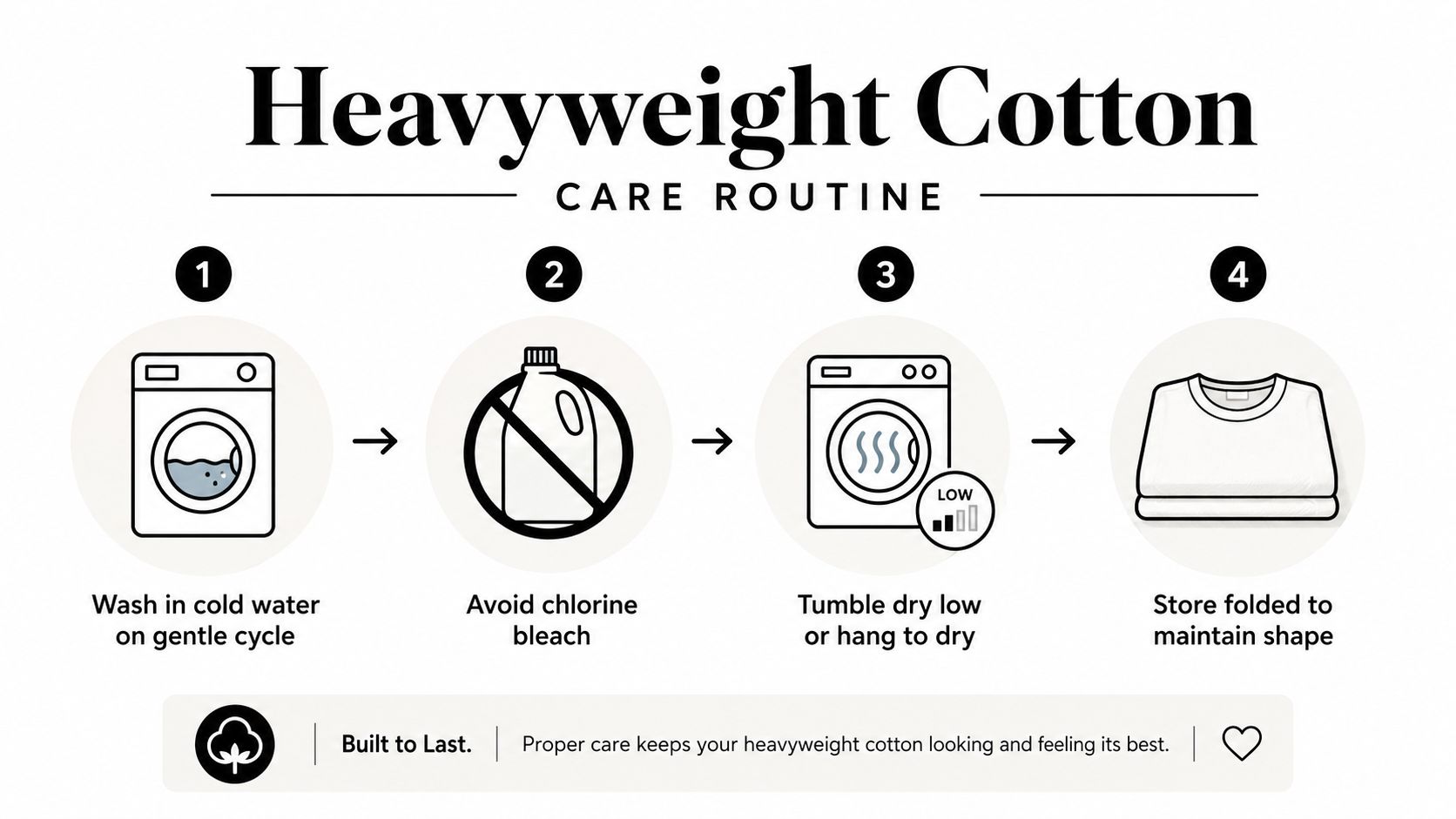
The same care habits work for graphic tees too, especially when the shirt is meant to stay in regular rotation. A good care routine doesn't make cotton indestructible, but it does keep the garment looking intentional instead of tired. For more on how graphic-heavy staples hold up, the graphic tees guide fits naturally alongside this conversation.
Your Quick Heavyweight Tee Buying Checklist
Buying the right tee gets much easier when you stop chasing the biggest number and start checking the details that change how it wears. For most streetwear use, a weight in the 220 to 280 GSM zone gives you a strong mix of structure and flexibility, while 300 GSM and above pushes the shirt toward cold-weather layering and a more substantial feel. Weight tells you the baseline, but it doesn't tell you everything.
Run this checklist before checkout
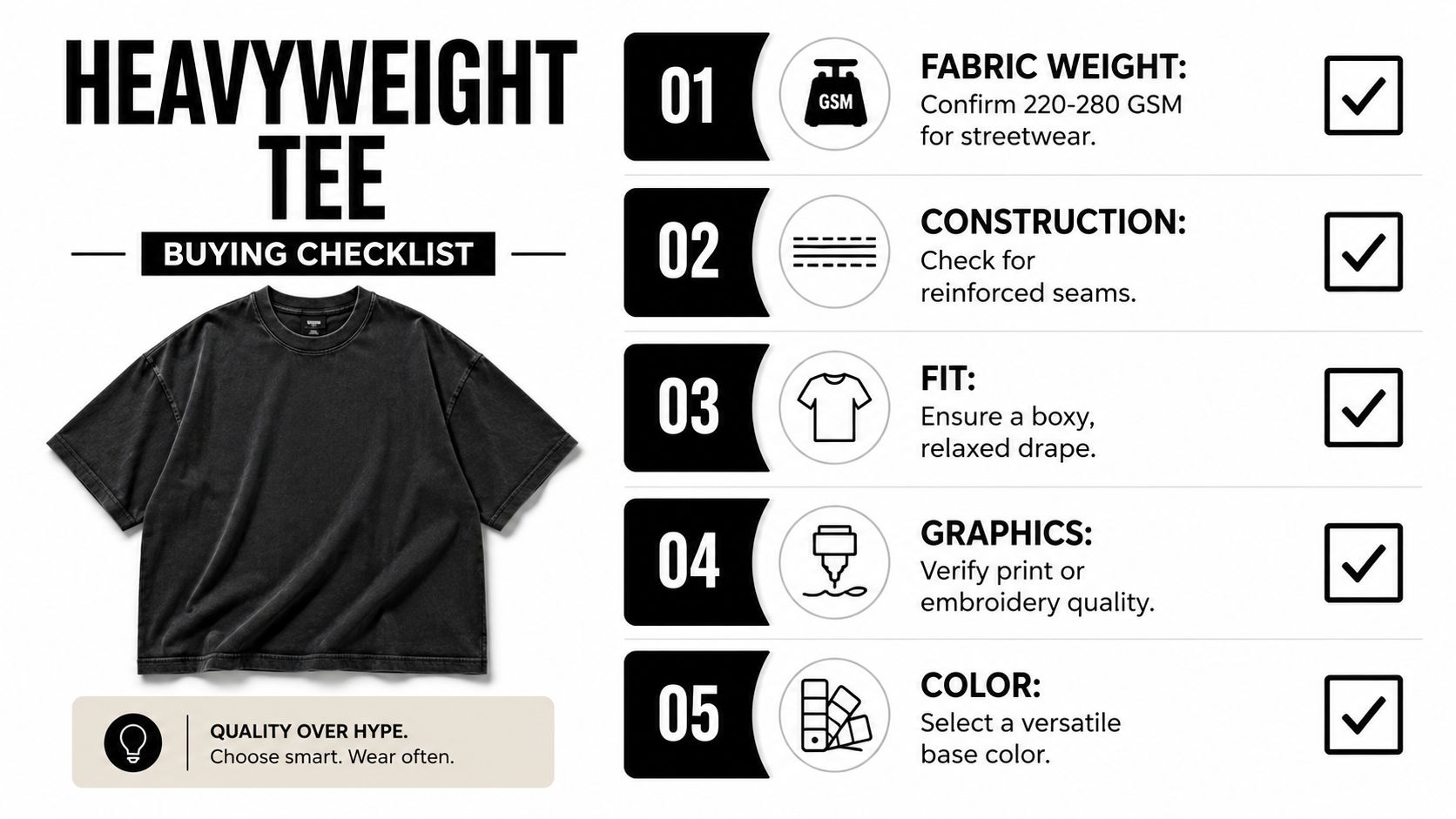
- Fabric weight: Confirm the shirt sits in the heavyweight range that matches your use, not just a vague “premium” label.
- Construction: Look for tight knit fabric, double-needle hems, and a taped or bound neckline so the shirt keeps its line.
- Fit: Choose a boxy or relaxed cut if you want layering ease, or a slightly tapered shape if you plan to wear it solo.
- Shrink control: Pre-shrunk finishing matters unless you're intentionally sizing up for a post-wash fit.
- Color and energy: Pick a base color that matches how often you'll wear it, because a heavyweight tee tends to become a repeat piece.
The best heavyweight tee doesn't shout for attention on day one. It keeps its shape, stays comfortable in rotation, and still looks composed after repeated wear. That's the difference between a shirt that feels heavy and a shirt that feels worth wearing.
If you want a heavyweight tee or embroidered staple that leans into the same structured, NYC-aware mindset described here, visit DM-Flexwear.com and browse the NY Crown Crest collection. You'll find core tees, hoodies, and crewnecks built around clean streetwear basics, color options, and durable finishes that make everyday dressing easier.