

You're scrolling through hoodie after hoodie, looking for the one that feels like a permanent part of your rotation instead of a disposable trend. One product photo looks premium, another looks almost identical, yet the difference usually appears only after repeated wear: the fabric loses its shape, the graphic starts to crack, or the oversized cut turns sloppy instead of intentional.
That's why choosing the best streetwear hoodies takes more than judging a logo. Fabric weight, construction, decoration, and proportion decide whether a hoodie looks sharp on a cold New York morning, layers cleanly under a jacket, and still feels right after regular use. A strong hoodie should work like a good pair of sneakers. It can anchor the whole outfit without demanding that every other piece compete for attention.
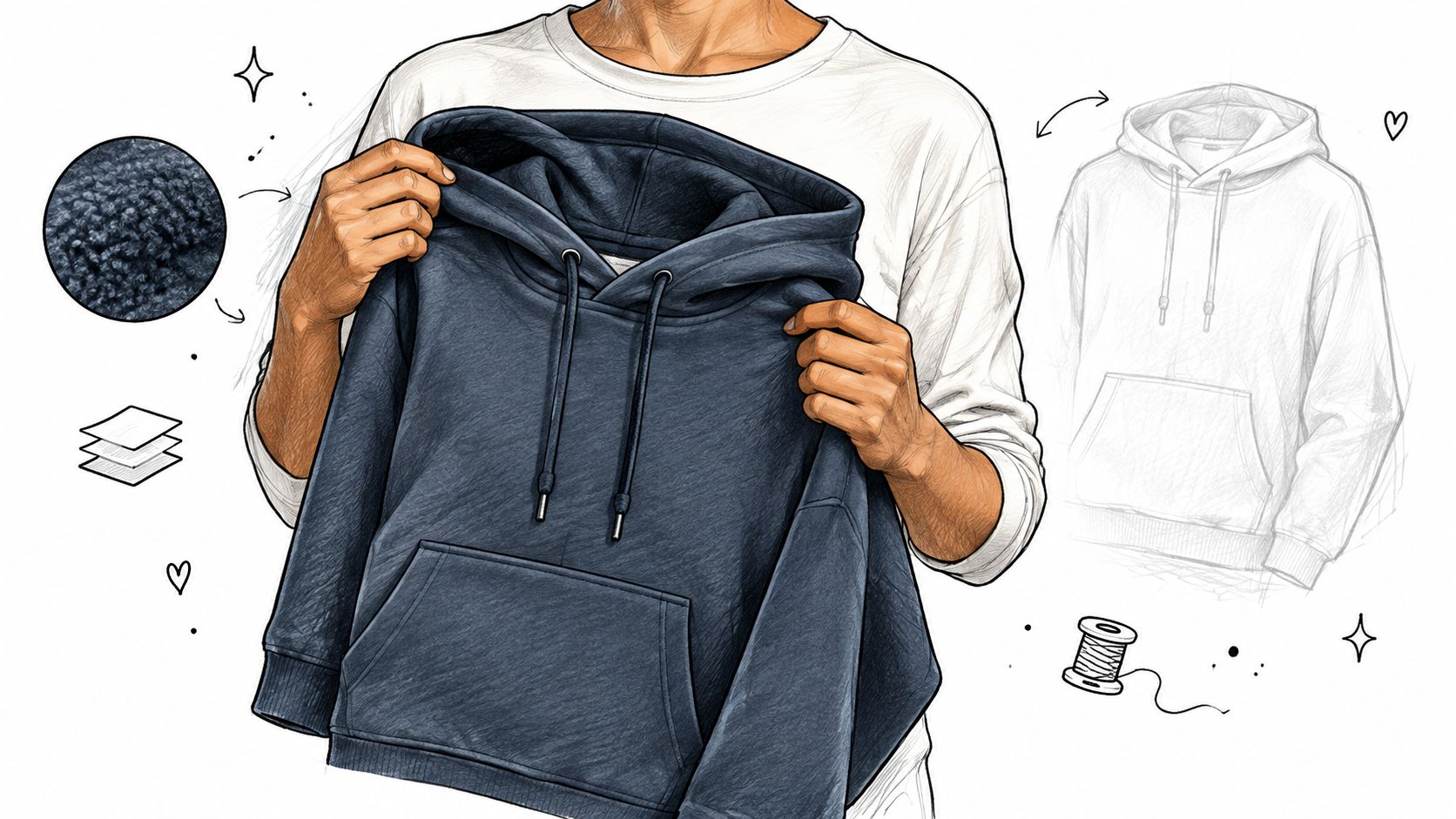
For a NYC streetwear wardrobe, the smartest buy often has a restrained identity: a considered crest, a useful color, a substantial handfeel, and a fit that gives you room without swallowing you. The following guide breaks down those decisions in practical terms, so you can tell the difference between a hoodie that looks oversized online and one that carries real structure in person.
Table of Contents
- Introduction Why the Right Hoodie Makes Your Whole Fit
- How the Hoodie Became a Streetwear Essential
- Fabric Weight and Materials That Signal Premium Quality
- Embroidery vs Print What Lasts and What Looks Better
- Nailing the Fit From Boxy to Controlled Oversize
- Branding Colorways and Everyday Streetwear Versatility
- Your Buying Checklist for the Best Streetwear Hoodies
Introduction Why the Right Hoodie Makes Your Whole Fit
A hoodie can rescue a basic outfit, but it can also expose weak styling immediately. Put a thin, overly long sweatshirt under a jacket and the sleeves bunch awkwardly. Pair a poorly shaped oversized hoodie with wide trousers and the entire silhouette loses definition. A well-built pullover does the opposite. Its shoulders, hem, cuffs, and fabric weight create a clean frame for everything around it.
That frame matters in New York, where a hoodie often has to do several jobs in one day. It might start under a wool coat, move beneath a varsity jacket, and finish as the main layer on the train ride home. The best streetwear hoodies handle those changes because they combine wearable proportions with material that holds its character.
Quality starts below the logo
Graphics attract attention first, but they aren't the whole product. A hoodie can carry an excellent design and still disappoint if the fleece feels flimsy or the ribbing relaxes too quickly. Premium quality shows up in less obvious places: a dense surface, stable seams, a hood that sits properly, and cuffs that frame the wrist rather than collapsing over the hand.
Decoration also changes the way a garment ages. A surface print can deliver a smooth, high-impact graphic, while embroidery adds physical texture and a quieter sense of permanence. Neither choice is automatically right for every design, but buyers should understand the trade-off before treating a product image as proof of quality.
The streetwear test: If the hoodie only works because the graphic is loud, it probably isn't doing enough as a garment.
What this guide helps you judge
Think of the purchase as four connected decisions:
- Fabric: Does the weight provide the warmth and structure you want?
- Fit: Do the shoulders, sleeves, and hem create controlled volume?
- Decoration: Will the logo age well with the way you wash and wear it?
- Versatility: Can the color and branding work with more than one outfit?
DM-FlexWear fits naturally into this staple-minded approach, especially for shoppers drawn to a focused NYC identity rather than a crowded catalog of unrelated graphics. The strongest wardrobe pieces aren't necessarily the loudest. They're the ones you reach for because the proportions feel right, the material feels dependable, and the design still makes sense after the trend cycle moves on.
How the Hoodie Became a Streetwear Essential
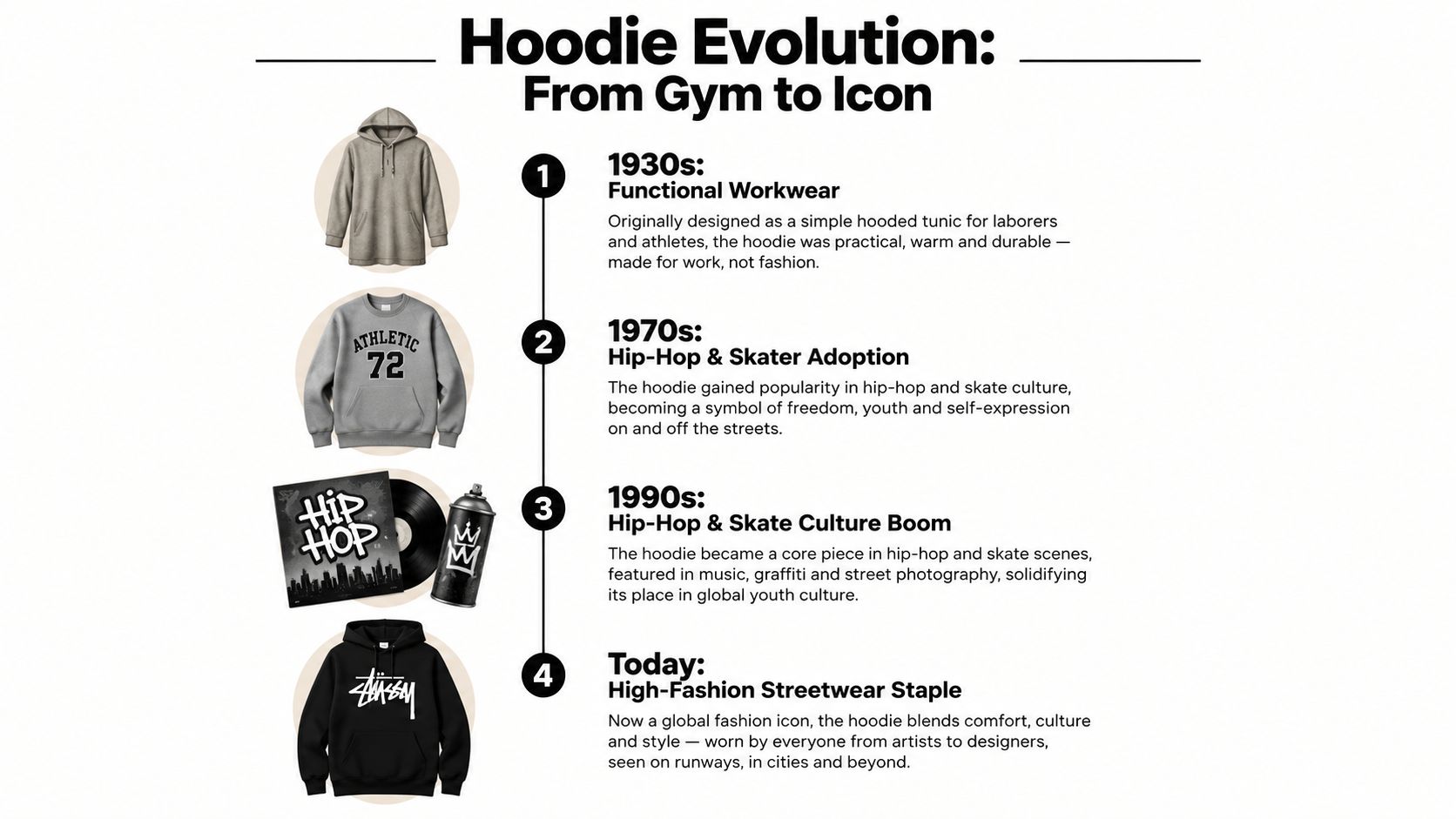
Walk through New York on a cool evening and you will see the hoodie doing several jobs at once. It blocks wind, adds warmth, and gives an outfit a clear shape. That combination explains why it carries more cultural weight than a standard sweatshirt. Hooded garments have existed for millennia, while the modern hooded sweatshirt is a 20th-century product shaped by athletic and workwear needs before youth culture gave it a broader meaning. Harry Rosen's hoodie history places the modern version's introduction in the 1930s, when Champion's predecessor, the Knickerbocker Knitting Company, developed hooded sweatshirts to help athletes stay warm.
The origin still shows in the garment. The hood provides coverage, fleece supplies comfort, and the sweatshirt construction makes the piece an adaptable layer. Streetwear gave those practical features a new visual language. A roomy cut, a deliberate logo, or a firm embroidered crest can turn the same basic layer into a statement.
From utility to cultural uniform
By the 1980s and 1990s, hoodies had moved well beyond sports. Hip-hop, skate, and graffiti communities adopted them because the garment supported movement, independence, and personal styling. A hoodie could be blank, branded, hand-customized, or layered under a jacket. It worked like a canvas while remaining useful every day.
That crossover made the hoodie a recognizable streetwear staple. A New York skater, a downtown creative, and a music fan could wear the same category while expressing different references through proportion, color, and decoration. The garment became flexible enough to serve several subcultures without losing its identity.
Why New York references still land
New York-themed crests resonate because the city connects fashion, music, sport, art, and street-level style. A crest inspired by New York can read as more than a souvenir. It connects everyday clothing to a city with a strong visual vocabulary, especially when the mark is sized with restraint and supported by a controlled oversize silhouette.
The word itself is relatively recent in formal English. The Oxford English Dictionary added “hoodie” in 2006, a detail also noted in the history of the hoodie. The contrast is useful: the clothing lineage is ancient, the modern sweatshirt emerged in the 1930s, and its streetwear meaning accelerated through late-20th-century youth culture.
The result is a garment with history built into its shape. You do not need a giant graphic for a hoodie to feel connected to streetwear. Cultural credibility can come through the silhouette, a fabric weight suited to the intended layer, and embroidery or print chosen for how it will age through repeated washing.
Fabric Weight and Materials That Signal Premium Quality
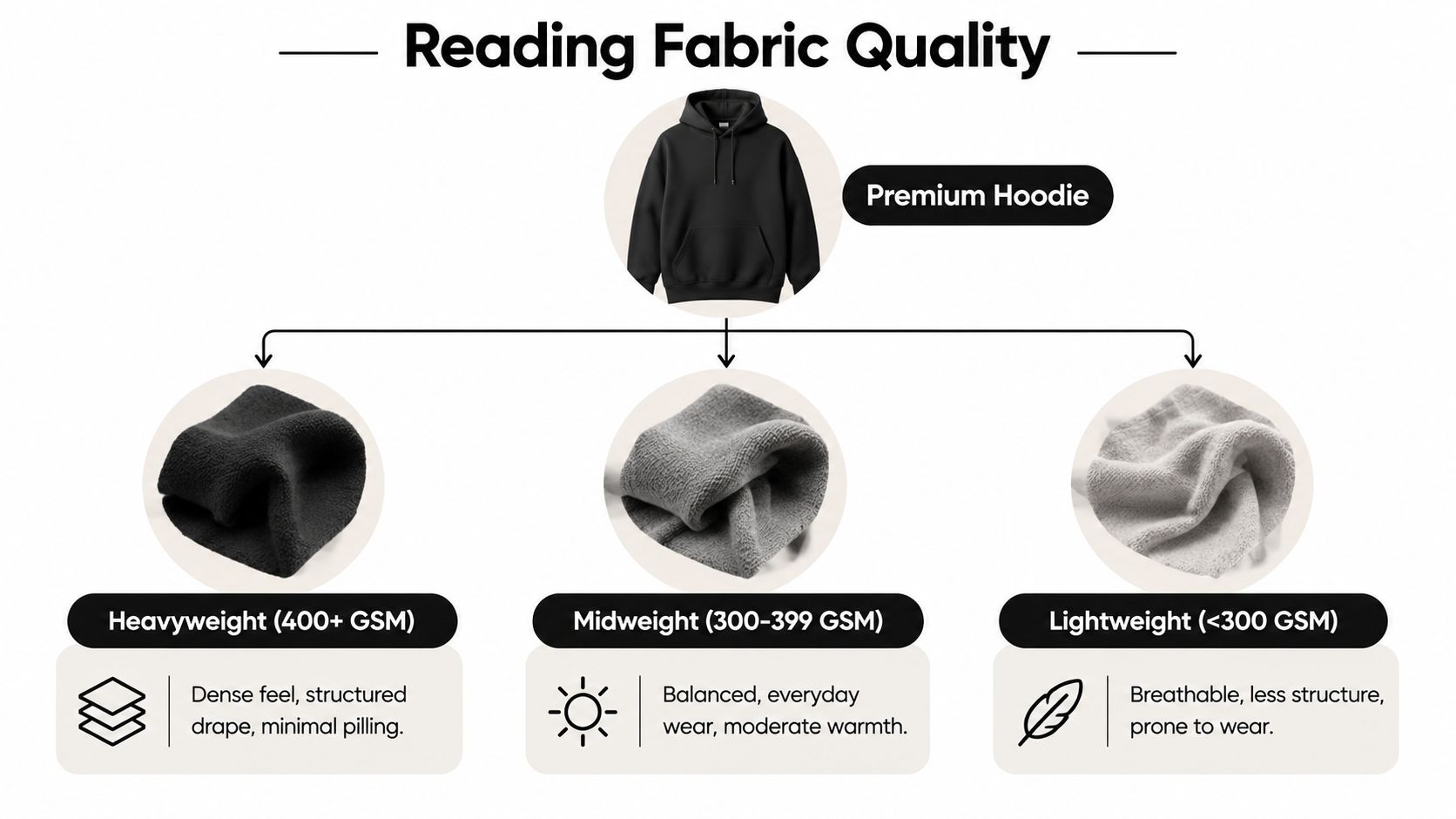
You pick up a hoodie and the first clue is in your hands. A thin jersey feels closer to a long-sleeve tee with a hood, while dense fleece behaves more like a soft jacket. GSM, or grams per square meter, measures fabric density. It cannot tell you everything about softness, fiber content, or finishing, but it helps predict drape, warmth, and resistance to shape loss. Fabric-weight guidance for hoodies places heavyweight streetwear fabric broadly between 300–500 GSM, with midweight hoodies around 220–300 GSM working well for everyday layering.
Use GSM as a fit and climate clue
Choose the weight based on the job you want the hoodie to do.
- Below 300 GSM: Breathable and easy to layer, with less structure and a lighter handfeel.
- 300–399 GSM: A balanced range for a substantial daily hoodie that still fits beneath changing layers.
- 400 GSM and above: Denser and more structured, with the grounded character associated with premium heavyweight streetwear.
These figures are guidelines, not strict category walls. Guides place heavyweight streetwear fleece anywhere from 300–500 GSM, with many everyday heavyweight hoodies clustering between 350–450 GSM. Around 400 GSM, the fabric usually begins to feel notably dense and premium, especially in a boxier silhouette. The GSM fabric weight chart from White Cotton offers another reference point, but use the range to compare garments rather than treating one number as a quality guarantee.
Read the inside, not just the product title
“Heavyweight” on a product page does not describe the whole garment. Brushed-back cotton blends have a raised inner surface that feels plush and warm. Loopback fabric has visible loops and a more breathable, textured feel, which suits flexible layering. Thin jersey can photograph cleanly while lacking the body needed for a controlled oversize shape.
Higher density gives the hoodie a stronger base against abrasion, pilling, and distortion. It cannot correct weak stitching or remove the need for proper care. A 300–500 GSM heavyweight hoodie guide describes 400–420 GSM as premium heavyweight and 450–500 GSM as ultra-heavyweight, where the silhouette tends to become boxier and more structured.
A useful comparison: Midweight fleece works like a flexible daily layer. Heavyweight fleece works like soft armor, giving the outfit shape before you add another piece.
For a cold city such as NYC, extra density can make a hoodie function as insulation instead of decoration. If you wear it beneath a coat, choose enough weight for warmth without restricting your arms. If it serves as your main outer layer, heavier fleece gives more visual authority and protection. Examine the hood, cuffs, seams, and fabric balance alongside the GSM, as shown in this guide to premium heavyweight hoodie construction.
Embroidery vs Print What Lasts and What Looks Better
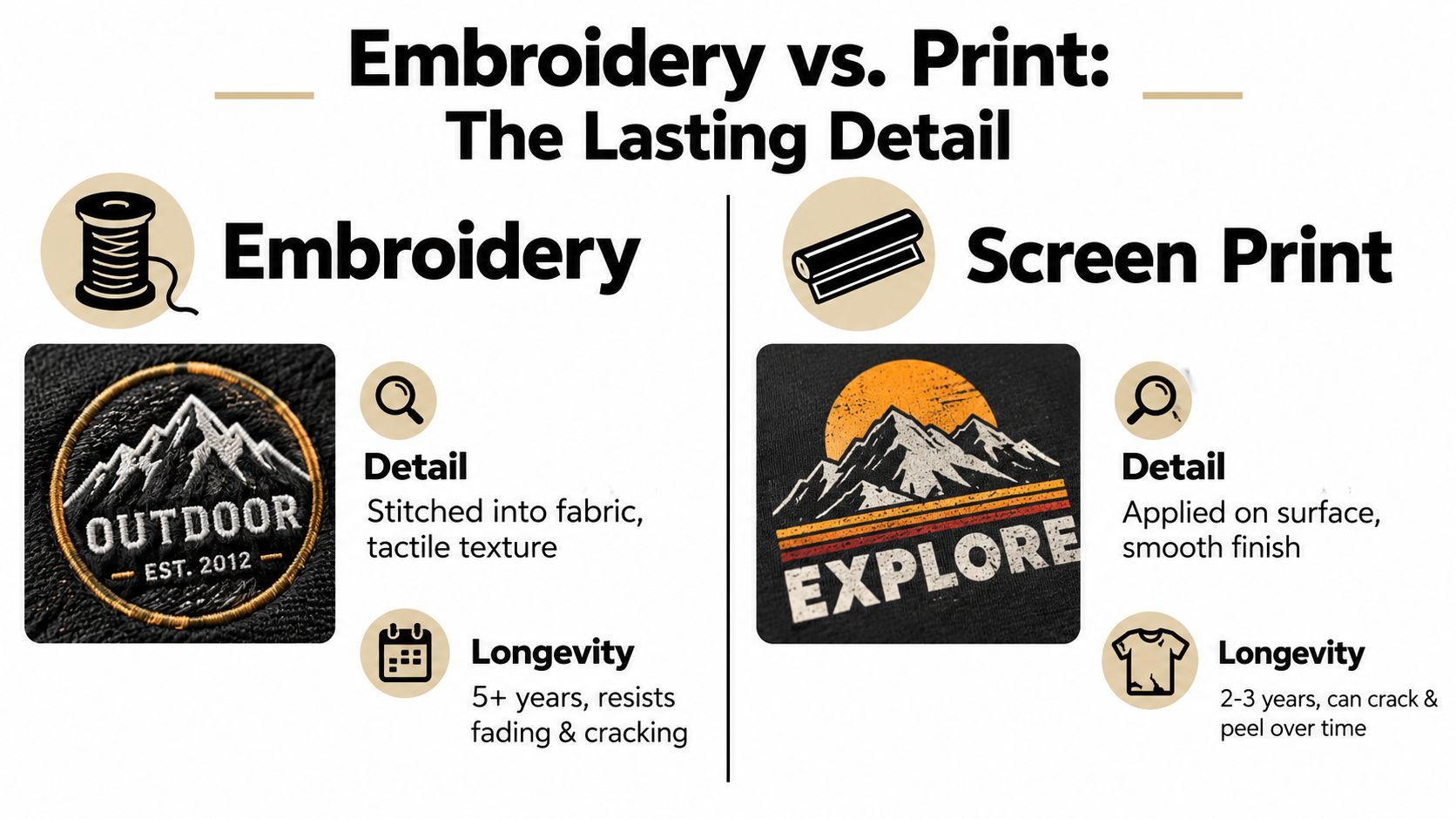
A hoodie can feel premium before you notice the logo. Run your hand over the decoration and the difference is immediate. Embroidery is stitched into the garment, while print sits on its surface. That construction affects texture, design flexibility, and how the piece develops character through repeated wear.
Embroidery gives a logo raised texture, visible thread direction, and physical depth. Print keeps the surface smooth and handles fine gradients, large artwork, and photographic effects more freely. A small crest, initials, or restrained type often benefits from stitching because it feels built into the hoodie. A large seasonal illustration may read more clearly as print.
Why construction decides durability
Printed graphics can crack, fade, or peel as the fabric bends and laundering wears down the applied layer. Embroidery avoids that specific surface failure because thread becomes part of the garment's structure. Dense stitching can still pucker, distort, or pull at knit fabric when the hoodie lacks enough support.
For knitted hoodies, guidance recommends polyester thread and a cut-away stabilizer to reduce puckering, fraying, and edge distortion. Stable medium-to-heavy fleece gives stitches a firmer foundation than thin, unstable fabric. Embroidery durability guidance explains why fabric choice and stabilizer matter alongside the decoration method.
Care also affects the result. A reference estimates that embroidered hoodie or sweatshirt graphics can withstand 150+ washes under appropriate conditions, including laundering around 30–40°C, as described in this embroidery care guide. Treat that figure as a construction-and-care benchmark, not a promise for every garment. Thread quality, stitch density, washing habits, and the base fabric all change the outcome.
Choose the method that matches your rotation
| Decoration method | Visual character | Main strength | Trade-off |
|---|---|---|---|
| Embroidery | Raised, tactile, dimensional | Strong durability and a premium handfeel | Can be less suitable for highly detailed artwork |
| Screen print | Smooth, graphic, flexible | Excellent for bold illustrations and broad artwork | Surface finish may crack or fade with wear |
| Puff or 3D embroidery | Raised, textured, statement-making | Adds depth without relying on a large graphic | Needs careful design and construction |
An embroidered NY Crown Crest can work across adult and kids' pieces because the motif remains recognizable without relying on a seasonal illustration. A minimalist print fits better when you want a flat, understated finish or intricate visual detail. Use this screen print and embroidery comparison to judge texture, artwork needs, and expected wear side by side.
Choose embroidery for rotation. Choose print for artwork. It is a practical starting point when durability and versatility matter more than a one-season statement.
Nailing the Fit From Boxy to Controlled Oversize
“Relaxed” and “oversized” aren't measurements. They're labels, and labels can hide poor proportions. A premium hoodie should create volume in deliberate places, not just add fabric everywhere.
Start at the shoulder seam. On a controlled oversized hoodie, the seam may sit slightly beyond your natural shoulder, creating a dropped-shoulder line without falling halfway down the arm. If the seam extends too far and the sleeve opening is also wide, the garment can look borrowed rather than designed. Heavyweight fabric helps here because it gives the shoulder line enough body to hold its shape.
Read the torso and hem together
A boxy hoodie usually has a wider body and a relatively contained length. That balance keeps the torso broad without making the wearer look visually stretched. An oversized hoodie adds more room through the chest and sleeves, but it still needs a hem that lands with intention.
Use your waistband or upper hip as a reference point. A hem that finishes around the upper hip often creates a clean, modern proportion, especially with wider trousers. A much longer hem can work with slimmer bottoms, but it may create a heavy column if the pants are also loose. Cropped cuts reverse the equation, showing more of the lower layer or waistband and giving broad silhouettes a sharper break.
Check sleeve stacking and wrist control
Sleeve stacking can look deliberate when the cuff stays near the wrist and the excess fabric gathers gradually along the forearm. It looks sloppy when the cuff drops over the hand or the fabric bunches from the shoulder all the way down. Ribbed cuffs should provide enough resistance to hold the sleeve without feeling restrictive.
Use this quick fit reading:
- Boxy: Broad through the chest, controlled in length, strong with clean trousers or denim.
- Relaxed: Extra room without dramatic volume, useful for everyday layering.
- Oversized: Dropped shoulders, generous sleeves, and a wider torso, best when the hem and bottoms create balance.
- Cropped: Shorter body length, useful for emphasizing proportion and layering.
Unisex sizing works well when the pattern keeps those relationships consistent across sizes. Don't assume you need to size up just because the product is described as streetwear. Check the garment measurements, compare them with a hoodie you already like, and pay attention to shoulder width, body length, and sleeve length together. A practical unisex sweatshirt sizing reference can help you make that comparison before ordering.
For gifting or coordinated adult-and-kids looks, a controlled relaxed fit is usually safer than an extreme oversize. It leaves room for movement and layering without relying on the recipient to style around excessive fabric.
Branding Colorways and Everyday Streetwear Versatility
A hoodie earns repeat wear when its identity is clear but flexible. Branding placement plays a major role. A small chest crest, sleeve mark, or tonal embroidery can communicate affiliation without locking the garment into one specific outfit. Large graphics can be powerful, but they ask the rest of the look to stay quieter.
New York references work particularly well because they carry visual shorthand. A crown, city name, or collegiate-style crest can suggest place, sport, and civic pride at the same time. That connection feels especially natural around the NYFW calendar, where New York's fashion language moves between runway polish and street-level experimentation.
Build the palette before the outfit
Colorways should make rotation easier, not create a closet full of isolated statement pieces. Start with dependable neutrals such as black, grey, navy, and white. These shades pair cleanly with denim, cargos, workwear trousers, and outerwear. Add a more expressive option, such as pink or gold, when you want the hoodie to carry the visual focus.
The most useful color isn't always the most dramatic one. Navy can soften an all-black outfit while keeping the mood urban. Grey can bridge dark outerwear and lighter sneakers. White can sharpen a layered look but asks for more careful maintenance. A bold shade works best when the silhouette and decoration remain controlled.
Let the collection create the system
A focused range of tees, hoodies, and crewnecks can be more useful than a huge catalog of disconnected designs. Repeating one crest across several garment types gives outfits a consistent thread, while different weights and layers keep the wardrobe from feeling like a uniform.
Keep one visual signature, then vary the garment. The hoodie can be the anchor, the crewneck can handle lighter layering, and the tee can carry the same identity when the weather shifts.
That approach also makes family coordination feel considered rather than costume-like. Shared embroidery and a related palette can connect adult and kids' pieces without requiring identical outfits. The result is everyday streetwear with a recognizable point of view, not a closet built around whatever graphic happens to be trending.
Your Buying Checklist for the Best Streetwear Hoodies
You are standing in a shop or scrolling through a product page. The hoodie looks clean, but the photo cannot tell you whether it will hold its shape, sit with the right volume, or still look good after repeated washing. Read it as a small design system. Fabric controls structure, fit controls proportion, decoration affects aging, and color determines how often the piece earns a place in your rotation.
Verify the fabric first
Start with a stated GSM instead of trusting the word “heavyweight.” For a structured hoodie, 400 GSM and above is a useful benchmark, as noted earlier. A lower weight may work better for layering or warmer weather. Choose based on the job: insulation, a mid-layer, or the visual centerpiece of the outfit.
GSM is like the thickness setting on the garment. More weight can help a hoodie stand away from the body, but weight alone does not guarantee good construction. Check the material description too. Brushed-back fleece usually gives you a warmer, softer interior, while lighter jersey constructions feel less substantial. An honest specification is a better starting point than vague luxury language.
Inspect the decoration and care expectations
Ask how the logo is made. Embroidery suits a crest or restrained mark because the thread adds texture and avoids the cracking pattern associated with many surface prints. A print can still deliver sharper artwork and a smoother hand feel, so judge it by the design and expected wear. Look for clean stitching and proper support when embroidery covers a dense area of knit fabric.
Wash count changes the decision. A hoodie worn and washed repeatedly needs decoration that can handle friction, heat, and agitation. Turn decorated garments inside out, choose a sensible wash cycle, and avoid treating a heavyweight hoodie like disposable gym wear. Strong construction helps during heavy rotation, while careless laundering can shorten the life of any textile.
Read the fit from the measurements
Do not buy “oversized” as a category. Compare shoulder width, chest width, body length, and sleeve length with a hoodie that already fits you well. Controlled oversize works like a frame around the body: the shoulder seam creates room, the hem balances the torso, and the cuff stays near the wrist. Extra fabric should look intentional, not accidental.
For family gifting, choose usable ease rather than extreme volume. A hoodie that works across different bodies has more value than one dependent on a highly specific styling trick.
Make the branding earn its place
A good logo should work with jeans, cargos, shorts, and outerwear. Restrained crests and minimalist embroidery usually give you more outfit options than loud graphics that dictate the entire look. Build color choices in sequence. Start with a neutral, add another everyday shade, then choose a bolder option once the rotation has a foundation.
DM-Flexwear's focused NY Crown Crest range shows that approach through embroidered hoodies and crewnecks, staple tees, multiple colorways, and sizing from young children through adult 3XL. The focused range gives shoppers a clear identity to assess instead of an endless stream of unrelated drops.
Use the checklist before you pay:
- Fabric specification: Is the GSM stated, and does it suit structure or layering?
- Material behavior: Does the fleece or blend feel dense enough to hold its shape?
- Decoration method: Is the design embroidered, printed, or built with raised detail?
- Wash durability: Can the decoration handle the care routine you expect to use?
- Fit measurements: Do the shoulder, torso, sleeve, and hem proportions create controlled volume?
- Color utility: Can you style the hoodie with several existing pieces?
- Care plan: Will you wash and dry it in a way that protects the fabric and decoration?
The best streetwear hoodies feel substantial, sit correctly, carry a deliberate mark, and keep working after the first outfit photo.
DM-Flexwear.com offers NY Crown Crest embroidered hoodies, crewnecks, tees, and coordinated children's pieces in multiple colorways and sizes. Visit DM-Flexwear.com to find a durable New York-inspired staple for your rotation, gifting plans, or family's next coordinated look.