

You've seen the outfit before. A heavyweight tee, relaxed trousers, clean sneakers, and a sweatshirt that looks like it was chosen without effort. Nothing screams for attention, yet the proportions, texture, and color balance make the whole look feel deliberate. You try to recreate it, buy a loud graphic, and somehow end up looking more like you're wearing a costume than getting dressed.
That distinction is the center of casual streetwear. The strongest version isn't built around chasing every limited release. It comes from comfortable silhouettes, reliable fabric, restrained branding, and pieces that can handle ordinary days. Tees, hoodies, and crewnecks aren't background items in this category. They're the foundation.
Streetwear has also become a serious global apparel business. One market estimate projects the category to reach USD 296.4 billion by 2035, while clothing already accounts for more than half of revenue, confirming that everyday garments sit at the heart of the movement. Business Research Insights' streetwear market overview supports what the streets have shown for years: casual staples have moved far beyond a niche youth trend.
Table of Contents
- What Is Casual Streetwear Anyway
- Decoding the Culture From Sidewalks to Runways
- The Holy Trinity of Streetwear Staples
- Building Your Look Three Outfit Recipes
- Why Quality and Fit Matter More Than Hype
- The Final Word on Effortless Street Style
What Is Casual Streetwear Anyway
Casual streetwear is everyday clothing shaped by street culture, but the definition gets more useful when you look at how people wear it. A relaxed tee with a strong shoulder line, a hoodie with enough weight to keep its shape, and trousers that leave room to move can look sharper than a complicated outfit full of logos. The style works because it balances comfort, proportion, and personal attitude.
Think about the person who looks good on a coffee run without appearing overdressed. Their clothes probably share a few qualities. The colors work together, the fit has intention, and at least one garment adds structure. A soft tee can sit under a firm overshirt. A roomy hoodie can work with cleaner trousers. A simple crewneck can carry the outfit when the fabric and shape are right.
Practical rule: If every item demands attention, the outfit has no visual hierarchy.
The accessible side of casual streetwear matters. You don't need an exclusive drop or an archive piece to participate. You need a wardrobe that lets you repeat combinations without looking repetitive. Neutral colors, practical layers, and recognizable silhouettes create more room for individual styling than disposable graphics do.
That repeatability also explains why the category has cultural staying power. Streetwear began with communities that valued movement, creativity, and self-definition, then grew into a global fashion language. The market scale is large, but the daily appeal remains straightforward. People want clothes that feel good, move easily, and communicate something without requiring a speech.
Start with the question, “Can I wear this three different ways?” If the answer is yes, the garment has a place in a serious casual wardrobe. If it only works with one matching set or one oversized graphic, it may be a novelty rather than a staple.
Decoding the Culture From Sidewalks to Runways
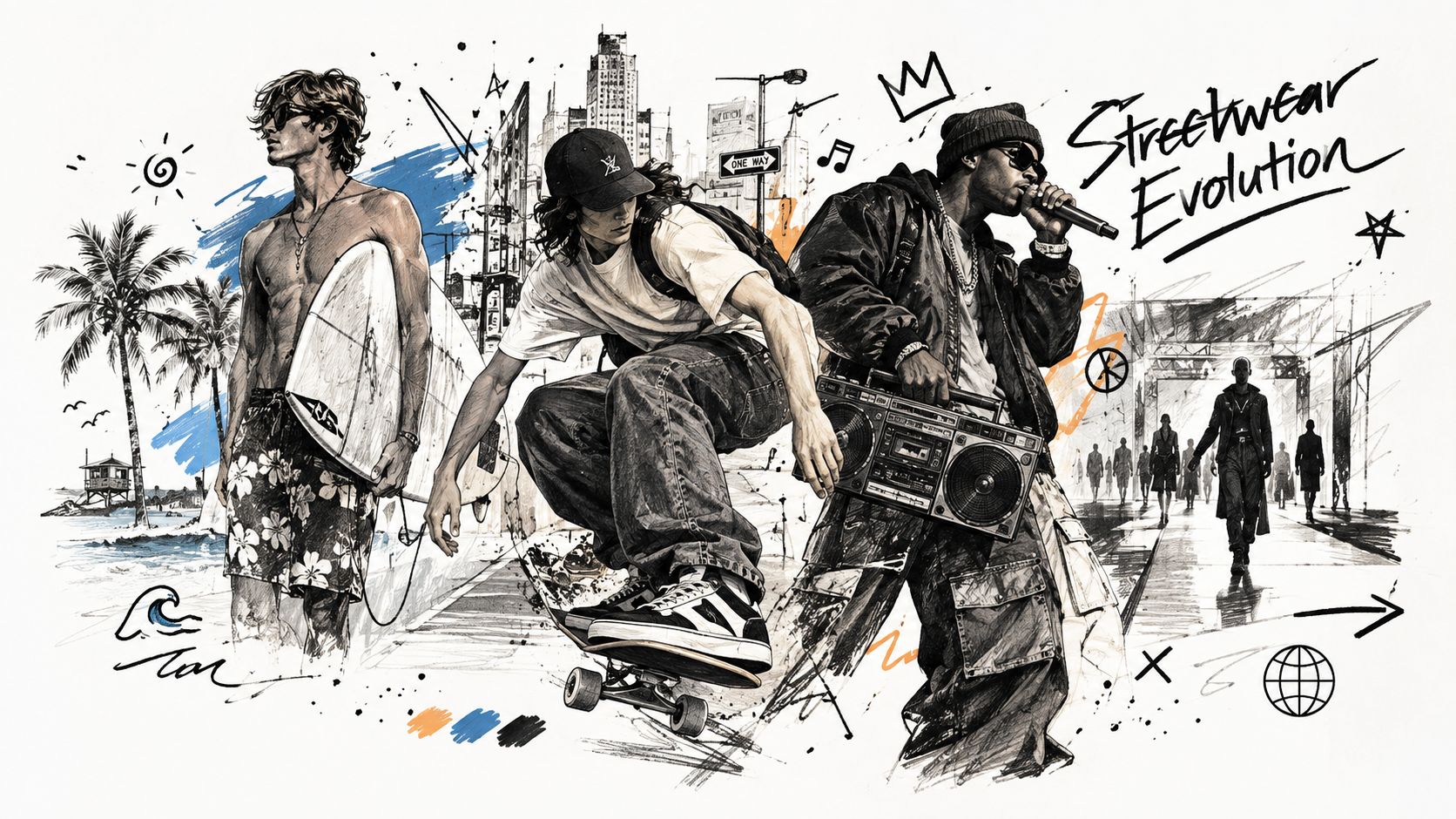
Streetwear's cultural DNA comes from places where clothing had to function before it became collectible. Surf communities valued ease and movement. Skate culture favored garments that could withstand active days. Hip-hop made proportion, attitude, and visual identity central to dressing. These influences didn't produce one uniform look. They created a framework for using clothing as a visible form of independence.
The drop changed the relationship with clothing
The modern streetwear system became clearer through brands that treated scarcity, community, and location as part of the product. Supreme's rise in New York, beginning in 1994, became a defining milestone. Its limited-release approach helped make drops a core streetwear tactic, and the brand's later majority-stake sale for about USD 2.1 billion in 2020 signaled how far the category had traveled from subculture toward mainstream luxury assets. Fortune Business Insights' streetwear coverage documents that transition.
The lesson isn't that every brand should copy the drop model. Hype can create energy, but it can also train shoppers to value availability over construction. A garment becomes powerful when the wearer gives it meaning, not solely because an inventory page disappeared quickly.
New York keeps the language moving
New York remains central because the city makes different communities overlap. Skate references, sportswear, workwear, music, and polished tailoring can appear in the same neighborhood, sometimes in the same outfit. That mix gives New York-coded clothing a natural sense of place without requiring a costume version of the city.
Casual streetwear works best when it carries that independent spirit into ordinary life. The strongest outfits borrow the culture's confidence, then simplify it for commuting, family plans, travel, or a normal weekend. You're not dressing as a historical reference. You're using the language and making it yours.
The Holy Trinity of Streetwear Staples
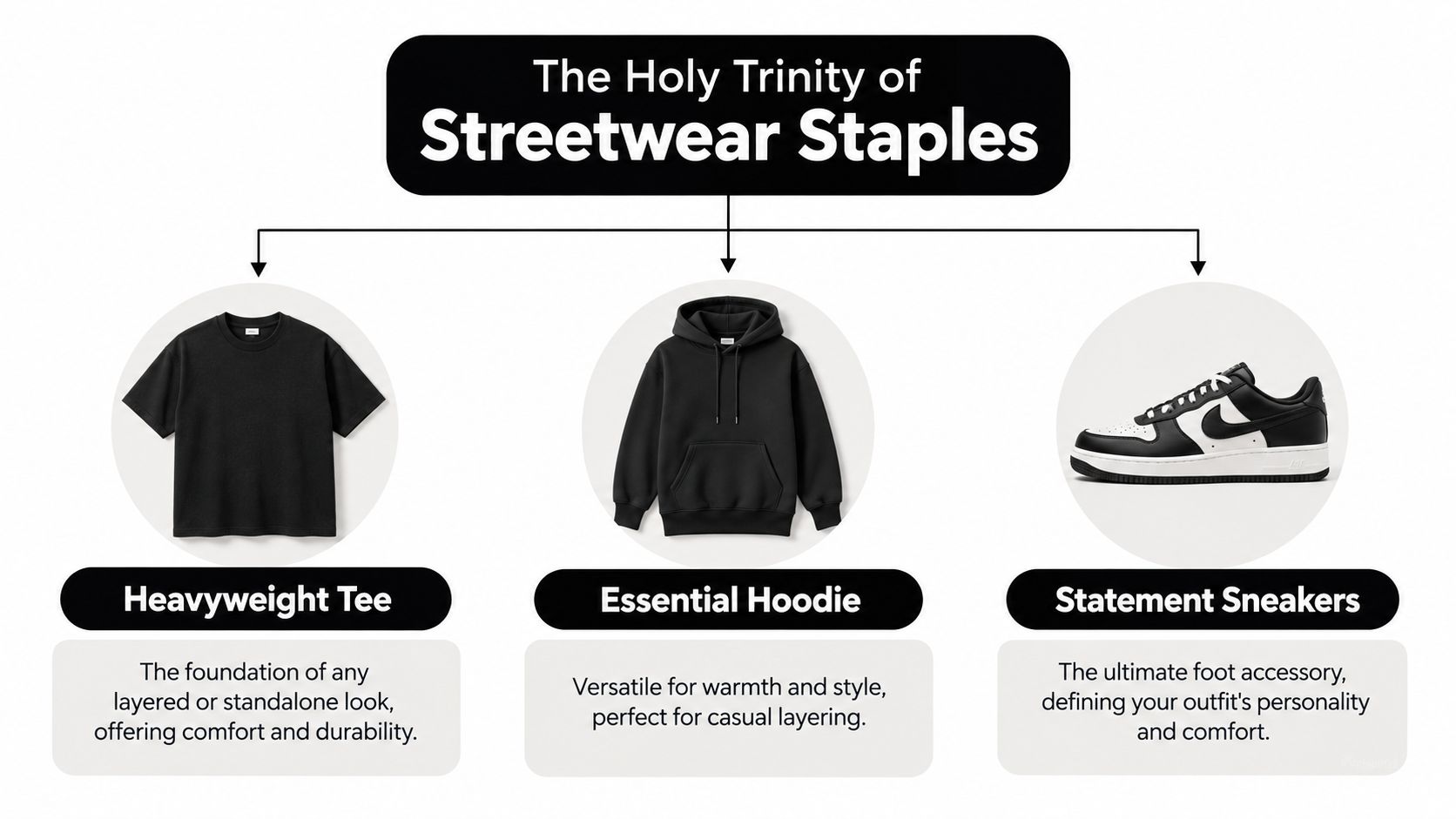
A practical wardrobe can be built around three garments: the heavyweight tee, the essential hoodie, and the versatile crewneck. Together, they cover standalone wear, layering, temperature changes, and the relaxed proportions associated with modern street style.
The heavyweight tee
A streetwear tee should have enough body to hold its outline when worn alone. Premium streetwear T-shirts typically fall within the 240–300 GSM range, while the heavier material supports the structured, boxier silhouette associated with the style. Clothing Producer's streetwear construction guide explains why fabric weight changes drape and shape.
Look at the shoulder seam first. It should support the intended fit rather than collapse toward the upper arm. Check the length next. A relaxed tee can be roomy, but it shouldn't look accidentally oversized or bunch under every layer. Black, white, grey, navy, and other grounded shades give you more combinations than a graphic that dictates the entire outfit.
The essential hoodie
A good hoodie brings warmth, volume, and a strong outer layer to the wardrobe. Premium fleece commonly sits around 400–520 GSM, a range that gives the garment more structure and helps it hold a boxier profile. Heavier fabric can feel substantial, but it also adds bulk, so balance it with trousers that have enough room through the leg.
The details decide whether the hoodie feels premium. Inspect the hood's shape, cuff recovery, seam finish, and decoration. Embroidery adds texture and depth, while a poorly executed print can crack, peel, or dominate the garment. For a deeper look at how premium hoodies fit into a staple wardrobe, explore this guide to premium hoodies.
The versatile crewneck
The crewneck is the quiet operator. It layers over a tee, works under a jacket, and gives you the warmth of a hoodie without the hood changing the neckline. Choose a fit that leaves room at the chest and sleeves without swallowing your frame.
Construction matters here because crewnecks often become repeat-wear pieces. Dense knitting, clean ribbing, controlled shrinkage, and secure stitching all affect how the garment looks after regular use. Fabric weight helps, but it isn't a complete durability test. Abrasion resistance also depends on yarn strength, fiber length, knit density, composition, stitching quality, and shrinkage control, as outlined in Istanbul Factory's explanation of GSM and garment durability.
Building Your Look Three Outfit Recipes
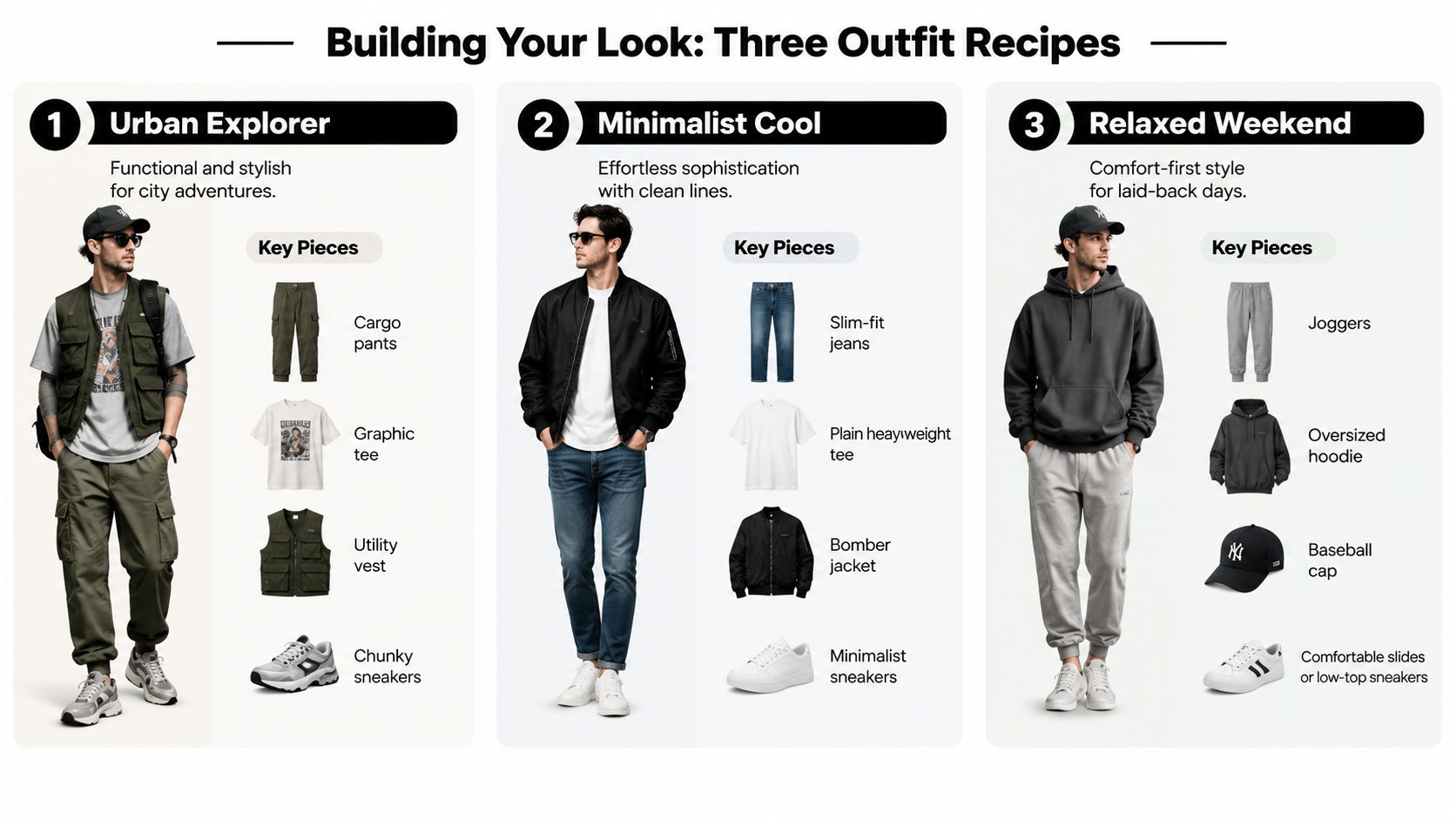
The easiest way to make casual streetwear feel natural is to treat dressing like a formula. Start with one anchor piece, add a layer or texture, then keep the remaining elements quiet enough to support it.
Recipe one, the clean everyday base
Begin with a plain heavyweight tee, relaxed jeans, and low-profile sneakers. Add a crewneck when the temperature drops. Keep the palette close, such as white, grey, navy, or black, and let the difference in texture provide the interest.
This works because the tee supplies structure while the denim or trousers create a clear lower half. Avoid adding several competing logos. A clean base looks intentional when the shoulder fit, trouser break, and sneaker condition are all under control.
Recipe two, the layered city uniform
Use a tee under an open overshirt or lightweight jacket, then finish with straight-leg trousers and a simple sneaker. Choose one darker outer layer around a lighter base, or reverse the contrast with a pale jacket over a deep tee.
The layer should frame the tee rather than hide it completely. Leave enough room through the shoulders and chest so the outfit doesn't bunch. If the top half feels heavy, use a cleaner trouser and a less aggressive shoe.
For more guidance on choosing a reliable daily tee, see this streetwear T-shirt guide.
Recipe three, the relaxed weekend fit
Pair an oversized hoodie with joggers or roomy cargos, then finish with a baseball cap and either slides or low-top sneakers. This is the most comfort-forward formula, but it still needs proportion. A large hoodie with extremely narrow bottoms can look accidental, while a balanced leg keeps the silhouette deliberate.
Use the hoodie as the focal point and keep accessories limited. If the garment carries embroidery or a strong crest, let that detail do the work. A clean shoe and coordinated cap are enough to make the outfit feel finished.
Styling test: Before leaving, remove one accessory. If the outfit improves, the original version was overworked.
Why Quality and Fit Matter More Than Hype
A loud logo can make an ordinary garment feel important for a moment. It can't fix weak fabric, awkward proportions, or decoration that deteriorates after regular washing. The more useful standard is simple: does the piece still look good when the novelty wears off?
Recent streetwear direction has favored quieter branding, muted neutrals, heavyweight tees, brushed fleece, and visible craftsmanship. That approach gives shoppers more flexibility because a well-made staple can move between settings without announcing itself. It also makes family coordination easier. A shared color and motif can connect adult and children's outfits without forcing everyone into identical styling.
Read the garment, not the marketing
Embroidery is a strong choice for a crest or small emblem because it creates a raised, tactile finish. Apparel-industry guidance links wash resistance and reduced fraying to strong thread, dense stitching, and edge-sealing methods, as described in Yima Label's embroidery durability guidance.
That doesn't mean every embroidered piece is automatically durable. Inspect the stitch density, loose threads, backing, and placement. Decoration should support the garment's identity, not compensate for a poor blank.
Fit deserves the same scrutiny. Unisex sizing can work across different wardrobes, but the wearer still needs to compare shoulder width, body length, sleeve volume, and intended layering room. A relaxed cut should look designed, not merely oversized. Use the unisex sweatshirt sizing guide to make the choice more deliberate.
The New York signal works best when it stays restrained
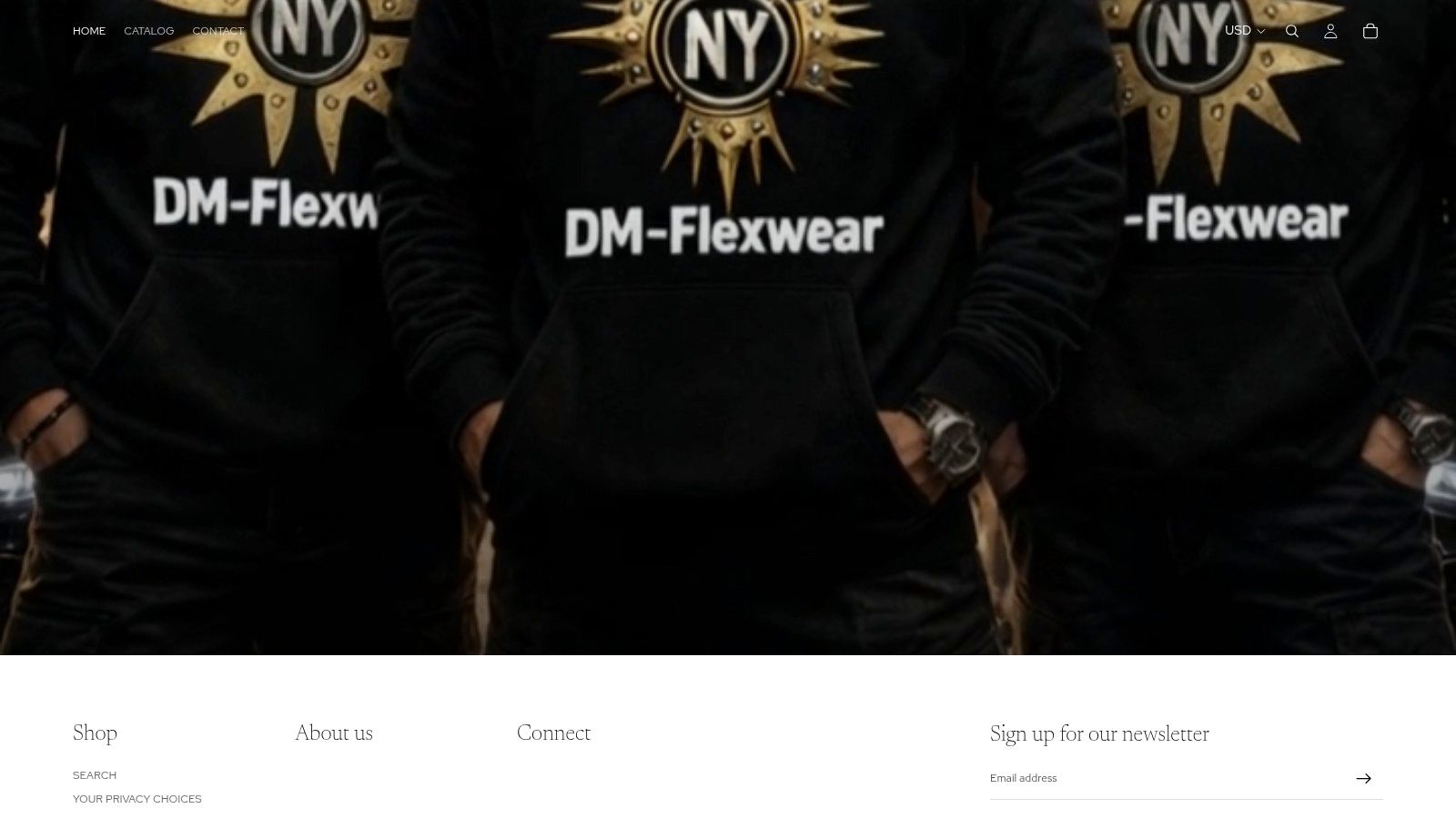
The NY Crown Crest idea fits naturally within New York's fashion vocabulary. New York Fashion Week operates as a biannual global platform, with official shows held in February and September, reinforcing the city's recurring role in fashion visibility and trend-setting energy.
A city-coded crest doesn't need to become a billboard. Keep the rest of the look clean, choose a strong neutral, and let the emblem function as a point of recognition. That's how branding feels personal rather than disposable.
Here's a closer visual look at how a branded hoodie can anchor this kind of wardrobe.
The Final Word on Effortless Street Style
Casual streetwear works when it serves real life. The best wardrobe doesn't require a new drop for every mood. It relies on a heavyweight tee that layers cleanly, a hoodie that keeps its shape, a crewneck that adapts across seasons, and trousers and sneakers that respect the proportions above.
The culture matters because it gives these basics a point of view. Surf, skate, hip-hop, and New York fashion all contributed more than visual references. They established the idea that personal style can be comfortable, functional, and independent at the same time.
Choose fabric before hype. Check the shoulder and body length before trusting a product photo. Let embroidery, color, and silhouette create recognition instead of stacking loud graphics. When a garment earns repeat wear, it becomes part of your style rather than another purchase you're trying to justify.
Build slowly, edit thoughtfully, and wear the pieces often. That's where effortless style comes from.
DM-Flexwear offers NY Crown Crest tees, embroidered hoodies, crewneck sweatshirts, and baby crewneck tees in coordinated colorways and sizes for adults and young children. Visit DM-Flexwear.com to find durable, New York-coded staples for your everyday casual streetwear rotation.