

Most advice on next T shirts gets it backwards. It obsesses over what's hot, then leaves you with tees that look sharp for a week and drift out of shape, fade, or feel sloppy after a few washes. A better wardrobe starts with the boring stuff people skip, fabric, fit, construction, and decoration, because that's what decides whether a tee still earns its place six months later.
Table of Contents
- Why Trendy Tees Fail as Everyday Staples
- Fabric and Construction That Actually Last
- Getting Unisex Sizing Right Every Time
- Embroidery Versus Print for Long-Term Wear
- Building a Coordinated Capsule Collection
- Styling Staples with NYC Fashion Week Energy
- Your Next T-Shirt Purchase Checklist
Why Trendy Tees Fail as Everyday Staples
The loudest T-shirt coverage keeps pushing oversized, boxy, baby tee, layered looks, neutral basics, and logo-heavy styling for 2026, but that conversation usually stops at silhouette. It rarely answers the question shoppers care about, which is whether the tee still works after repeated wear, layering, and washing, not just whether it photographs well on day one. That gap matters if you're building a capsule instead of a mood board, because a tee that looks current on social media can still be a weak daily buy. According to trend coverage on 2026 T-shirts, style direction gets far more attention than practical performance.
Trend appeal and daily utility are not the same thing
A tee can be on-point visually and still fail in rotation. Oversized cuts swallow shorter frames, baby tees can feel too fragile for regular layering, and boxy silhouettes only work if the shoulder, body length, and hem land in the right place. Once the fabric starts twisting, shrinking, or losing its shape, the trend value drops fast.
That's why I'm opinionated about this category. Buy for repeat wear, not for the first photo. A solid tee should keep its line under a hoodie, stay clean at the collar, and survive the wash without turning into a different garment.
Practical rule: if the tee only looks right when it's styled exactly one way, it's not a staple, it's a costume piece.
The better question is simple, will this still look good in six months? If the answer depends on luck, the wrong fabric, or a narrow silhouette window, skip it. Staples win because they stay useful when the trend cycle moves on.
Fabric and Construction That Actually Last
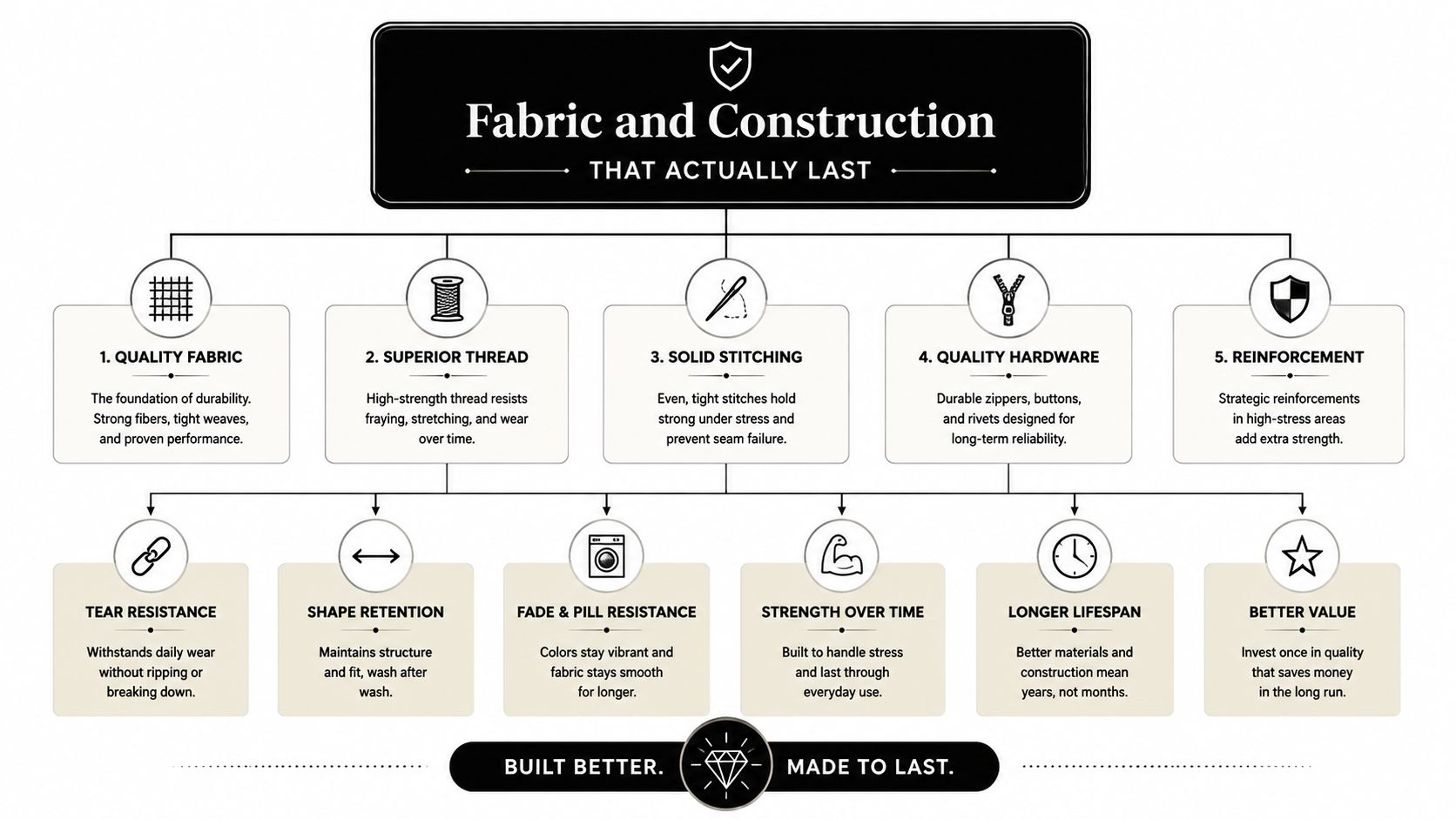
Price is a weak signal. In a 47-T-shirt durability assessment, price wasn't a reliable predictor of physical longevity, while fabric composition did affect durability, and the better-constructed basics held up better than cheaper alternatives (textile durability assessment). That's the buying logic you want in streetwear, where a tee gets layered, stretched, sweat-tested, and washed more often than many admit.
Read the garment, not the hype
Start with the fabric blend. Cotton-rich knits are the safe base for everyday wear, especially when the construction is tight and the yarns are better spun. Ring-spun yarns usually feel smoother and hold up better than rougher low-end cotton, while tighter knits help resist early thinning and distortion.
Then look at structure. A tee with cleaner side seams, a stable collar, and less obvious waffling in the knit usually behaves better under laundering stress. That matters more than whether the listing screams premium or throws around vague language about comfort.
A heavyweight tee isn't automatically better, but a flimsy tee almost never becomes a favorite.
If you want a practical benchmark, focus on measurable wear resistance across repeated use instead of assuming GSM or price tells the whole story. A heavier or better-constructed basic can outlast a cheap trend piece, but only if the build is there. For a deeper look at why that matters in everyday rotations, the heavyweight tee guide is a useful reference point.
What to look for in product copy
- Fiber blend language: Look for cotton-rich formulas when you want softness and wearability.
- Knit and yarn detail: Ring-spun and tighter constructions are stronger signs than generic “premium” claims.
- Finish and feel notes: Better finishing usually means less early shape loss.
- Construction cues: Stable collars and clean seams matter because they're the first places cheap tees fail.
If a listing hides all of that behind style photos, move on. A capsule tee should be judged like equipment, not decoration.
Getting Unisex Sizing Right Every Time
Unisex sizing only works when you ignore the label and check the measurements. Major size guides show that 2XL to 3XL tops commonly map to chest ranges roughly around 49 to 56 inches, and the right size should be based on chest, waist, and hip measurements instead of the nominal tag alone (size guidance). That's the reality behind fit consistency, especially when you're shopping the same tee in multiple colors or buying for different body types.
Measure first, then compare the garment
Take body measurements, then compare them to the product page. Chest matters most for the silhouette of a tee, but waist and hip measurements help when you're checking drape and how much room the shirt has over the midsection. If a brand doesn't publish garment measurements, you're guessing.
That guess gets expensive when the same style is sold across adult and youth ranges, because tiny spec shifts in chest circumference or length can change the whole fit. A tee that lands clean on one person can look oversized, cropped, or tight on another, even if both ordered the same nominal size.
The smarter move is to use the size chart as a garment map, not a promise. Compare the tee you want against a shirt you already wear well, then choose the closest match in actual inches. That's how you avoid the sloppy shoulders, awkward hem length, and return-cycle headache that comes from trusting labels too much.
| Size | Chest (inches) | Waist (inches) | Hips (inches) |
|---|---|---|---|
| S | Check brand chart | Check brand chart | Check brand chart |
| M | Check brand chart | Check brand chart | Check brand chart |
| L | Check brand chart | Check brand chart | Check brand chart |
| XL | Check brand chart | Check brand chart | Check brand chart |
| 2XL | Roughly 49 to 56 | Check brand chart | Check brand chart |
| 3XL | Roughly 49 to 56 | Check brand chart | Check brand chart |
The table above keeps the logic simple. The exact numbers vary by brand grading, so the label matters less than the actual cut.
For a practical companion to tee sizing, the unisex sweatshirt sizing guide is a useful benchmark because the same measurement mindset applies across tops.
Embroidery Versus Print for Long-Term Wear
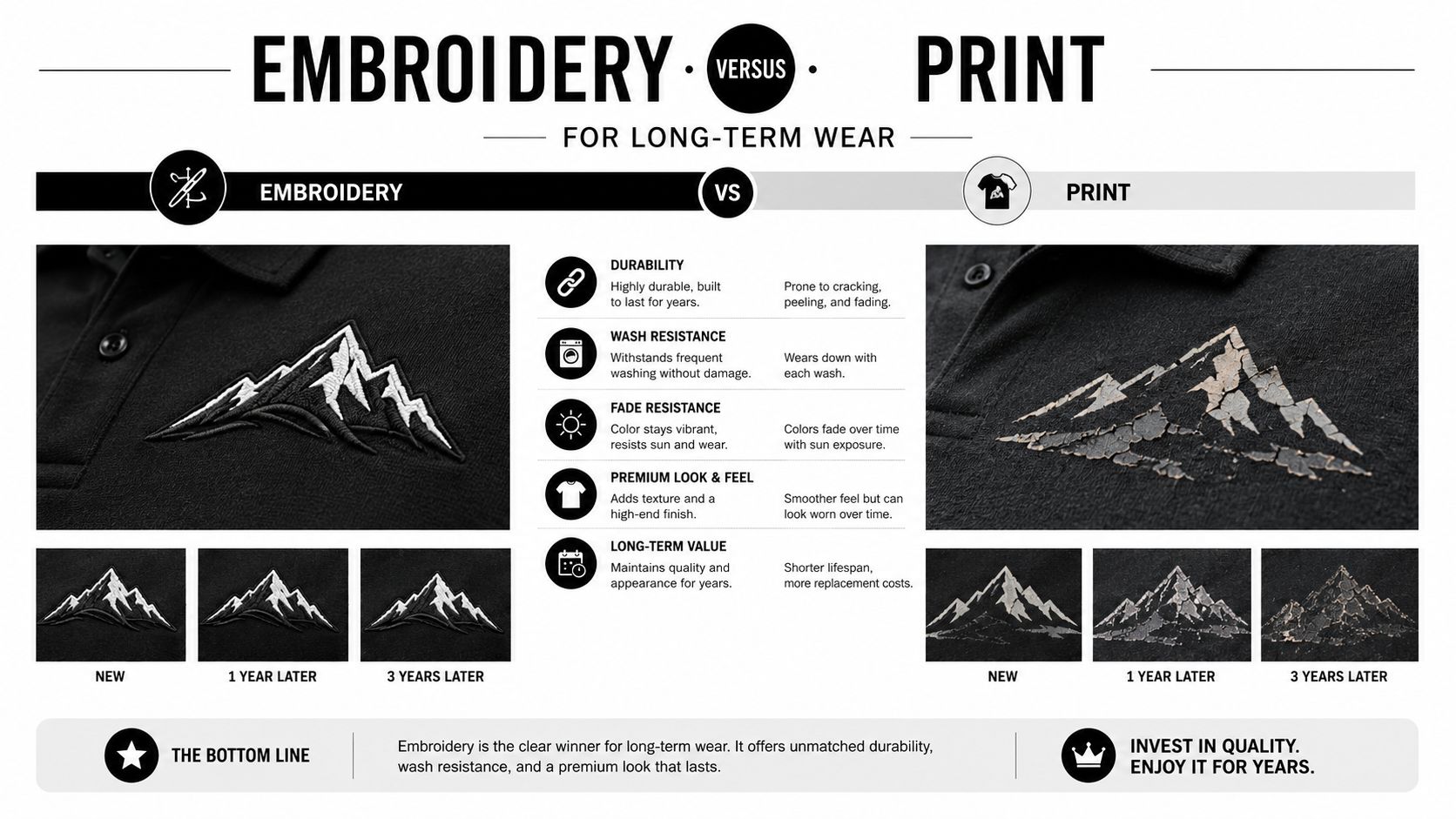
Decoration changes how a tee behaves over time. Printed graphics can look sharp at first, but they usually depend on the print method and the base fabric doing all the heavy lifting. Embroidery adds texture and structure, and textile research shows that it's not just a visual choice, it changes performance in measurable ways.
Why embroidery holds a different place in the rotation
Independent textile research on embroidered wearable materials tested samples through 100, 300, and 500 loading cycles plus 10, 30, and 50 wash cycles, which shows embroidery can survive repeated mechanical stress and laundering as a measurable feature, not just an aesthetic one (embroidery durability research). Another textile assessment found embroidered samples could increase tearing strength while reducing tensile strength, which means embroidery changes the garment's behavior rather than decorating it.
That tradeoff matters. A stitched motif can feel more premium and often ages better visually, but it can also need more thoughtful care than a flat print. If the design is rubbed hard, washed carelessly, or stressed on a softer base, thread fraying and pathway disruption become real risks.
Choose the decoration method for the use case
If the tee is for frequent wear, kids, gifts, or family matching, the safest choice depends on how much laundering and abrasion it will face. Print is usually simpler and lighter on the fabric. Embroidery brings texture and a stronger visual signature, but it works best when the garment has enough structure to support the stitching.
Care rule: turn embroidered garments inside out, wash them gently, and avoid rough handling in the dryer if you want the threads to stay clean.
For buyers comparing finish options across apparel types, the screen print vs embroidery guide is worth a look. My view is straightforward, use print when you want a flat, lightweight graphic, and use embroidery when you want a more tactile finish that can hold up as a long-term staple.
Building a Coordinated Capsule Collection
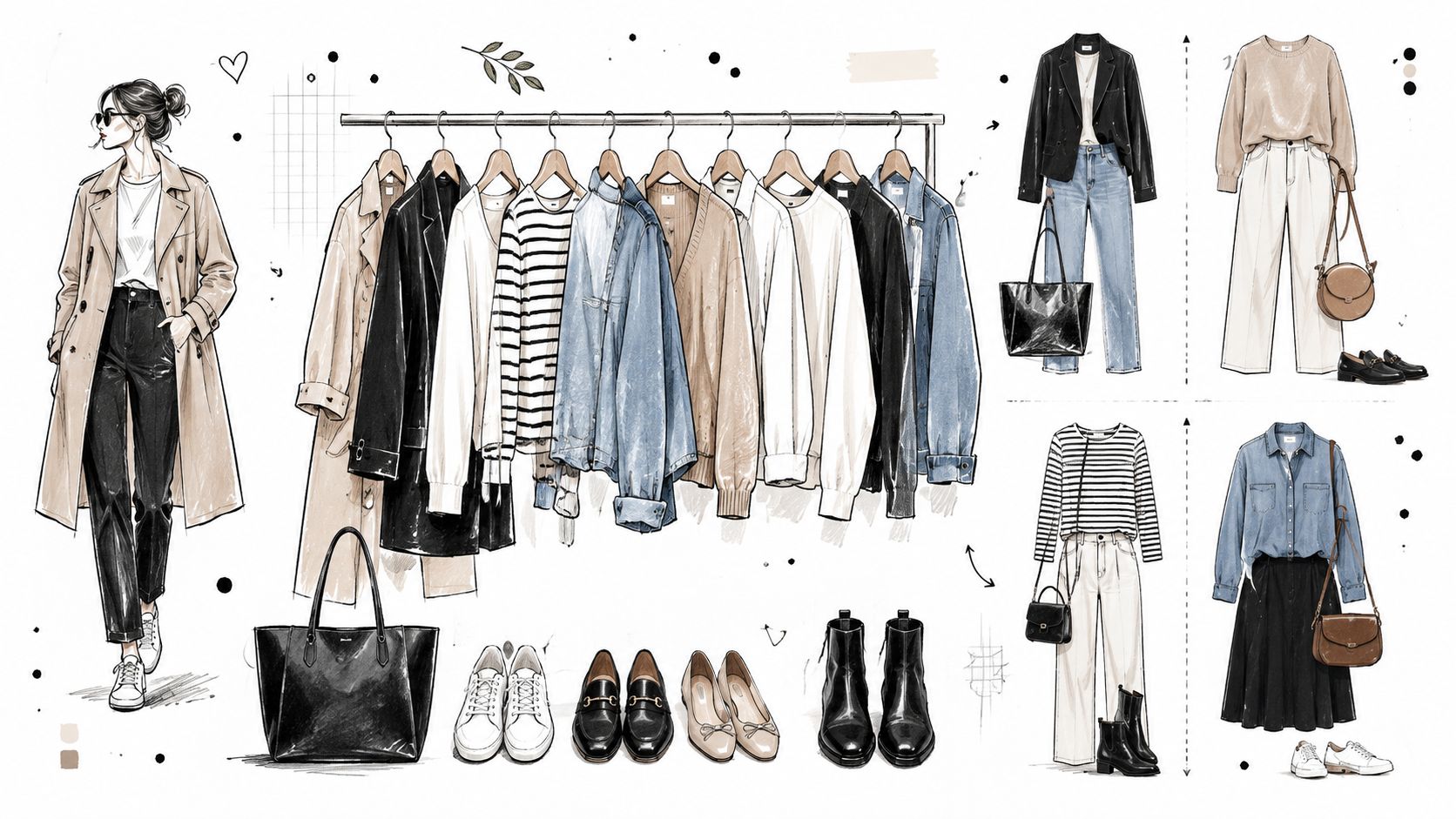
A good capsule doesn't need a giant color wall. It needs a tight color system, a repeatable motif, and enough range to move between clean basics and stronger statement pieces without looking random. That's where a focused collection like DM-FlexWear's NY Crown Crest approach makes sense, because the same visual language can run across tees, hoodies, and crewnecks without forcing you into a different style every season.
Build around repeatable colorways
Start with neutrals. Black, white, grey, and navy do the heavy lifting because they work with almost everything else in a wardrobe. Add one or two accent tones only if they improve outfit options, not because the color looks exciting in isolation.
The strongest capsule tees are the ones you can rotate under hoodies, pair with denim, or throw on with sweatpants without thinking. If you're coordinating family looks, the same motif across adult and child sizes keeps the visual thread intact without making everyone look identical in a forced way. That's especially useful when a collection spans from 6M through 3XL, because it lets one theme work across age groups.
A narrow catalog can be an advantage here. Instead of browsing endless drop after drop, you pick a color system once and keep building around it. That reduces decision fatigue and keeps the wardrobe cohesive.
Match the garment to the role
- Heavyweight tees: Best as the base layer when you want structure and cleaner drape.
- Embroidered hoodies and crewnecks: Best when you want the outfit to carry texture without loud graphics.
- Baby and toddler pieces: Best when the motif is simple, recognizable, and easy to coordinate with adult colors.
- Neutral basics: Best for the outfits that need to work on repeat.
The key is consistency, not sameness. A capsule should feel intentional whether you're dressing for errands, travel, or a family outing. When the motif, fabric weight, and colorway all line up, you get a wardrobe that feels bigger than the number of pieces suggests.
Styling Staples with NYC Fashion Week Energy
NYC gives basics a different context. During the official September 2026 NYFW window, a good tee doesn't need to compete with runway pieces, it needs to support them. That's why heavyweight unisex tees, embroidered layers, and clean neutrals do more for real-world streetwear than a pile of trend-only shirts.
A downtown outfit starts with a heavyweight tee under a crewneck, then adds a clean outer layer so the neckline and hem stay sharp. If the tee is too thin, the whole fit collapses. If the tee has better structure, the layers sit right and the outfit looks deliberate instead of thrown together.
On a colder day, an embroidered hoodie carries enough texture to read as styled without needing extra graphics. On a lighter day, a neutral tee with a strong fit gives you a blank canvas for denim, cargos, or a sharper shoe choice. That's the move I trust most, because it keeps the outfit flexible.
The best part is that you don't need constant new purchases to stay current. A capsule made of sturdy tees and coordinated layers already has enough range to feel fashion-aware, especially in a city where clean basics have always been part of the language. New York doesn't reward clutter, it rewards pieces that look right in motion.
Your Next T-Shirt Purchase Checklist
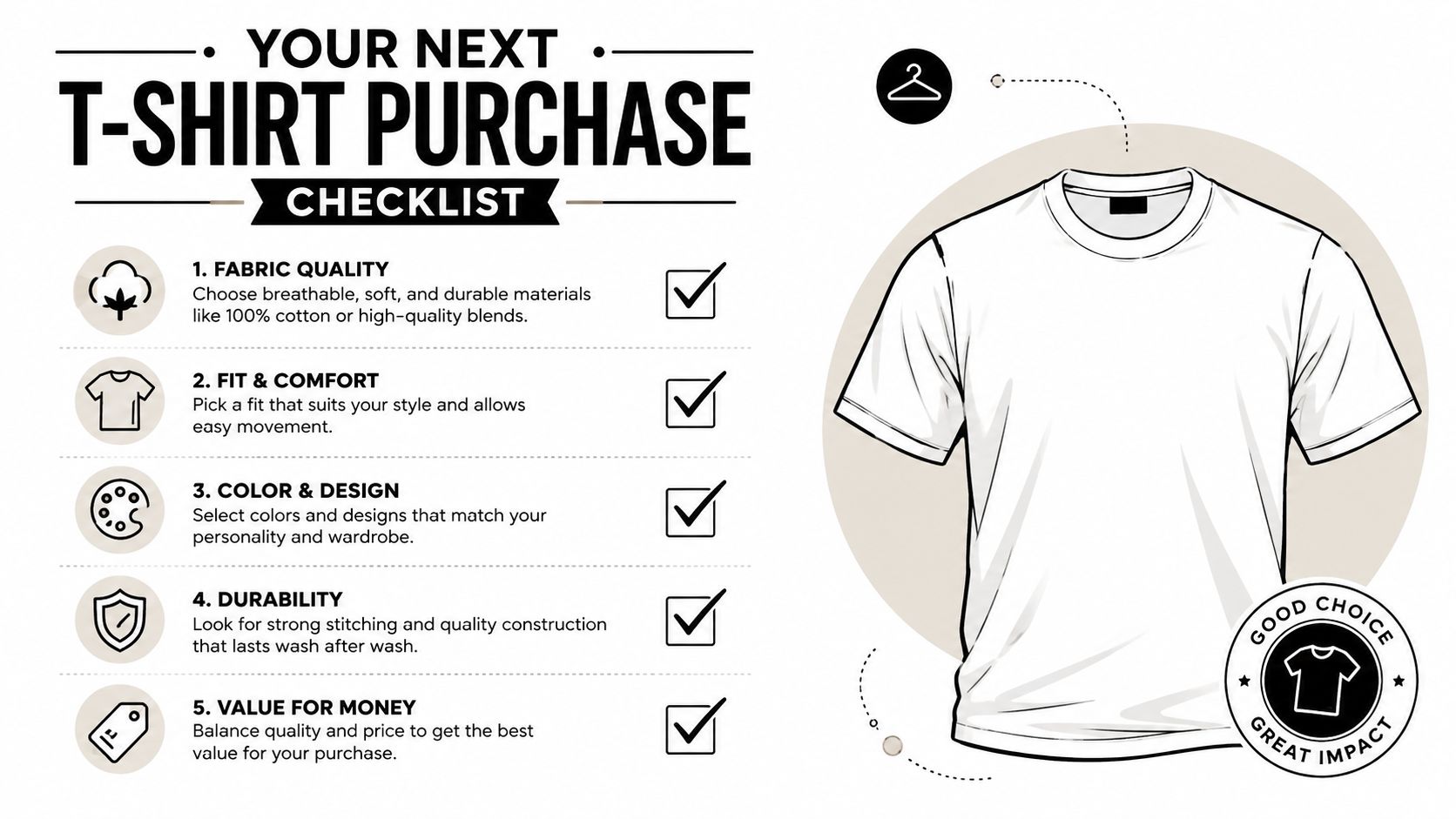
Buy fewer tees and buy them better. A capsule gets stronger when every shirt earns its spot through fabric quality, construction, fit accuracy, decoration method, and colorway flexibility. If one of those is weak, the shirt becomes the one you avoid, which is the fastest way to waste money on “deals.”
Before you check out, make sure the listing answers these questions clearly:
- What is the fabric blend? Prefer cotton-rich, better-constructed basics for everyday wear.
- Does the brand publish garment measurements? Use chest, waist, and hip data, not just the label.
- Will the decoration hold up? Choose embroidery for texture and print for a lighter graphic when that fits the use case.
- Does the color work with the rest of the wardrobe? Neutral first, accent second.
- Is the build strong enough for repeat washing? If the product copy hides construction details, skip it.
My view is simple, trend pieces are optional, staples are mandatory. If a tee isn't versatile, durable, and easy to size correctly, it doesn't belong in a capsule.
DM-Flexwear.com keeps the focus on exactly that kind of wardrobe, staple tees, hoodies, and crewnecks built around the NY Crown Crest motif, with multiple colorways and sizes for adults and kids. If you want to build a cleaner, more useful rotation around next t shirts that hold up, visit DM-Flexwear.com and start with pieces made for repeat wear.