

You're standing in front of an overstuffed drawer, pulling out tees with curled collars, stretched hems, and graphics that looked better before the last wash. You remember buying most of them because the color was right or the fabric felt soft in the store. Now you're wondering where the money went.
Your next t shirt shouldn't be another impulse purchase. The smarter choice starts with what happens after checkout: whether the fabric keeps its shape, whether the fit still works with jeans and shorts, and whether the crest or graphic survives regular wear. That logic applies to one everyday tee and to a coordinated family outfit built around the same identity.
The decision is straightforward. Check the construction weight, judge the fit shape, then inspect the decoration method. The best choice depends on your priorities, but those three filters expose most of the reasons a tee ends up in the donate pile. A coordinated infant-to-adult crest collection gives you an especially useful test, because the garments need to look connected without forcing every wearer into the same proportions.
This isn't generic style advice. You'll get clear tradeoffs, practical checks, and specific guidance for choosing a streetwear staple that still feels intentional months after purchase.
Table of Contents
- Why Your Next T Shirt Deserves More Thought Than You Think
- Getting Clear on Heavyweight Fabric and GSM
- Finding a Fit That Works for Everyday Wear
- Embroidery vs Print and Why the Decoration Matters
- Matching Colorways and Sizes Across the Family
- What Separates a Tee You Keep From One You Replace
- Shopping the NY Crown Crest Lineup With Confidence
Why Your Next T Shirt Deserves More Thought Than You Think
A tee can look perfect on day one and disappoint you later. The collar sits neatly, the color works with everything, and the fabric feels comfortable against your skin. After repeated laundering, the neckline may curl, the body may twist, or the shirt may lose the shape that made it appealing in the first place.
Most regret comes from buying on vibe alone. Softness at the rack tells you very little about how the garment will behave over time. A thin knit can feel luxurious in a fitting room yet cling to the body, turn translucent under strong light, or lose its proportions after routine washing.
Practical rule: Judge a tee by the job it has to do repeatedly, not by the first five minutes you spend wearing it.
Start with construction weight. Fabric density affects opacity, drape, stiffness, and how well the body resists deformation. Then consider fit shape, especially if the shirt uses unisex sizing or a relaxed streetwear cut. Finally, look at the decoration. A stitched crest and a surface print may create completely different aging patterns, even when they look equally sharp on the product page.
The three checks that prevent buyer's remorse
- Construction weight: Look for fabric information rather than relying on words such as premium or substantial.
- Fit shape: Compare chest room, body length, sleeve placement, and neckline tension with a tee you already like.
- Decoration method: Decide whether you want a graphic designed for a short style cycle or a mark that can handle regular wear.
This framework works for a solo purchase and for matching family pieces. Adult and child garments can share a color story and crest while still using different proportions for different bodies. That's why a coordinated infant-to-adult collection deserves the same scrutiny as a personal wardrobe upgrade.
The global market shows how common the category has become. About 22 billion T-shirts were consumed worldwide in 2024, with a market value of $85.9 billion, and projections point to 25 billion units and $105.1 billion by 2035, according to IndexBox's global T-shirt market overview. With so much choice, a clear buying filter matters more than another trend list.
Getting Clear on Heavyweight Fabric and GSM
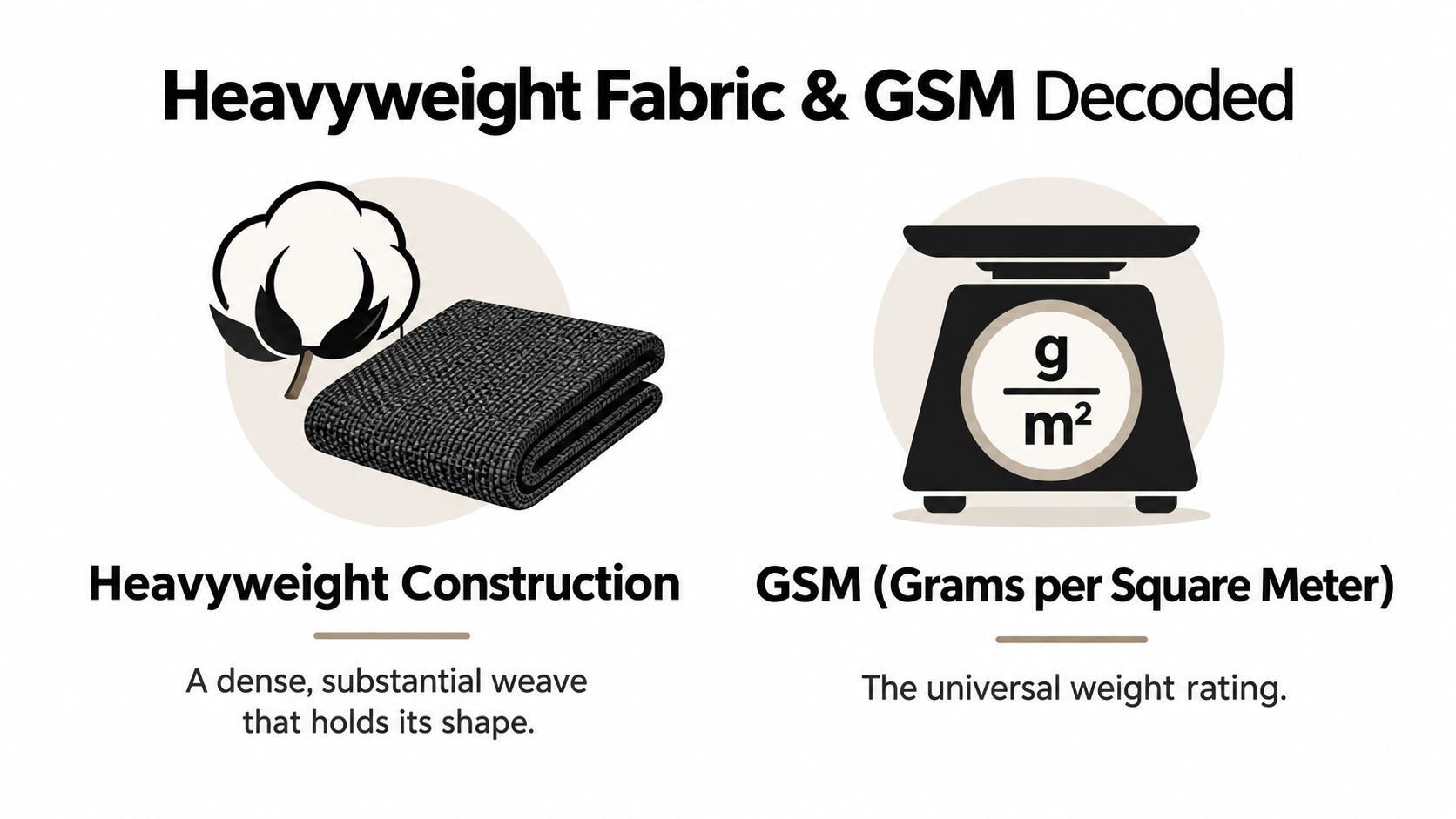
GSM means grams per square meter, a practical way to compare fabric weight across brands. It doesn't tell you everything about softness, breathability, or finishing, but it gives you a useful baseline. A tee with greater fabric mass generally feels more substantial and holds a more structured shape than a lightweight knit.
Neutral apparel guidance commonly places heavyweight tees at roughly 200 GSM and above, with premium ranges often around 220 to 280 GSM. Denser jersey fabric can increase opacity, reduce cling, and resist deformation better than lightweight knits, as explained in this heavyweight T-shirt construction guide.
What more fabric changes in real life
A heavyweight tee usually gives you a sharper fall over denim. The body won't collapse against your torso as readily, and the hem can look cleaner over relaxed trousers or joggers. That structure also helps the shirt feel less clingy, which matters if you want an easy streetwear silhouette rather than a close base layer.
The neckline is another giveaway. A denser body often pairs well with a stronger rib, so the collar can look more stable instead of folding inward. Heavier cotton can also provide more coverage under bright light, although the final result still depends on the weave, color, and finishing.
Heavier doesn't automatically mean hotter. Cotton breathability and the knit structure still matter, so judge the whole garment rather than treating GSM as a temperature rating. The tradeoff is clear, though. A substantial tee can feel stiffer at first and may retain more warmth than an airy lightweight option.
For a deeper product-focused explanation, compare the construction details in this heavyweight T-shirt resource. The useful baseline is simple: choose a denser tee when you want opacity, shape, and a stronger foundation for embroidery or layering. Choose a lighter tee when maximum airflow and a softer, less structured hand feel matter more.
Finding a Fit That Works for Everyday Wear
Fit problems rarely come from choosing the wrong aesthetic. They come from ignoring proportions. A tee can be called relaxed, oversized, or unisex, but your body still needs the right relationship between chest width, shoulder placement, sleeve length, and hem.
Unisex sizing is a practical starting point because it simplifies adult shopping and makes coordinated purchases easier. It doesn't mean every body will fit the same size. It means you can assess the garment through measurements and intended use instead of relying only on gendered labels.
Match the shape to your frame
If you've got broad shoulders, prioritize chest room without adding unnecessary body length. Excess length can make a relaxed shirt look untidy with shorts, while a comfortable upper back lets you move without pulling across the shoulder blades.
An average build usually benefits from a hem that lands around mid-zipper on a typical pair of jeans. That length gives you room to tuck or leave the tee loose without turning the garment into a tunic. Check that the sleeves end roughly halfway down the bicep if you want a balanced everyday streetwear proportion.
A lean frame can handle a cleaner shoulder line and moderate chest ease. Avoid sizing up automatically for a relaxed look, because heavyweight cotton drapes more sharply than thin jersey. One size up can read oversized fast, especially when the sleeves and hem already have extra length.
The common regrets are easy to recognize:
- Too much length: The shirt overwhelms shorts and bunches when tucked.
- Too little upper-back room: The chest may look acceptable while movement creates pulling across the shoulders.
- A loose neckline: The collar loses definition and makes the entire tee look older than it is.
Measure a tee you already wear often. Lay it flat, compare the chest and body length with the product measurements, and decide whether you want a close everyday fit or a deliberate oversized shape. Don't use your usual size as proof that another brand's cut will work.
Fit also affects decoration. A crest placed on a shirt that twists, stretches, or hangs too long won't look intentional, regardless of how well it was made. Once the shape works for your body and wardrobe, the next decision is how the logo or graphic is attached.
Embroidery vs Print and Why the Decoration Matters
Decoration isn't a minor styling detail. It determines how the shirt ages.
Screen printing places ink on top of the fabric. That can produce bold color, sharp oversized artwork, and an affordable way to experiment with a graphic. The weakness appears in high-friction areas and after repeated washing, where the surface can crack, fade, or lose its clean edge.
Embroidery uses thread that penetrates the garment structure and locks into the fabric with backing support. A stitched crest has physical dimension, and its raised texture can become part of the garment's character rather than peeling away like a failing surface layer. Technical apparel guidance reports that embroidered marks can exceed 100 wash cycles, while screen-printed plastisol commonly shows visible degradation after roughly 25 to 50 cycles, according to this embroidery and screen-print durability comparison.
Embroidery vs Screen Print at a Glance
| Factor | Embroidery | Screen Print |
|---|---|---|
| Attachment | Thread penetrates and anchors into the garment | Ink sits on the fabric surface |
| Texture | Raised, tactile finish | Flat or slightly surfaced finish |
| Aging | Can develop a worn-in patina without cracking like ink | May crack or fade with laundering and friction |
| Best use | Everyday crests, logos, and workwear-style marks | Loud graphics, detailed artwork, and shorter style cycles |
| Garment support | Benefits from stabilizers and suitable backing | Depends on ink, curing, fabric, and print placement |
Good embroidery still requires technical control. Short stitch lengths, stable tension, and appropriate stabilizers help prevent snagging, unraveling, and distortion. That matters on heavyweight tees, hoodies, and crewnecks because layering creates friction across the decorated area.
If the graphic defines the shirt, choose the method that will still define it in year two.
That doesn't make print useless. A screen-printed tee can be the right move for a loud seasonal graphic or a low-commitment style test. For an everyday staple, though, embroidery usually makes more sense because the decoration is treated as part of the garment's construction. You can compare the practical tradeoffs in this screen print versus embroidery guide.
Matching Colorways and Sizes Across the Family
Matching family outfits work best when they share an identity, not when every garment is forced into an identical cut. The NY Crown Crest lineup makes that distinction clear. The adult and child pieces can use the same embroidered crest and related color stories, while the proportions change to suit the wearer.
Start with the adult tee. The relaxed chest creates an easy streetwear shape, especially in black, off-white, or heather. Then choose the child version by color rather than assuming the adult size label translates directly. Infant and toddler garments need a different proportional balance, with shorter body lengths and age-specific shaping.
Use a garment you already trust
Lay a well-fitting tee flat and measure its chest width and body length. Compare those measurements with the adult product chart, then repeat the process with a child's current favorite shirt for the infant or toddler piece. This method beats guessing from age because children's proportions change quickly.
A practical ordering flow looks like this:
- Pick the adult piece first. Decide whether the adult wearer wants a regular relaxed fit or extra room for layering.
- Match the colorway. Black, off-white, and heather create an easy coordinated base without making every outfit look uniform.
- Check the child chart. Use the child's garment measurements and current fit as the reference point.
- Buy the set together. Confirm that the crest placement and color combination create the connection you want.
The retailer's size range runs from 6M through 4T for baby and toddler pieces, while the adult range commonly uses labels from S through 3XL, as shown in the family matching T-shirt guide. U.S. sizing systems separate labels such as 6M, 4T, S, and 3XL because age groups and body proportions require different fit references.
Don't wait if the match matters
Small-batch crest releases can sell through infant and toddler sizes before adult sizes disappear. That creates a simple planning issue for parents: if the family look depends on a specific child color, check that option before committing to the adult purchase.
The strongest combinations don't need identical colors. A black adult tee with a grey toddler version can still read as coordinated when the crest, placement, and overall visual language match. Keep the color relationship deliberate, then let each wearer have a fit that works.
What Separates a Tee You Keep From One You Replace
The first-fit test is useful, but it's not the smartest final test. A tee earns its place by surviving wash cycles while keeping the details that made you buy it. Ask what the shirt will look like in month six, not only how it looks under store lighting.
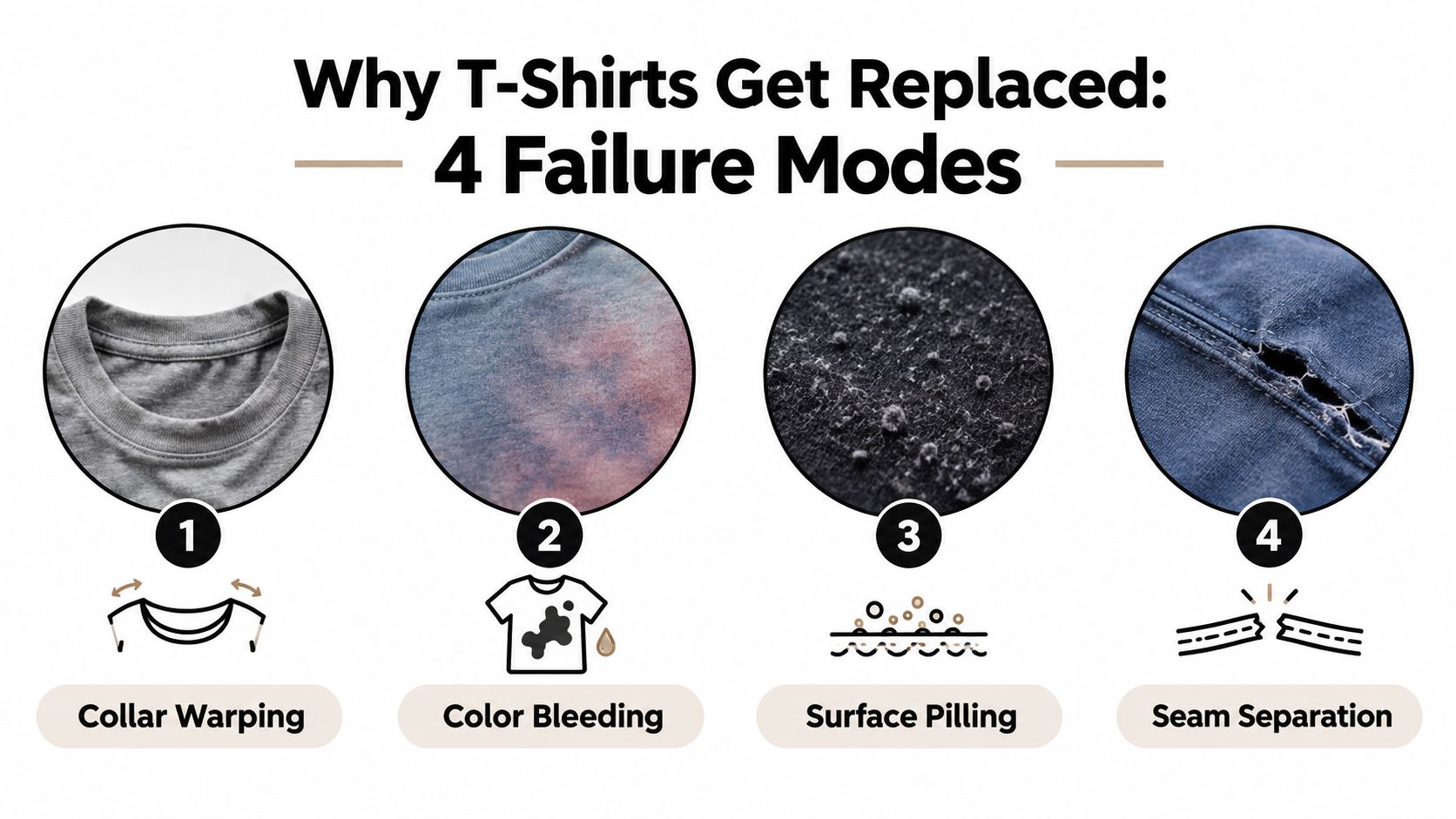
Four problems send everyday tees toward replacement:
- Collar warping: Thin or weak ribbing can curl, stretch, or fold inward.
- Side-seam twist: Poor stability or finishing can make the body rotate after washing.
- Graphic cracking: Surface decoration can fracture when ink loses flexibility.
- Pilling: Friction can raise fibers on the fabric or printed face, making the shirt look tired.
Inspect the choices behind the failure
Heavier GSM can give the body more resistance to deformation. A taped or reinforced neckline can help the collar keep its edge. Twin-needle stitching supports high-stress seams, while embroidery avoids the cracking pattern associated with surface-applied ink.
Care still matters. 100% cotton tees are especially prone to shrinkage, and cold-water washing with low- or no-heat drying can materially reduce that risk, according to the T-shirt care and buyer questionnaire reference. Follow the garment's care label, avoid unnecessary high heat, and don't treat laundering as an afterthought.
The cost-per-wear argument only works when the prices and wear counts are real for your purchase. A more expensive heavyweight tee can be the better value if you wear it regularly and it stays presentable, but don't assume price alone proves durability. Check the construction, decoration, care instructions, and fit together.
The NY Crown Crest tee's appeal rests on that combination of heavyweight construction, pre-shrunk cotton treatment, and an embroidered crest. Those choices target the exact problems that make staple tees disposable. You're not buying a promise of perfection. You're choosing a garment designed around shape retention and a decoration method that can handle regular use.
See the decision in motion before you buy:
The better checkout question is simple: will this still look good in month six?
Shopping the NY Crown Crest Lineup With Confidence
The NY Crown Crest collection works because the identity stays restrained. The crown-and-text mark reads as a low-key New York reference rather than a loud all-over graphic, which gives the tee room to work with denim, cargos, shorts, and layered outerwear.
New York Fashion Week provides a clean cultural anchor for that visual language. The official September 2026 calendar ran from Thursday, September 10 through Tuesday, September 15, 2026, and the CFDA positioned the event as a spotlight on American fashion on the global stage, according to USA Today's NYFW calendar coverage. The official schedule opened with Henry Zankov's debut as artistic director for Diane von Furstenberg and closed with Thom Browne, showing the mix of legacy names and new creative direction noted by the CFDA's September 2026 schedule.
Start with the anchor piece
The NY Crown Crest Embroidered Heavyweight T-Shirt is the obvious first choice for an adult wardrobe. Check the heavyweight cotton construction, relaxed unisex shape, and embroidered crest against the criteria that matter after purchase. Pick the color that will earn repeat wear, not merely the one that looks most dramatic in a product image.
For a family set, map the adult color to the infant or toddler tee. The child version should preserve the crest connection while respecting the wearer's proportions. Matching doesn't mean cloning the fit. It means creating a visual relationship that still looks natural when everyone moves, plays, and layers differently.
Rack-side verdict: Choose the adult tee that works with your real rotation, then build the family color match around it.
Run this pre-checkout list
- Confirm the GSM range: Look for heavyweight construction rather than relying on vague premium language.
- Check the shoulder seam: It should sit where the intended fit expects it, not fall awkwardly down the arm.
- Inspect the embroidery: Look for clean thread coverage, stable edges, and a crest that sits smoothly on the fabric.
- Match the child size by measurements: Use the kid's existing tee and the product chart instead of guessing from age.
- Coordinate the colors: Black, off-white, heather, and related neutrals make the crest connection easy to style.
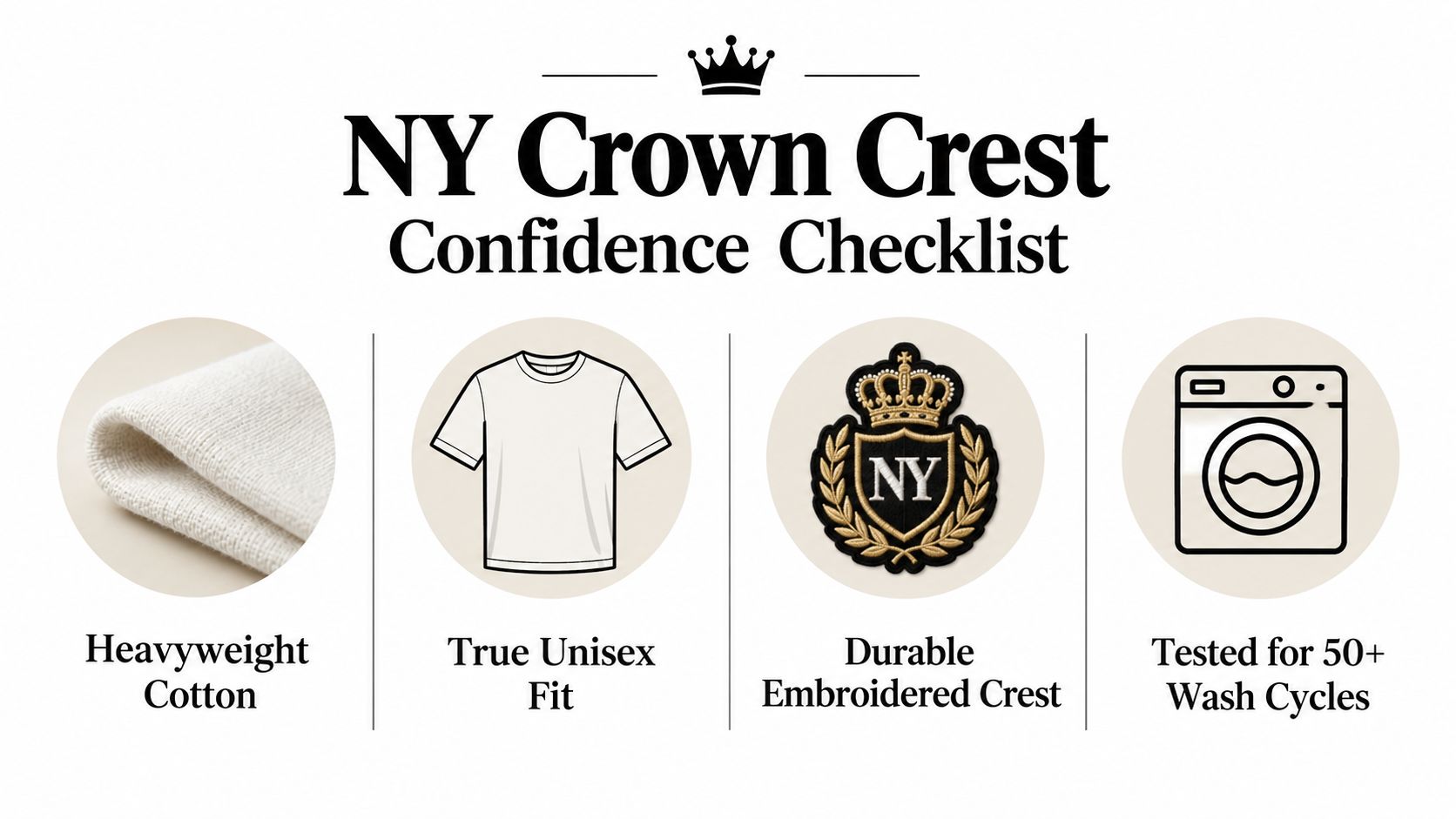
The NYFW framework adds context, but the garment still has to work on an ordinary day. Choose the tee that combines structured cotton, a useful unisex fit, a durable embroidered crest, and a color you'll reach for. That's the next t shirt worth buying.
DM-Flexwear.com offers focused NY Crown Crest staples, including heavyweight tees, embroidered hoodies, crewnecks, and coordinated baby-to-adult colorways. Visit DM-Flexwear.com to compare the collection, check sizing, and choose your next everyday tee with wash durability and family matching in mind.