

You've got the hoodie on, the mirror looks fine, and then the day happens. By noon the sleeves are swallowing your hands, the hem's fighting your jacket, and what looked intentional at home reads like you borrowed someone else's laundry. That's the difference between oversized hoodies that look sharp in the street and ones that collapse into a mess, and the fix starts with fit, not the tag size.
Table of Contents
- Why Most Oversized Hoodies Look Sloppy Before Noon
- Engineered Oversized Fit vs Simply Sized Up
- How to Choose Your Size Without Guesswork
- Three Ways to Style Them on NYC Streets
- Fabric Weight and Embroidery That Holds Up
- When to Skip the Oversized Look
- Quick Answers Before You Buy
Why Most Oversized Hoodies Look Sloppy Before Noon
The bad version starts the second you size up a regular hoodie and call it oversized. It might feel comfortable in the mirror, but once you hit the street, the shape falls apart. Brands treat oversized hoodies as core product now, because the fit has to be built in from the start.
The shape breaks first
A real oversized hoodie holds its line through the shoulders, chest, and hem. The shoulder seam should drop with purpose, not drift halfway down the arm. The body needs room, but it should still read as streetwear, not a blanket with cuffs.
That sloppy look gets worse as the day goes on. Fabric stretches at the elbows, the hem gets trapped under outerwear, and every movement pushes the hoodie further off balance. On New York streets, that reads unfinished fast.
Why the tag is the wrong clue
The size label tells you almost nothing about silhouette. Shoulder drop, chest ease, and body length tell you what matters. A hoodie can be technically large and still sit clean if the pattern was designed for volume. A regular hoodie that's been upsized often balloons in the wrong places.
Practical rule: If the hoodie feels roomy and still keeps the shoulder line, it's working. If the sleeves eat your hands and the hem keeps bunching, that hoodie is simply too big, not oversized.
The market has made room for better versions of this fit. Oversized apparel reached a global value of USD 130.18 billion in 2025 and is projected to rise to USD 221.22 billion by 2034, with a 6.20% CAGR from 2026 to 2034 according to the oversized-apparel market data in the brief. That scale explains why brands stopped treating roomier hoodies like a niche joke and started building them as core product.
Engineered Oversized Fit vs Simply Sized Up
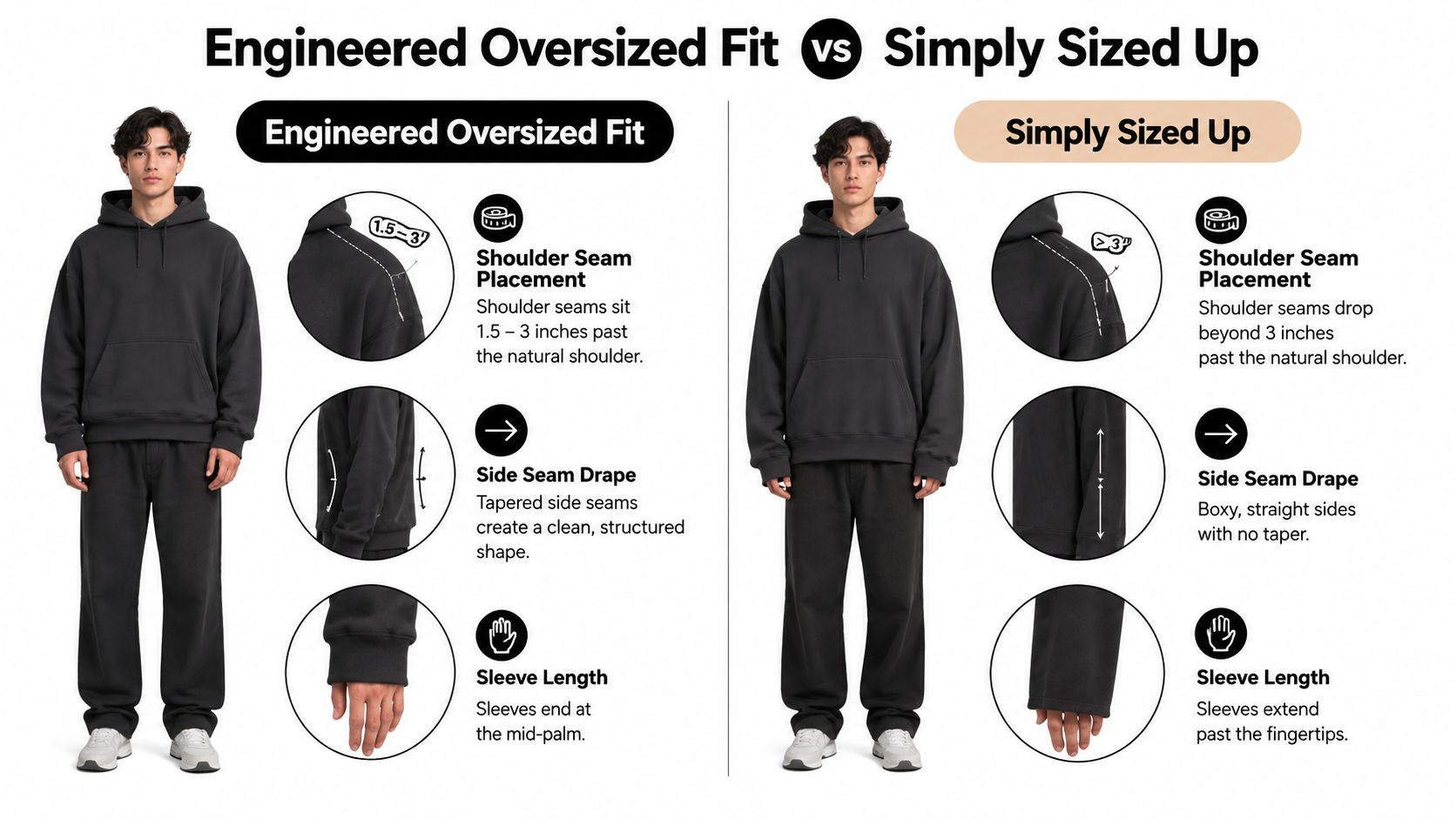
An engineered oversized hoodie and a hoodie you just sized up are not the same garment. One is drafted to place volume where it reads clean on the body. The other just gets bigger and hopes the proportions sort themselves out.
What the good one does
A proper oversized build keeps the shoulder line controlled, with a drop that sits just past the natural shoulder, and a boxy body that still holds shape. The goal is room without drag. Heavier fabric helps too, because a hoodie that starts with real weight keeps its line better on the street than a thin one that collapses after an hour on the train.
The proportion is the whole point. A real oversized hoodie opens up the chest, keeps the sleeves in check, and still looks intentional from every angle. If the volume reads clean while the body stays structured, you're looking at an actual design choice.
What the sized-up one does wrong
A regular hoodie that's only sized up gives itself away fast. The shoulder seam drops too far, the sleeves run long, and the body hangs with no shape. In NYC, that reads lazy, especially once you layer it under a jacket or move through a full day.
The grading is where the difference really shows. Good oversized patterns scale the body and shoulder together so the silhouette stays boxy. A basic upsized hoodie often just stretches longer and wider in a way that makes the whole thing feel off. The result is extra fabric without better fit, which is the exact mistake you see on the street when someone buys one size up and calls it oversized.
An engineered cut also keeps the hoodie working in motion. Raise your arms, sit down, grab a coffee, and the shape should still hold. If the hem bunches hard or the sleeves take over your hands, the fit is doing too much. If it stays balanced, it belongs in your rotation.
How to Choose Your Size Without Guesswork
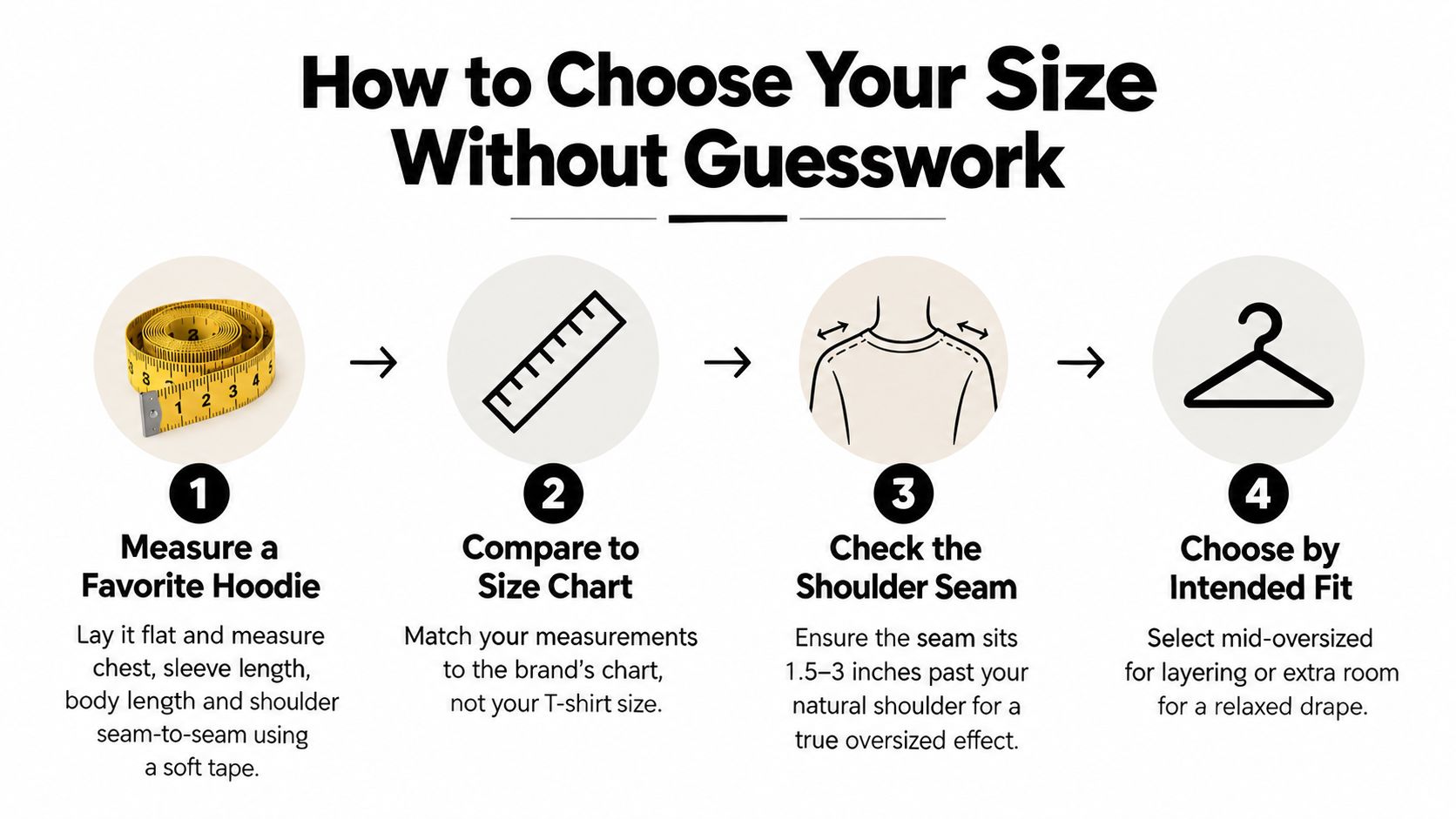
Stop buying oversized hoodies by vibe alone. Vibe matters, but measurements decide whether you look styled or swallowed. If you want the fit to work on your body, start with one hoodie you already like and measure it flat on a table.
Measure chest, body length, shoulder seam-to-seam, and sleeve length with a soft tape. Then match those numbers to the brand's actual size chart, not the letter on the label. That's the only way to know if you're buying a real oversized cut or a standard hoodie with a marketing adjective attached.
What to check before you click buy
Read the product photo like you'd read a fit check on the train. A hoodie with visible structure in the chest and sleeves usually signals a heavier build. Limp drape is a warning sign if you want the boxy streetwear shape.
Then look at model notes. Height and weight help, but only if you translate them to your own frame instead of copying the size blindly. Review photos matter too, especially when they show the hoodie on different body types and different heights.
Use the return policy as part of the decision, not a backup plan. If a brand makes it easy to exchange, you can be more exact about fit. If it's a pain to return, you need to get the measurements right the first time.
Here's the straight rule: if you're between two sizes, choose the one whose chest flat matches your body best, even if the sleeves look a little long. Long sleeves can be cuffed. Bad shoulders can't be fixed.
For a more detailed breakdown of broad, unisex fit logic, DM-Flexwear's own sizing guide on unisex sweatshirt sizing is worth checking before you order.
Three Ways to Style Them on NYC Streets
The right oversized hoodie doesn't need much help, but it does need a frame. In New York, the move is to let the hoodie do one job and let the rest of the outfit keep the line clean. That's how you get streetwear energy without looking like you gave up on the rest of the look.
Coffee run
Go with a heavyweight oversized hoodie in charcoal or bone, half-tucked into wide-leg cargo pants, with beat-up Dunks and a crossbody bag sitting at the hip. The half-tuck breaks the block of fabric so the hoodie doesn't flatten your whole shape.
That works because the bottoms keep the volume balanced. You're not trying to hide the hoodie, you're controlling it.
Layered under a coat
A wool overcoat changes everything. Tuck the hoodie hem a little, keep your hands in the coat pockets, and wear straight-leg jeans cropped above the boot. Skip loud logos here, because the coat needs the structure and the hoodie needs to stay quiet underneath.
This is the cleanest winter move in the city because it looks intentional from block to block. The hoodie gives you softness, the coat gives you shape, and the jeans keep the line from getting bulky.
Casual office
If the office is relaxed, wear a solid black oversized hoodie over a ribbed mock neck with pleated trousers and clean loafers. Pull your hair back if you can. That mix keeps the hoodie from reading like weekend wear and pushes it toward polished casual.
DM-FlexWear's casual streetwear angle makes sense here too, because the brand's hoodies and crewnecks already sit in that same everyday lane. The point isn't to dress the hoodie up into something it isn't. The point is to keep the rest of the outfit disciplined enough that the hoodie can stay the star.
Fabric Weight and Embroidery That Holds Up
Fabric weight is where a lot of oversized hoodies lose the plot. If the knit is too light, the shape collapses fast. If it has real heft, the hoodie keeps its box, hangs off the shoulder cleanly, and reads like a deliberate streetwear piece instead of something you threw on for the couch.
Heavyweight construction gives the silhouette authority. Midweight fabric softens up sooner and starts losing its line after repeated wear. If you want a hoodie that keeps that street-ready frame on New York sidewalks, go heavier and choose a hood that stands up instead of folding in on itself. For a good reference point on premium hoodie construction, see DM-FlexWear's premium hoodies guide.
Construction that holds up
The small details do the work. A double-layer hood keeps the top half from collapsing, and ribbed cuffs that bounce back help the sleeves stay put after a long day outside. You notice that in motion, not in a mirror.
| Build Detail | Heavyweight (400+ GSM) | Midweight (280–350 GSM) |
|---|---|---|
| Silhouette | Holds a boxy oversized shape | Tends to soften and sag |
| Drape | Drops cleanly from the shoulder | More likely to slump |
| Hood | Better structure | Can feel thin or floppy |
| Cuffs | Usually firmer and more stable | More prone to stretching |
| Streetwear look | Sharper and more controlled | More casual, less defined |
Decoration that survives wear
Embroidery beats a lot of printed decoration because the threads sit on top of the fabric instead of sinking into it. In plain terms, embroidered logos usually outlast prints by a wide margin, while printed graphics tend to wear down sooner with regular washing and heavy street use.
That matters if you want the hoodie to stay clean after the wash cycle, not just look good on day one. For a branded staple, embroidery gives the piece a tougher, more permanent feel. DM-Flexwear's embroidered hoodies fit that lane well because the textured crest treatment makes the garment read like a real staple, not a throwaway graphic.
When to Skip the Oversized Look
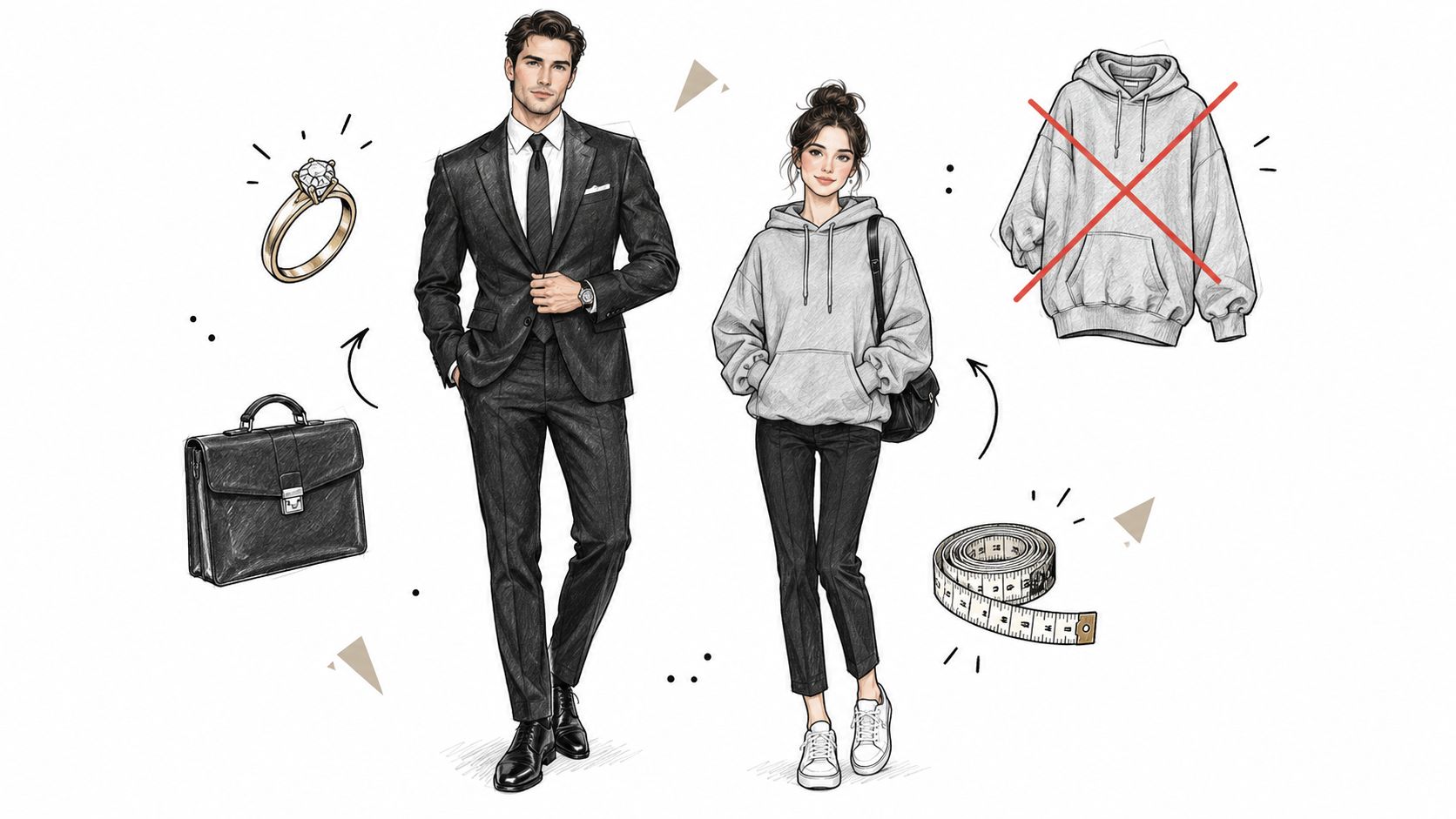
Bigger only works when the outfit can carry it. A wedding, a job interview, or any formal room that calls for clean lines is the wrong place for a hoodie that takes over the whole look.
Read the room and your frame
Petites under 5'4" need to be careful here. A standard oversized drop can sit too far past the hip and make the leg line look shorter. The fix is simple, use a controlled cut, a shorter body, cleaner bottoms, and less extra volume through the torso.
On NYC sidewalks, the mid-oversized shape keeps winning because controlled volume reads as considered. That is the difference between an engineered oversized fit and just sizing up. One is built to hold shape, the other usually looks borrowed.
A hoodie that swallows your frame looks like you are hiding in it.
If the room needs polish, wear structure. If the street needs ease, wear volume. Keep those jobs separate.
That is why mid-oversized still works hardest. It gives you room without letting the outfit disappear, and on the street that balance always looks sharper than a tent of fabric.
Quick Answers Before You Buy
The cleanest oversized hoodie fit is simple. Choose engineered oversized over random sizing up, check shoulder drop and chest ease, and favor mid-oversized shapes when you want the sharpest street read. Before you commit, look at fabric weight, embroidery quality, and the care label, because the hoodie only stays good if the construction does.
How should oversized hoodies fit at the shoulders
The shoulder seam should drop past your natural shoulder, but not drown the arm. For a true oversized look, aim for a controlled drop rather than a dramatic slide down the bicep. If the seam is hanging far into the upper arm, it's probably too much.
Should women size up in women's cuts
Only if the cut is built that way. A women's hoodie that's already designed with room doesn't need a blind size jump, and that's where people get the fit wrong. Check the flat measurements first, then decide if you want a cleaner mid-oversized look or a looser drape.
Do unisex hoodies run large
Usually, yes, but the answer depends on the brand's pattern. Unisex sizing can work beautifully for oversized hoodies because it often gives you a roomier body and straighter silhouette. Still, the measurements matter more than the label.
How do you shrink a hoodie that ran too big
Wash it warm and dry it with heat if the care label allows it, then check the fit again before repeating anything aggressive. Don't assume every hoodie will shrink the same way, because fabric blends behave differently. If the piece is way off, tailoring or exchange beats gambling on the dryer.
Do oversized hoodies work on shorter frames
Yes, if you stop the silhouette from swallowing you. Shorter frames usually look better with cropped lengths, cleaner bottoms, and less pile-up at the hem. The hoodie should frame you, not erase your legs.
What about DM-FlexWear
If you want a New York-branded hoodie with an embroidered crest, DM-FlexWear.com keeps that lane tight and simple with hoodies, crewnecks, and tees in multiple colorways and adult sizes. Start with the fit, then browse the core pieces at DM-FlexWear.com, because the right oversized hoodie only works when the cut, fabric, and styling all line up.