

You're standing in front of the closet with one hand on a shirt that has to do a lot. It needs to work by itself, hold up under a jacket, and still look clean when the temperature swings from train platform to corner coffee run. That's exactly where unisex long sleeve shirts earn their keep, they're the kind of staple that can carry a weekday fit without making you overthink the whole outfit.
In NYC, that matters. Streetwear isn't just about graphics or hype, it's about pieces that move with your life, your layers, and your commute. A good long sleeve sits in that lane naturally, especially when the cut is right and the fabric has enough substance to look intentional. For a brand like DM-FlexWear, that logic lines up with the bigger idea behind everyday staples, simple silhouettes, clear identity, no waste. For a broader streetwear lens, the vibe sits close to DM-FlexWear's casual streetwear perspective, where one piece has to do real work.
Table of Contents
- Introduction Why Unisex Long Sleeve Shirts Belong in Every Rotation
- What Makes a Shirt Unisex Understanding the Cut
- Fabric and Weight Choices That Change How Your Shirt Feels
- Finding Your Fit Without Guessing Measurements That Matter
- How to Style Unisex Long Sleeve Shirts From Base Layer to Statement
- Choosing Your Go-To Shirt and Building a Lasting Rotation
Introduction Why Unisex Long Sleeve Shirts Belong in Every Rotation
A shirt like this solves the same problem for a student, a creator, and a parent. You want one top that doesn't need a full styling session to look right, and you want it to work across seasons without feeling flimsy or dated. That's why unisex long sleeve shirts keep showing up in real wardrobes, they're not a one-off trend piece, they're a repeat player.
The market backs that up. The global long sleeve shirt market is projected to grow from USD 13.77 billion in 2025 to USD 20.47 billion by 2031, with a 6.83% CAGR over 2026 to 2031 according to the cited market reference, and online is identified as the fastest-growing segment, with North America as the largest market. The U.S. market alone is estimated at USD 3.6 billion in 2024, while China is forecast to reach USD 3.4 billion by 2030 in the same reference, which shows the category has serious staying power, not just seasonal buzz. Market reference on long sleeve shirt growth and regional size
Why this silhouette keeps winning
The long sleeve silhouette works because it sits in the middle. It gives you more coverage than a tee, less commitment than a hoodie, and more styling range than many give it credit for. In streetwear terms, that middle ground is gold.
Practical rule: if a shirt can only work one way, it's a weak purchase. If it can go solo, layered, and under outerwear, it earns rack space.
That's the lens here. The point isn't to romanticize basics, it's to make the cut, weight, and sizing logic click so you can buy once and wear often.
What Makes a Shirt Unisex Understanding the Cut
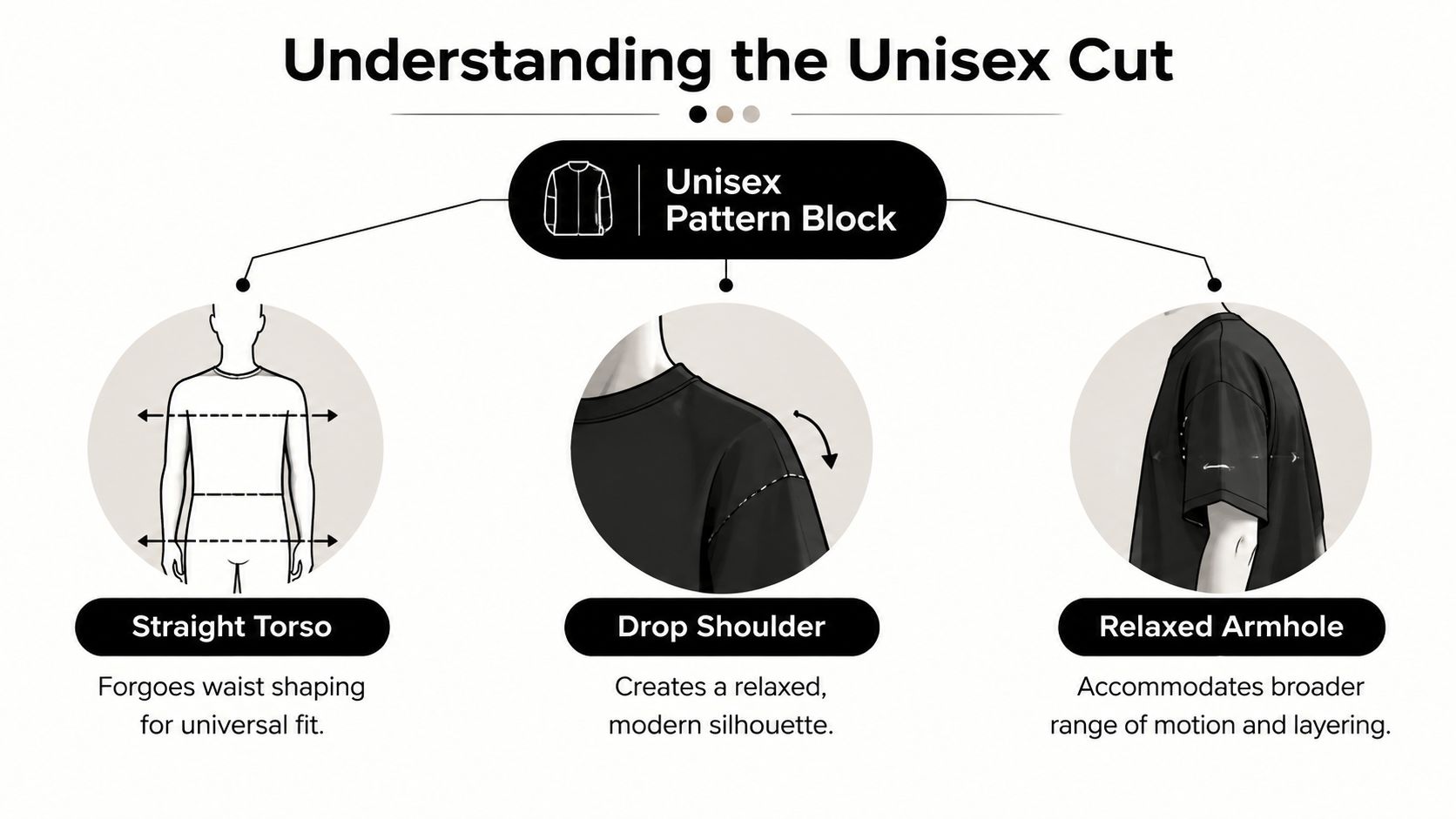
A true unisex cut usually starts from one straight pattern block, often built off a men's fit structure, instead of separate male and female blocks. That means the shirt is not shaped around waist definition the way a women's top often is. You get a cleaner torso line, a more neutral shoulder, and more room through the body. On different bodies, that same shape can read easy, boxy, or relaxed. Charles River Apparel fit guide
A straight blueprint versus two different molds. A gendered pattern shapes the body before you even put it on. A unisex pattern gives you a simpler frame, then lets length, drape, and sleeve balance do the styling work. That is why chest shaping matters less here than how the garment falls off the shoulder and where it lands at the wrist and hem.
Why the shoulder line matters more than people think
If the shoulder seam sits too far in, the shirt feels tight and fussy. If it drops a little, the fit reads more relaxed and street-ready. That is why unisex long sleeve shirts work well for group orders, family sets, and coordinated basics, the shape stays steady even when the wearer changes.
Sizing still needs attention. The same fit guide notes that women often size down 1 to 2 sizes to get a true-to-size feel in this style family, and adult unisex charts commonly move in 2 to 4 inch chest increments across sizes, with examples running from roughly 31 to 34 inches at XS to 50 to 53 inches at 2XL. A separate published chart shows adult unisex sizing reaching 3XL, with chest ranges from 32 to 34 inches at XS to 53 to 56 inches at 3XL. Charles River Apparel fit guide Silverts unisex clothing chart
A unisex shirt does not fit everyone the same way. It gives everyone the same starting shape, then sizing and length do the rest.
For streetwear buyers, that is the useful part. A straight torso and drop shoulder create the block, while sleeve length decides whether the shirt feels clean under a jacket or relaxed on its own. That is why a shirt like DM-FlexWear can make sense in rotation, the cut has to work like a base layer, not just look good on a hanger.
Fabric and Weight Choices That Change How Your Shirt Feels
The cut gets you into the conversation. Fabric weight decides whether the shirt feels crisp, drapey, airy, or built like it can take a beating. That's the part a lot of shoppers skip, then wonder why one long sleeve looks sharp solo while another only works under layers.
The main fabric choices in plain language
Midweight cotton is the everyday lane. It breathes, it holds shape without feeling stiff, and it's the safest pick if you want one shirt that can do a little bit of everything. Heavyweight cotton feels more substantial, gives the shirt structure, and usually reads better when you want the garment to stand on its own instead of disappearing under a jacket. Cotton-poly blends are the low-fuss option, they're easier to care for and less likely to shrink dramatically, which makes them practical for regular rotation. Textured knits add visual depth, softer drape, and a more seasonal feel when you want the shirt to look deliberate, not basic. DM-FlexWear's fabric discussion for shirts
For layering, weight matters as much as color. A lighter shirt can sit under a hoodie without building bulk at the shoulders. A heavier one works better when you want the sleeve to keep its shape after you push it up, stack it under a vest, or wear it as the main layer on a cold day. That's the difference between a shirt that vanishes and a shirt that frames the outfit.
Embroidery changes the whole read
Embroidery is a different lane from surface print because the stitched design becomes part of the garment structure. A garment-care source notes that embroidered designs can last for many years, often for the lifetime of the garment, which is why embroidered hoodies and crewnecks feel more durable as streetwear pieces. Embroidery durability guide
When you want the detail to feel built in, embroidery wins. It adds texture without making the shirt look loud, and that texture plays well with heavyweight fabric, especially in a city wardrobe where one piece has to survive real wear.
Finding Your Fit Without Guessing Measurements That Matter
A long sleeve can look right on the rack and still miss on body. Sizing labels help, but chest, sleeve length, and body length tell you much more than S, M, or L ever will, especially with unisex shirts built from a straighter block. If you know your own measurements, you buy with intent instead of guessing.
Retail sizing guides usually measure sleeve length from the center back neck across the shoulder to the wrist, and unisex long sleeve charts often move sleeve length by about 1 to 2 inches per size step. One benchmark chart lists S at 24 to 24.5 inches, M at 24.5 to 25 inches, L at 25 to 25.5 inches, and XL at 25.5 to 26 inches. Body length rises from about 28 to 28.5 inches to 31 to 31.5 inches. That's why a shirt can fit the chest and still feel off if the sleeves sit short or the hem lands too high. Terry Fox Schools sizing chart
Unisex Long Sleeve Shirt Fit by Measurement
| Measurement | Size Range to Check | Streetwear Fit Notes | Clean Solo Fit Notes |
|---|---|---|---|
| Chest | 31 to 34 in (XS) to 50 to 53 in (2XL) | Add room if you layer over a tee or tank | Keep closer to your chest if you want less drape |
| Sleeve length | 24 to 24.5 in (S) to 25.5 to 26 in (XL) | Longer sleeves read better when you push them up or stack layers | Match the sleeve to your wrist so it does not ride short |
| Body length | 28 to 28.5 in to 31 to 31.5 in | A longer body helps the shirt hang over tees without flashing skin | A shorter hem can look sharper when the shirt stands alone |
If you want a reference point for how unisex sizing works in practice, see DM-FlexWear's unisex sweatshirt sizing guide. The logic is the same: check the chart, then compare it to how you wear the piece.
A shirt can be technically correct and still feel wrong on a tall frame if the body is too short. It can also look swallowed on a smaller frame if the shoulder width and sleeve length outrun the body. That is why body diversity matters here, not just style. A 2026 garment manufacturing trends overview from clothingmanufacturer.us notes that unisex blocks still leave buyers with unanswered questions about shoulder width and sleeve length. Fashion guidance on unisex fit gaps
Use the chart, then check the shoulder and hem. That is the cleanest way to buy a shirt that works in motion, the way a good NYC layer should.
How to Style Unisex Long Sleeve Shirts From Base Layer to Statement
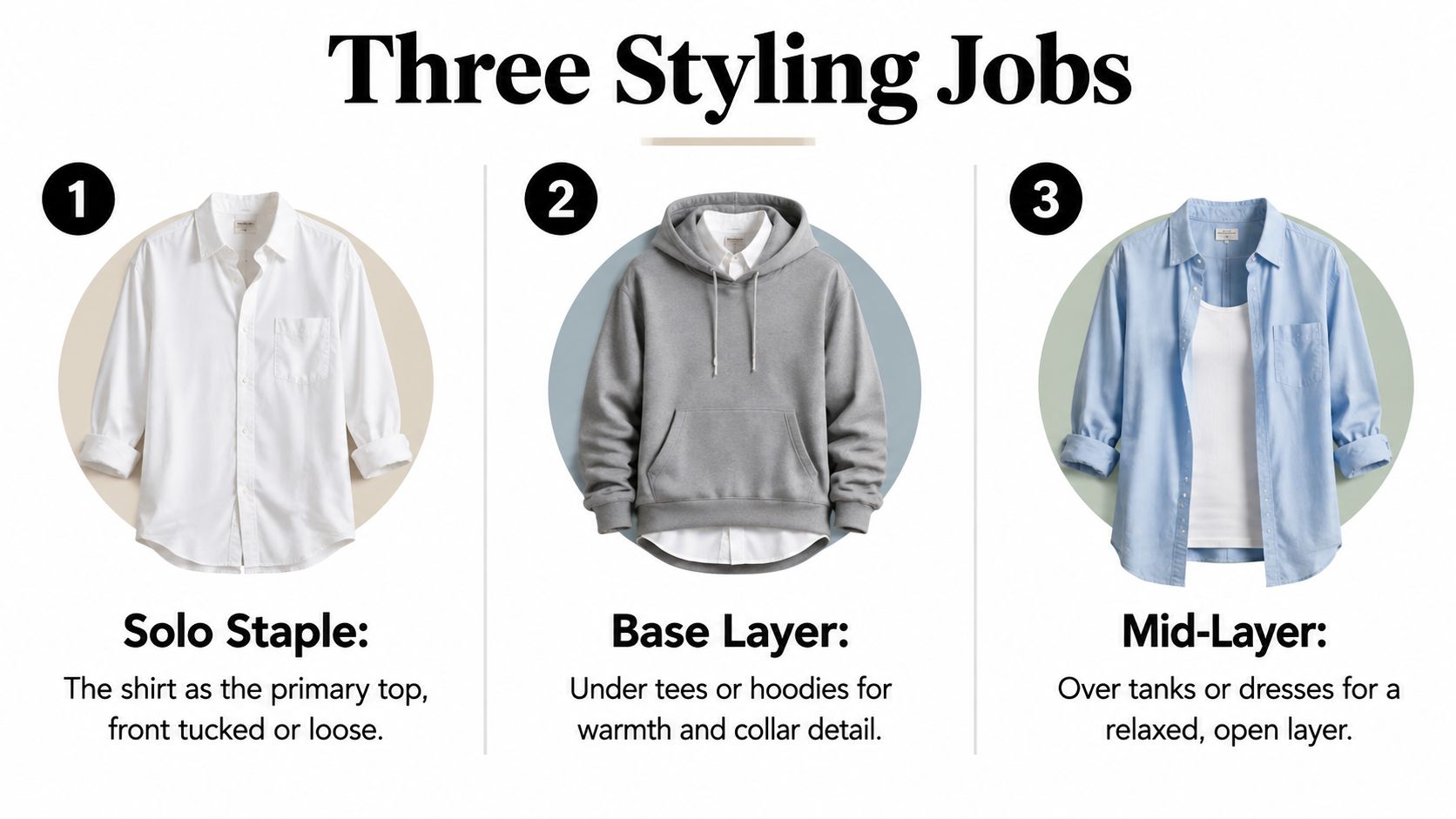
A long sleeve is not just a shirt. In NYC, it can be the base under a hoodie, the mid-layer over a tank, or the whole statement when the rest of the outfit is quiet. That flexibility is why this piece keeps showing up in streetwear, especially as layering and stacked textures stay central in 2025 and 2026 fashion coverage. W Magazine layered tee styling coverage
Three jobs, three different buys
If you're wearing it solo, look for a cleaner hem, enough body length to sit straight, and a fabric that keeps its shape without collapsing. If you're using it as a base layer, go lighter, keep the sleeves smooth, and avoid a body that's too thick under another top. If you want it as a mid-layer, choose a shirt with enough room through the torso and sleeve to sit over a tank or under a shirt-jacket without bunching.
Muted tones help layered fits feel controlled. Black, grey, white, navy, and soft earth tones give you more mileage because they don't fight with outerwear. Structured fabric also matters, because a shirt that's too limp disappears into the stack, while one with a little body gives the whole outfit shape. That's where the shirt starts acting like architecture, not just cloth.
Proportion rules that keep the fit clean
New York styling loves tension. A relaxed long sleeve under a sharper jacket, or a slightly oversized shirt under a cropped outer layer, gives the outfit shape. New York Fashion Week is a real calendar anchor for that kind of styling energy, and the official NYFW schedule tied to the CFDA includes screenings at the Rink and Channel Gardens from September 11 through September 16, 2025. Official NYFW page
For New York-themed crests or embroidered details, let the shirt breathe. If the graphic or chest detail is the focus, don't bury it under too many layers. If the look is about texture, stack with purpose and keep the palette tight. That's how a simple long sleeve starts reading like a styled piece instead of a fallback.
Choosing Your Go-To Shirt and Building a Lasting Rotation
Start with one shirt that handles the most ground. If you need it for daily wear, choose a midweight or structured fabric, a chest fit that leaves a little room, and sleeves that don't cut short when you reach forward. If you know you'll layer hard, lean into a slightly longer body and more room in the sleeve, because that's where comfort shows up once the outfit is moving.
Then build the rotation by function, not impulse. One light neutral for under layers. One heavier version for solo wear. One darker color that works when you want the outfit to feel sharper. That's the same logic behind a focused basics lineup like DM-FlexWear's NY Crown Crest pieces, where tees, hoodies, and crewnecks keep the identity consistent while colorways and sizes stay easy to manage.
A quick buy checklist
- Check the chest first: match the size chart to your real measurement, not the label you usually grab.
- Check the sleeve second: make sure reach and wrist coverage feel right when your arms move.
- Check the body length: decide whether you want a clean solo hang or a longer layer-friendly fit.
- Check the fabric weight: lighter for easier layering, heavier for shape and structure.
- Check the finish: embroidery, knit texture, or a clean plain surface changes how the shirt reads.
If you want a shirt that earns repeat wear, buy the one that fits your body and your layering habit, not just the one that looks good on the hanger. That's the streetwear move. It's practical, it's sharp, and it saves you from a closet full of almost-right basics.
If you want a sharper way to build your rotation, visit DM-FlexWear.com and look at how the NY Crown Crest staples handle tees, hoodies, and crewnecks across colorways and sizes. The lineup is built for coordinated, everyday wear, which makes it a clean reference point for anyone choosing unisex long sleeve shirts with real fit and layering intent.