

You're outside a downtown drop with a hoodie over your tee, and the outfit already feels wrong. The shirt bunches under the layer, the graphic looks soft, and the collar has started folding before you've even reached the subway. That isn't just a fit problem. The fabric is controlling the entire silhouette.
The best fabrics for T-shirts depend on where you'll wear them, how you'll layer them, what you'll print on them, and how much maintenance you'll tolerate. A heavyweight cotton tee reads differently under a chore coat than a slick polyester jersey does under a windbreaker. NYC streetwear demands more from a basic than softness alone, so this guide judges each option by drape, hand-feel, weight, shrink risk, print clarity, durability, and performance.
Table of Contents
- Why the Fabric on Your Tee Matters in Streetwear
- How T-Shirt Fabrics Are Actually Built
- 100% Cotton Options for Everyday Tees
- Blends and Performance Fabrics Worth Knowing
- Matching Fabrics to Real Wearing Situations
- Care, Durability, and the Sustainability Tradeoff
- Picking Your Go-To Tee and Why DM-FlexWear Fits
Why the Fabric on Your Tee Matters in Streetwear
Fabric decides whether a tee sits clean beneath a hoodie or fights the layer all day. A thin cotton shirt can disappear under a jacket, but it may also cling, twist, or show every contour of the garment above it. A denser knit gives a boxy streetwear outfit more authority, especially when the sleeves are cut wide and the hem is meant to land cleanly over denim or cargos.
The fabric also determines how a graphic reads. Smooth, stable surfaces give screen prints and detailed artwork a cleaner foundation, while loose or heavily textured knits create a softer, more vintage result. A graphic tee isn't only an image. It's an image plus the surface carrying it.
Judge the tee by the whole outfit
Use this quick streetwear filter before you buy:
- Layering: Will the tee slide under an overshirt, or will the fabric grab and bunch?
- Hand-feel: Does it feel substantial and smooth, or thin and rough?
- Weight: Does it support a structured silhouette without becoming uncomfortable?
- Shrink risk: Will the neckline, body length, or sleeve proportions change after washing?
- Print surface: Will the artwork look crisp, soft, faded, or textured?
- Daily endurance: Can the shirt handle a commute, a long day out, and repeated laundering?
Industry guidance commonly places everyday tees in the 150 to 180 GSM range, with heavier builds around 180 to 200 GSM offering more structure and less transparency, as outlined in this fabric-weight and fit guide. For a streetwear buyer, that distinction matters. A lighter summer tee works under an open shirt, while a heavier one can hold its own as the main layer.
Streetwear rule: If the tee is supposed to define the outfit, choose fabric with enough body to hold the intended shape.
The rise of polyester has also changed the modern tee. Global fiber production grew from about 34 million tonnes in 1975 to 132 million tonnes in 2024, and polyester represented roughly 59% of the 2024 total, or about 77.7 million tonnes, according to this history of T-shirt fiber production. Cotton's share fell to around 19% over the same period. That's why the fabric conversation now includes blends as a serious everyday option, not merely a technical alternative.
How T-Shirt Fabrics Are Actually Built
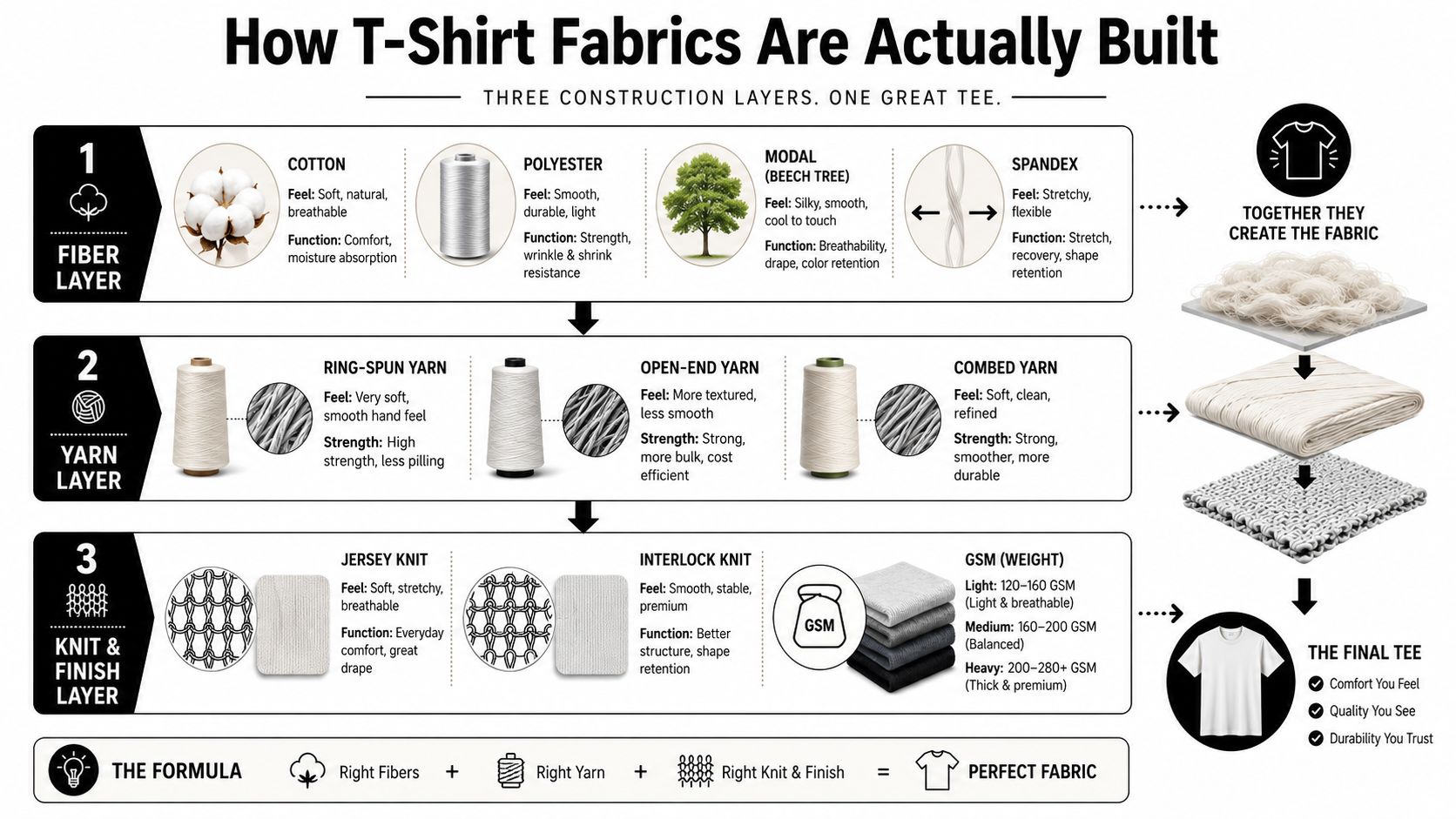
A tee isn't defined by fiber content alone. Its final character comes from three stacked decisions: fiber, yarn, and knit structure. The same cotton label can produce a soft premium shirt or a rough promotional blank depending on how those stages are handled.
The fiber layer supplies the raw material. Cotton brings a familiar softness and absorbency. Polyester adds shape retention and fast drying. Modal and other regenerated cellulosic fibers create a smooth, fluid hand-feel, while spandex or elastane contributes stretch. Streetwear buyers should treat the fiber label as the starting point, not the full verdict.
The yarn layer changes how those fibers feel once they're spun. Open-end yarns are efficient and often appear in budget tees, but they can feel rougher and less refined. Ring-spun yarn twists the fibers into a smoother, tighter strand, which usually creates a cleaner surface for graphics and a more comfortable worn-in feel. Combed yarn goes further by removing shorter fibers before spinning, leaving a more uniform surface and stronger construction.
Knit structure controls the silhouette
Most everyday tees use jersey, a knit with a smooth face and a more textured reverse. It's flexible, familiar, and easy to wear. Slub jersey intentionally varies the yarn thickness, giving the surface visible texture and a casual vintage character. Interlock uses a denser double-knit structure, so it feels smoother and more stable under an overshirt. Terry knits add looped texture and more visual weight.
GSM means grams per square meter, the standard way to describe fabric weight. A lightweight tee around 130 GSM feels easy and airy, while a shirt around 220 GSM gives a boxier, more substantial streetwear profile. The first works under a flannel in warm weather. The second can sit under a jacket without collapsing.
The finish changes the hand after knitting. Enzyme washing softens the surface, garment dye creates color variation and a lived-in look, and mercerization can add smoothness and a cleaner appearance. Always read the specification as a combination of fiber, yarn, knit, weight, and finish. That combination tells you far more than “cotton” printed on a label.
100% Cotton Options for Everyday Tees
Step onto a New York block in a clean tee, overshirt, and worn sneakers, and the fabric decides whether the outfit looks deliberate or disposable. 100% cotton remains the safest everyday choice when comfort, breathability, and printability lead the brief. It feels natural against the skin, gains character with wear, and gives graphics a dependable surface. “100% cotton” still covers a wide range, from rough carded blanks to polished combed yarns.
| Cotton Type | Hand-Feel | Durability | Print Clarity | Best Streetwear Use |
|---|---|---|---|---|
| Standard carded cotton | Basic, slightly rougher | Serviceable, but less refined at high-friction areas | Good for straightforward graphics | Budget blanks and casual rotation |
| Ring-spun cotton | Smooth, soft, broken-in | Strong everyday benchmark | Clean and consistent | Daily tees, screen prints, layered looks |
| Combed cotton | Cleanest and most polished | Strong, stable, premium feel | Excellent for detailed artwork | Heavyweight boxy tees and premium drops |
Carded cotton
Carded cotton keeps production practical because the fibers receive less refinement before spinning. Expect a rougher hand, less controlled drape, and faster-looking wear around the collar. It works for a low-cost event tee or a backup shirt, but it rarely earns a place in a serious streetwear rotation. Under an overshirt, the weaker structure shows quickly.
Ring-spun cotton
Ring-spun cotton is the strongest everyday pick. Its tighter yarn produces a smoother hand, cleaner print base, and softer broken-in character after repeated wear. It gives a tee substance without making it feel rigid, which suits NYC layering from warm afternoons to cool subway rides. For daily rotation, ring-spun cotton offers the best balance of comfort, structure, and graphic clarity.
Combed cotton
Combed cotton removes shorter fibers before spinning, creating a cleaner, more uniform yarn. That finish matters on heavyweight boxy tees, where the surface must look intentional rather than just thick. Choose it for detailed artwork, premium blanks, and new drops where the fabric needs to communicate quality before the graphic does. For a deeper look at that build, use this heavyweight t-shirt construction guide.
Pure cotton breathes well and feels familiar, but it absorbs moisture and dries more slowly than synthetic fibers. Aggressive washing can also cause shrinkage and wrinkles. Plan for that behavior when choosing a tee for summer wear, close layering, or frequent laundering.
Choose ring-spun cotton for the dependable everyday staple. Choose combed cotton for a premium heavyweight release, especially when the DM-FlexWear heavyweight unisex tee is your benchmark for boxy NYC styling. Skip cheap carded construction unless keeping the price low matters more than hand-feel, shape, and long-term presentation.
Blends and Performance Fabrics Worth Knowing
Blends make sense when one fiber can't handle the full assignment. Cotton brings comfort, polyester brings resilience and easier care, rayon brings fluidity, and elastane adds recovery. The right combination gives a tee the behavior you need without forcing one material to do everything.
| Fabric Type | Composition | Hand-Feel | Drape | Best Use | Watch Out For |
|---|---|---|---|---|---|
| Cotton-poly blend | Cotton and polyester | Soft with a firmer, more stable feel | Moderate and controlled | Daily wear, graphics, travel | Higher polyester content can feel warmer |
| Tri-blend | Cotton, polyester, and rayon | Very soft, light, lived-in | Fluid and relaxed | Vintage streetwear, lifestyle fits | Loose builds can pill and graphics may look softer |
| Polyester jersey | Polyester | Smooth, technical, sometimes slick | Clean and athletic | Gym, heat, active commuting | Can retain odor or feel less natural |
| Nylon or stretch performance knit | Nylon with elastane or related stretch fibers | Smooth, flexible, resilient | Close and mobile | Training, travel, movement | Less classic for oversized graphic styling |
Cotton-poly is the dependable middle ground
Cotton-poly blends are useful when you want a tee to resist wrinkles, hold its shape, and handle repeated laundering with less drama than pure cotton. Polyester and cotton have become foundational apparel fibers, and a 50/50 cotton-polyester shirt remains a familiar market construction. The blend can support sharp graphics while keeping the garment easier to manage in a packed bag or busy weekly rotation.
The ratio matters. More cotton usually means a softer, more natural hand. More polyester generally improves drying and shape retention, but it can reduce airflow and make the shirt feel warmer. Don't buy the word “performance” without checking the actual fiber mix and knit weight.
Tri-blends are for drape
Tri-blends combine cotton, polyester, and rayon for a soft, lightweight feel with a vintage drape. They suit a relaxed graphic tee, especially when you want the garment to fall close to the body instead of standing away from it. The tradeoff is a more delicate surface. Lower-weight, loose-knit tri-blends can pill with friction, and their softer structure may not deliver the hard shoulder line that defines heavyweight streetwear.
Synthetics earn their place during movement
Polyester is the practical choice for sweat management. Its moisture regain is about 0.4%, compared with roughly 8.5% for cotton, so it absorbs far less liquid and can move moisture along the fiber surface through capillary action, as explained in this evidence review of moisture-wicking fabrics. Polyester mesh and Tencel jersey kept the skin microclimate coolest and driest in wear-trial evidence, while cotton retained the most sweat.
That doesn't make polyester the universal winner. Choose it for workouts, humid commutes, or travel days where drying speed matters. Choose cotton-poly for versatile daily wear. Choose a tri-blend when drape and softness are the point. Match the blend to the scenario, not the buzzword on the label.
Matching Fabrics to Real Wearing Situations
The cleanest way to choose a tee is to start with the day, not the fiber. A fabric that works under a workwear jacket may be the wrong call for a gym session, even if both garments are sold as everyday basics.
Layering under overshirts and jackets
For a chore coat, denim jacket, or flannel, choose a smooth cotton jersey or a stable cotton-poly blend. The tee should slide beneath the outer layer without grabbing at the sleeves. A heavyweight ring-spun cotton shirt under a chore coat gives you a firm base and keeps the outfit from looking limp, especially in fall.
Avoid an overly loose slub knit when the overshirt already has texture. Two competing surfaces can make the stack look bulky. Keep the tee smooth and let the jacket provide the visual noise.
Gym days and active movement
Choose polyester or a stretch performance knit when sweat and mobility matter. Polyester handles moisture better because it absorbs far less than cotton, and elastane helps the shirt move without pulling across the shoulders. For training, the best tee is the one that dries quickly and doesn't cling through repeated movement.
A controlled exercise study found that polyester shirts lowered relative humidity at the chest and back compared with cotton during and after running. However, heart rate, oxygen uptake, ventilation, and time to exhaustion didn't differ meaningfully across the fabrics, so moisture handling doesn't automatically create superior athletic performance, as detailed in this exercise study on cotton and polyester shirts.
The technical tee can keep you drier without making you faster.
Travel and humid commutes
For a packed bag, airport connection, or humid July commute, pick a cotton-poly blend with enough structure to recover its shape. It's less fussy than pure cotton and more comfortable than a fully technical jersey when you're moving between the street, a train, and an indoor space.
Coordinated family fits
Matching family outfits look strongest when every size shares similar drape and visual weight. Mid-weight cotton works for a classic coordinated look, while a tri-blend creates a softer, vintage-influenced group photo. Keep color and logo placement consistent, then let each wearer's proportions create the variation.
Use this decision rule: layering means smooth and stable, training means moisture control and stretch, travel means wrinkle resistance, and coordinated outfits mean consistent weight and drape.
Care, Durability, and the Sustainability Tradeoff
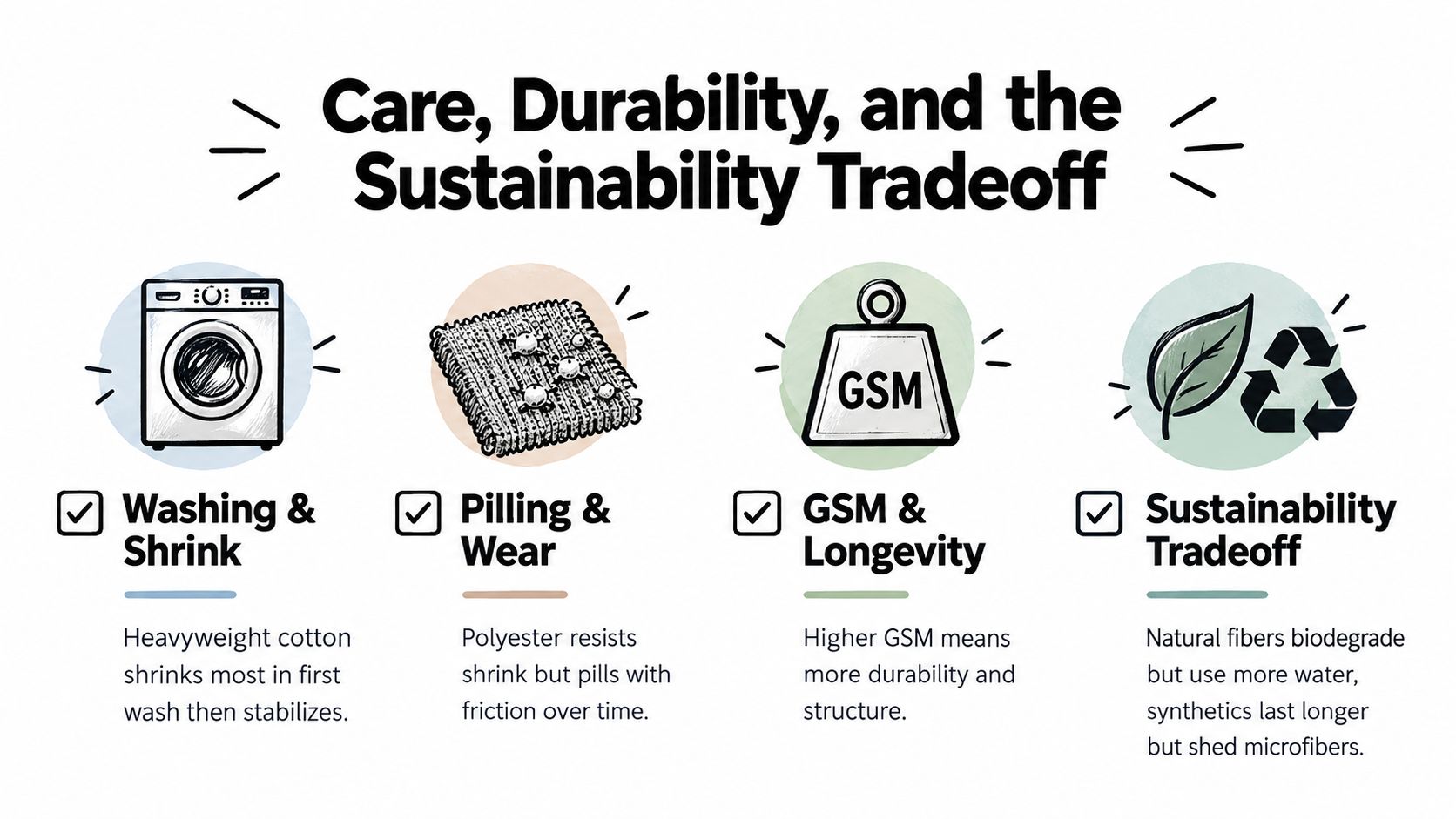
A tee earns its place in a NYC rotation through care, construction, and repeat wear. Heavy cotton may shrink most during the first wash before stabilizing. Polyester resists shrinkage and wrinkles, yet friction can cause pilling, while the fiber may retain odor or heat. Tri-blends have excellent softness and drape, but lighter surfaces usually need gentler handling because they wear faster.
GSM helps predict longevity, not rank overall quality. A heavier knit generally gives a tee more structure and better resistance to transparency. Yarn quality and finishing decide whether that surface stays smooth. Higher thread count alone doesn't guarantee better durability, and organic cotton can still wear quickly when the garment uses a low GSM construction. For streetwear, judge the fabric by how it holds under overshirts, hoodies, denim, and repeated washing. That is the DM-FlexWear benchmark.
Sustainability has more than one scoreboard
Cotton and polyester carry different environmental pressures. One comparative life-cycle assessment found that cotton T-shirts had the lowest global warming potential in the studied Chinese production context, at 14.1 kg CO2e/kg, but the highest water demand, at 2.9 m3/kg. Polyester used less water in that comparison, while raising concerns about plastic accumulation, as reported in this comparative textile sustainability assessment.
The industry is shifting, but no single material solves every problem. Raw materials under sustainability programs rose from 58% in 2023 to 67% in 2024, while virgin fossil-based polyester fell from 637,388 tonnes to 560,029 tonnes. Recycled polyester and responsibly sourced cotton offer middle-ground choices, though each still carries tradeoffs.
A 2025 study of 459 T-shirts found about 55% used a single fiber type and 36% used two fiber types. Most analyzed shirts used cotton or other cellulosic fibers, often with elastane. Polycotton garments represented 29 pieces, or 6.3% of the sample, as shown in this study of T-shirt fiber composition. Choose based on your priority, whether that is emissions, water, durability, or plastic shedding. For a clean streetwear graphic, review screen printing versus embroidery alongside the shirt's fabric and care demands.
Use this care checklist:
- Wash cold: Lower heat reduces stress on cotton and helps preserve color.
- Turn inside out: Protect prints and reduce surface abrasion.
- Skip the dryer: Air-drying lowers shrink risk and protects shape.
- Rotate your tees: Spreading wear gives each shirt recovery time.
- Store heavyweight pieces flat or on broad hangers: Prevent shoulder distortion.
Picking Your Go-To Tee and Why DM-FlexWear Fits
A strong buying rule is simple. Choose heavyweight ring-spun cotton for daily wear, tri-blend for drape-heavy styling, and performance synthetics only when sweat or travel demands them. That rule covers most streetwear wardrobes without getting trapped in fabric hype.
Start with your closet. If you wear chore coats, overshirts, hoodies, and structured denim, prioritize a tee with enough GSM to hold a clean body and sleeve. If your outfits depend on movement and a softer fall, choose a lighter blend. If you spend long days sweating or moving through humid weather, let moisture management outrank the classic cotton feel.
Check four things before you commit
- Weight: Lightweight fabric disappears under layers, while heavyweight fabric creates the silhouette.
- Softness: Ring-spun and combed yarns usually offer a cleaner touch than basic open-end construction.
- Shrink risk: Pure cotton needs more careful washing than a cotton-poly blend.
- Drape: Tri-blends fall softly, while dense cotton holds a more deliberate shape.
| Fabric Type | Best For | Tradeoff | DM-FlexWear Fit |
|---|---|---|---|
| Heavyweight ring-spun cotton | Daily NYC streetwear and layering | More weight and possible shrink risk | Strong match for a structured staple |
| Tri-blend | Soft, vintage-influenced outfits | Lighter body and greater pilling risk | Better for relaxed drape than rigid silhouettes |
| Cotton-poly blend | Travel, commuting, and easy care | Can feel warmer as polyester content rises | Useful when convenience leads |
| Performance synthetic | Training and sweat-heavy days | Less natural hand-feel | Best reserved for technical use |
A 2025 composition study found that single-fiber and cotton-based shirts still dominate the sample, while polycotton remains meaningful but not universal. That supports a buyer's instinct to keep cotton as the closet anchor and add blends for specific needs rather than replacing every tee with technical fabric.
For a heavyweight unisex streetwear benchmark, the DM-FlexWear NY Crown Crest Heavyweight Unisex Tee uses 240 GSM ring-spun cotton. That construction delivers the structure, drape, and layered presence this guide has prioritized, with enough visual weight to work under a hoodie or as the top layer of a clean NYC outfit. You can also compare the role of a core tee in a rotation through this guide to the next T-shirts.
A well-built heavyweight tee outperforms bargain-thin cotton once you account for shape, print surface, layering range, and cost per wear. It gives an outfit a stronger foundation, and it doesn't need much styling beyond good denim, cargos, or a sharp outer layer.
DM-Flexwear.com offers the NY Crown Crest Heavyweight Unisex Tee alongside embroidered hoodies, crewneck sweatshirts, and coordinated options for adults and young children. Visit DM-Flexwear.com to choose your colorway and build an NYC-ready rotation around a tee with real structure.