

You pull a fresh cotton heavyweight from the dryer before heading out, expecting that clean, structured fit. Instead, the hem sits higher, the sleeves feel tighter, and the neckline looks gathered. The machine didn't just remove moisture. It may have changed the silhouette you bought the piece for.
So, does cotton shrink in the dryer? Yes, but heat isn't the whole story. Cotton garments change as moisture relaxes manufacturing tension, while heat and mechanical tumbling push the yarns and fabric structure toward a more compact shape. That distinction matters when you're protecting a streetwear staple, especially a substantial tee, hoodie, or embroidered crewneck with a fit built for city layers and NYFW-level presentation.
Table of Contents
- The Heartbreak of the Shrunken Thread
- Why Cotton Contracts Under Heat and Agitation
- The Heavyweight Cotton Factor in Streetwear
- Tumble Drying vs. Air Drying Your Gear
- Mastering the Dryer for Perfect Fit
- Care Label Rules and Long-Term Preservation
The Heartbreak of the Shrunken Thread
You crack open the dryer, reach for your favorite heavyweight tee, and know right away something is off. The hem sits higher than it should. The sleeves lost that clean drop. Even the embroidery can look tenser because the fabric under it has pulled into a tighter shape.
That stings more with premium streetwear because the fit is the product. A solid heavyweight tee is built on proportions. Length, shoulder line, sleeve stack, collar shape, and drape all work together. Shift one piece and the whole silhouette can go from sharp to cramped.
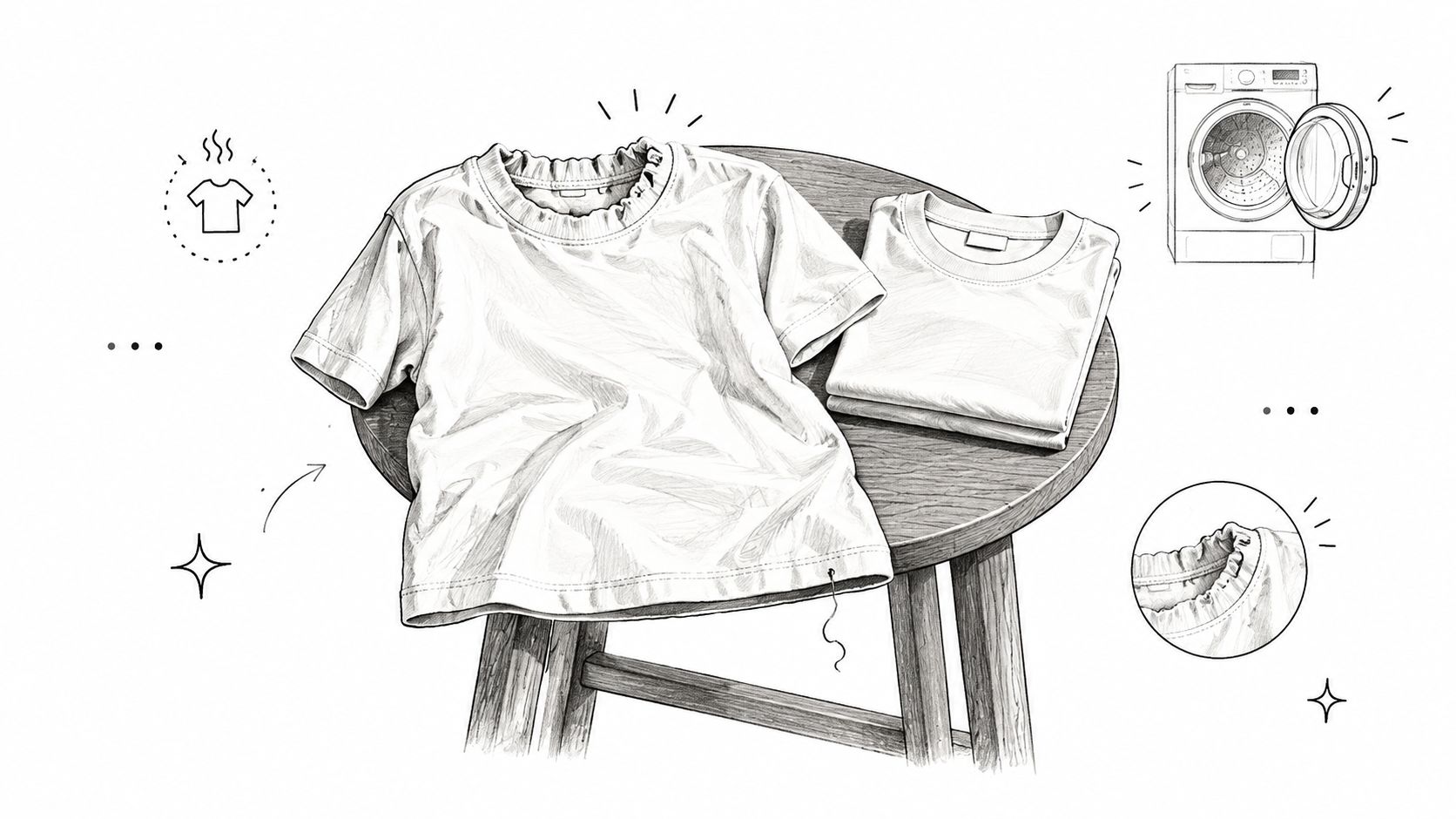
Cotton can shrink in a tumble dryer. The key point for anyone protecting a serious tee, hoodie, or crewneck is that heat is only part of the problem. Cotton changes shape during laundering, and the full mechanism behind that fit shift, tension relaxation plus heat and tumbling, is covered in the next section. Research on cotton drying behavior also notes that drying conditions affect fabric change, which is exactly why careless dryer use can mess with a garment you bought for its cut, not just its logo.
The fit change isn't always dramatic
Shrinkage does not always show up as a full-size drop. Sometimes the body gets a little shorter while the width barely moves. Sometimes the collar tightens up first, or the chest feels stiffer because the knit settled differently after the cycle.
The first wash and dry usually matter most. That is the moment when a tee often reveals how much movement its fabric still had left in it.
Streetwear rule: Treat the first wash and dry as a fit-setting moment. Measure the garment afterward if its proportions matter.
A lot of people blame temperature and stop there. That misses what really wrecks expensive cotton gear in real life. The drum keeps folding, twisting, and pressing the fabric while it dries, and that repeated movement can be just as relevant to the final fit as the heat setting itself. If you care about preserving the silhouette, handle the dryer like a risk, not a default.
Why Cotton Contracts Under Heat and Agitation
Cotton yarns don't enter a garment in a completely relaxed state. Manufacturing pulls and arranges the yarns under tension, whether the material becomes a woven panel or a knitted jersey. Washing introduces moisture, the fibers swell and relax, and drying removes that moisture while the structure adjusts.
Heat speeds up the process, but it doesn't work alone. Tumbling repeatedly folds, twists, presses, and releases the fabric. Knit garments are especially exposed because their loops can consolidate under movement. That mechanical compaction can affect the garment even when the dryer temperature isn't extreme.
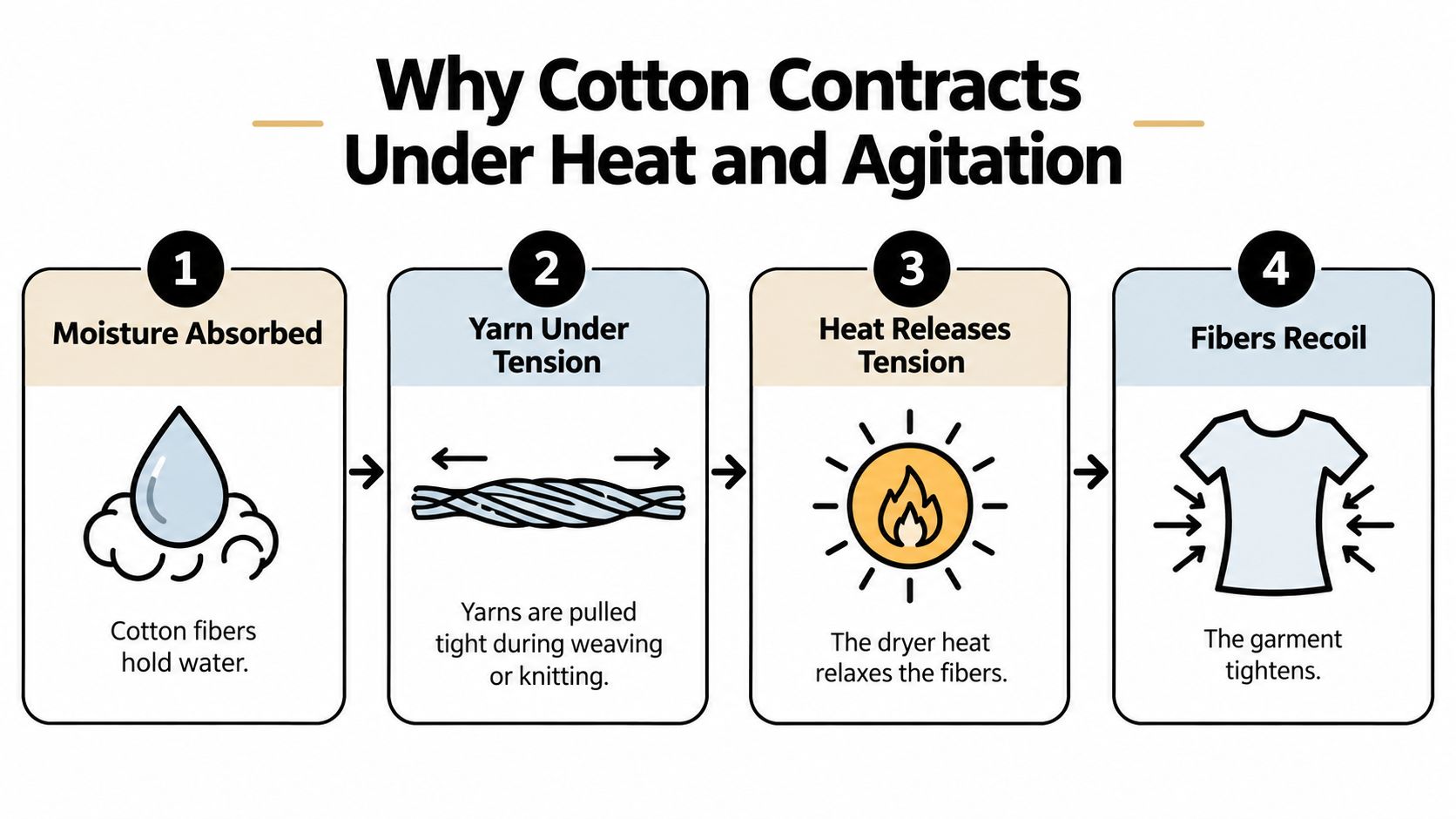
A 2002 textile-laundering study compared tumble drying with line drying. The tumble-dried samples shrank in length, while line-dried samples extended in length. The study attributed 34% of observed fabric changes to agitation and another 24% to the washing spin cycle, showing why temperature alone can't explain every fit change. You can review the underlying textile laundering research on agitation and dimensional change.
Heat, movement, and moisture do different jobs
Think of the process as three pressures acting together:
- Moisture relaxes structure: Water allows yarns and fibers to release some of the tension created during production.
- Tumbling compacts the fabric: Repeated mechanical action pushes loops and yarns toward a denser arrangement.
- Heat accelerates drying: Warmer air removes moisture faster and can increase thermal stress, but it doesn't determine the final result by itself.
This is why a lower temperature setting isn't a magic shield. It may reduce thermal stress, yet a long tumble can still alter dimensions. Fabric construction, finishing, prior washing, and the remaining moisture level all influence the result.
The same logic helps explain why a guide to cotton linen fabric is useful when comparing natural textiles. Fiber content matters, but weave, knit structure, and finishing determine how a garment behaves in real laundry conditions. For a practical fabric comparison before buying another tee, see this guide to the best fabrics for T-shirts.
The Heavyweight Cotton Factor in Streetwear
You pull a heavyweight tee from the dryer and the chest still looks solid, but the body sits higher, the sleeves ride up, and the whole fit loses that clean streetwear line. That is why heavyweight cotton can sting more when it shifts. These pieces are bought for shape, presence, and drape, so even a modest change can throw off the look.
A dense knit holds structure, but it also stores tension from knitting, finishing, and sewing. Once moisture and tumbling work on that structure, the change does not always show up evenly. In real wear, that usually means length becomes the first thing you notice. Width may stay close enough to feel acceptable, while the torso, sleeve, or hem starts looking off.
Direction matters more than a single shrinkage label
For heavyweight streetwear, directional change is the detail that matters. A shrinkage label gives you a general warning. It does not tell you whether your tee loses drop, whether your sleeves tighten up, or whether the silhouette gets boxier in the wrong way.
A 2017 study of cotton fabrics reported warp-direction shrinkage of approximately 1.29% to 1.71%, while weft-direction shrinkage measured approximately 0.002% to 0.045% under its testing conditions. Those figures are the detailed evidence behind the broader point and are reported in the Manchester research record on cotton dimensional change.
That matters on heavyweight gear because streetwear fit is built on proportion. Lose body length and the tee stops stacking right over denim or cargos. Add embroidery, patch panels, or heavier trims, and localized tension can make certain areas react harder than the rest of the garment. The result is a piece that still feels thick and premium in hand, but no longer fits the way you bought it for.
| What changes | What you may notice |
|---|---|
| Body length | The tee sits higher and loses its relaxed drop |
| Sleeve length | Cuffs land closer to the wrist or forearm |
| Collar and neckline | The opening can look tighter or more gathered |
| Knit density | The garment feels firmer and less fluid |
If you want a cleaner read on how weight shapes silhouette before you buy, this guide to a heavyweight T-shirt is worth a look. The practical rule is simple. Don't judge laundry risk by fiber content alone. Heavy cotton, structured cuts, and decorated panels usually need tighter drying control than a thin basic tee.
Tumble Drying vs. Air Drying Your Gear
Tumble drying wins on convenience. It removes moisture quickly, fits a busy schedule, and gives you wearable clothes without waiting for a rack or flat surface. The trade-off is continuous movement, folding, and compression, with heat often added to accelerate the process.
Air drying takes longer and requires space. In return, it removes the drum's mechanical force and gives the garment a better chance to retain its measured shape. For an embroidered hoodie or crest sweatshirt, fewer collisions and less twisting can also help the decoration stay flat and the surrounding fabric look cleaner.
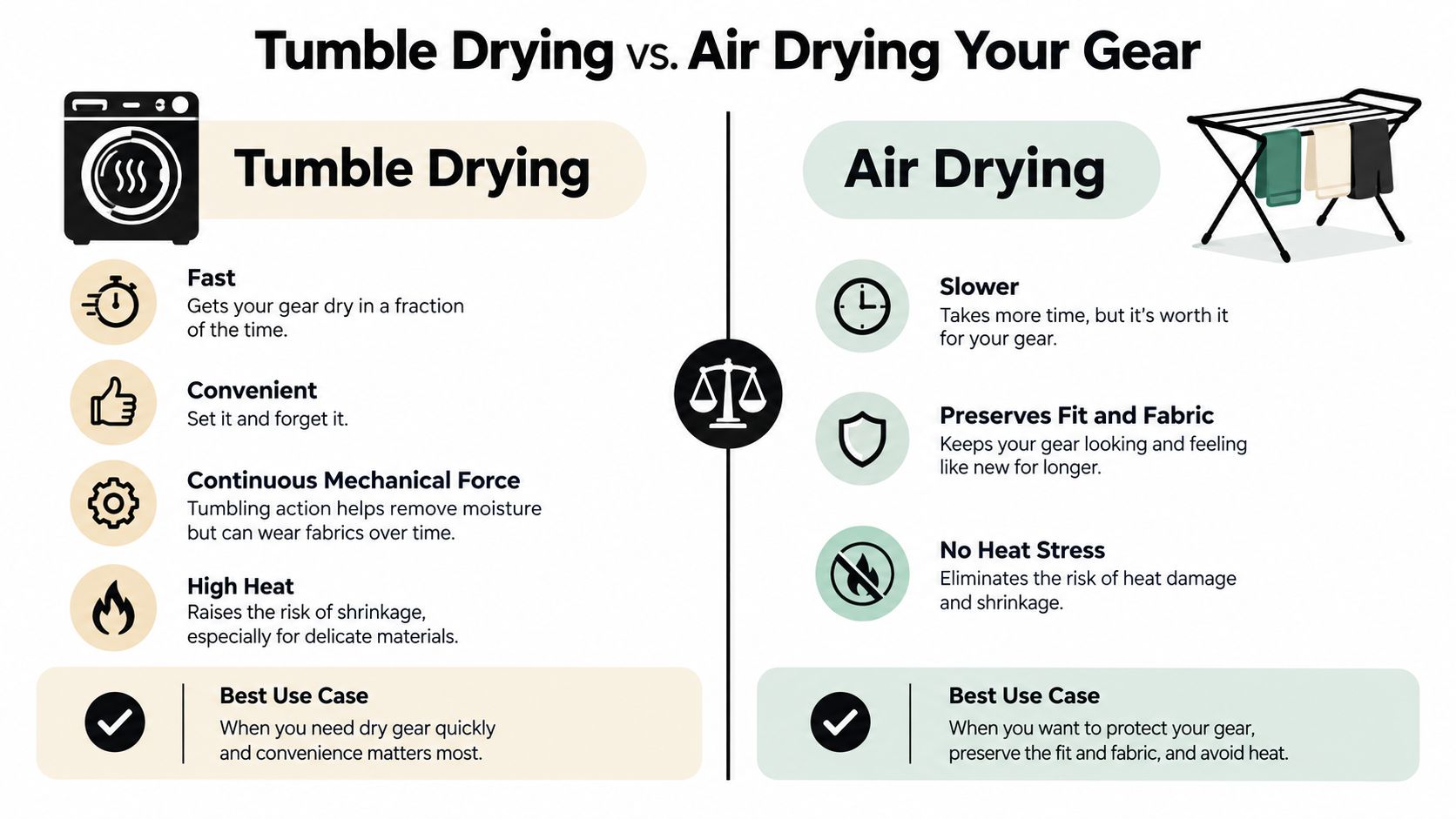
The strongest evidence against the heat-only myth comes from Cotton Incorporated testing. A 100% cotton interlock fabric shrank by more than 20% after 45 minutes of tumbling without a heat source. Comparable loads dried at 150°F and 200°F reached roughly the same final shrinkage in less time, indicating that heat mainly sped moisture removal while tumbling drove much of the dimensional change. The test is summarized in this technical report on cotton tumble drying.
Choose the method based on the garment
- Air drying: Best when preserving dimensions and surface presentation matters most. Lay the garment flat or support it so wet weight doesn't distort the shoulders.
- Low or medium tumble: A practical compromise when you need speed. Stop the cycle before extended over-drying and reshape the piece while it still has a little moisture.
- High-heat tumble: The fastest route to a dry garment, but the least forgiving option for a carefully balanced fit.
Blends may behave differently from pure cotton, which makes this guide to 50-50 blend T-shirts useful when comparing everyday options. No method guarantees zero change. Air drying removes tumbling, not the relaxation that begins during washing.
Mastering the Dryer for Perfect Fit
You don't have to ban the dryer from your apartment. You need a protocol that limits unnecessary tumbling and catches the garment before it dries into a compact shape.
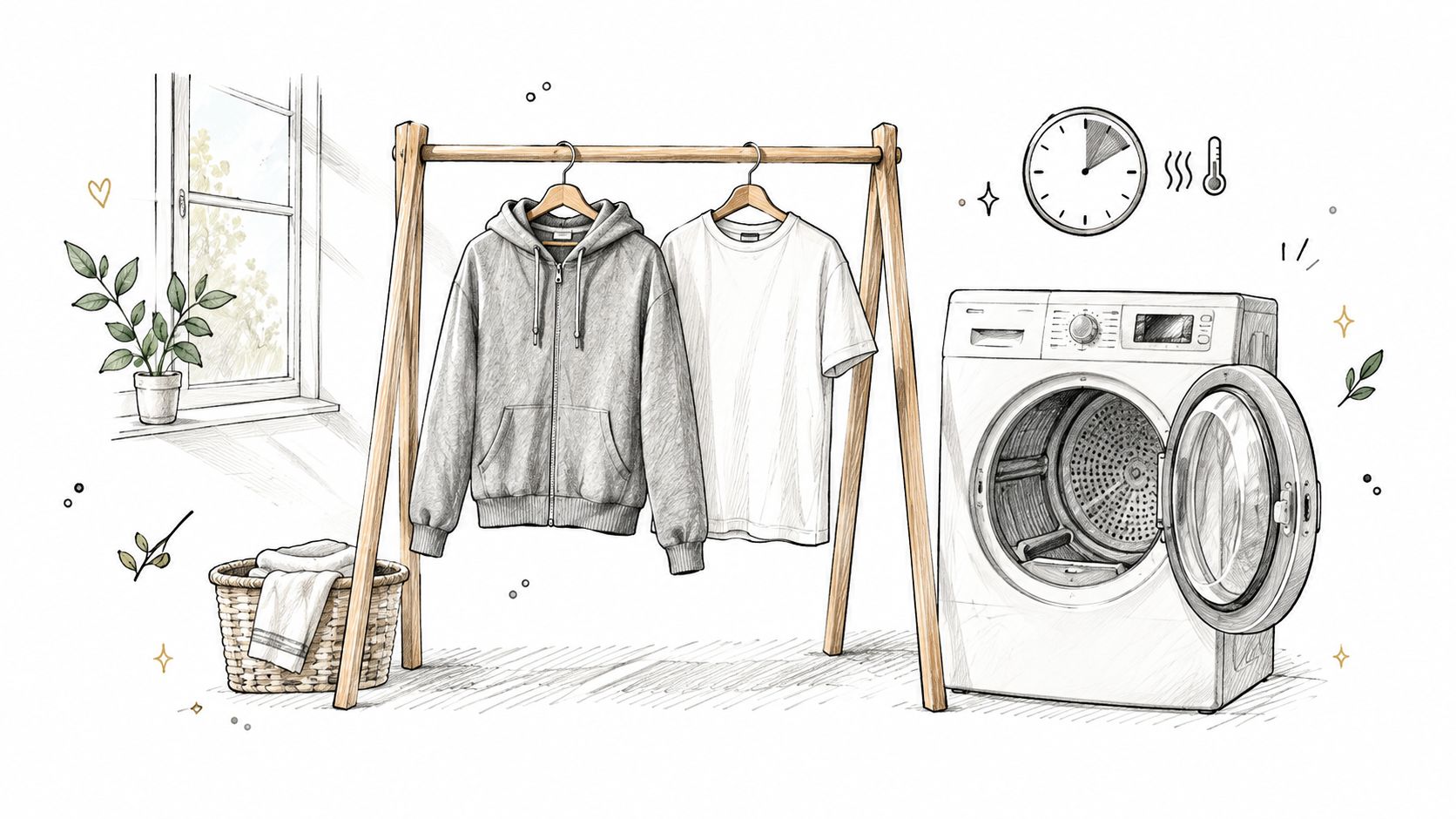
A controlled drying routine
- Read the garment label first. The label determines whether machine drying is appropriate and identifies the permitted temperature where applicable.
- Use a low or medium setting when allowed. Lower heat reduces thermal stress, but remember that it doesn't eliminate mechanical action.
- Avoid extended tumbling. Dry the garment until it is just dry or still slightly damp, rather than leaving it in a hot drum after the moisture is gone.
- Remove it promptly. A warm, damp cotton piece is easier to reshape than one that's fully dry and compressed.
- Restore the proportions by hand. Pull the hem gently lengthwise, align the side seams, straighten the sleeves, and smooth the neckline.
- Finish flat when possible. Lay the tee or crewneck on a clean surface so gravity doesn't pull wet weight into the shoulders.
The largest dimensional change often arrives during the first wash-and-dry treatment, not automatically during every later cycle, according to controlled testing of cotton garment shrinkage. That first result gives you useful information. Measure the body length, chest, and sleeve before and after laundering if fit consistency matters.
Practical rule: Stop the dryer before the garment becomes bone-dry, then reshape it while the fabric still has flexibility.
If an embroidered crest is involved, smooth the fabric around the decoration rather than pulling directly on the threads. The aim is a clean, structured drape without stretching the embroidery field.
Care Label Rules and Long-Term Preservation
The care label isn't decorative fine print. Under the U.S. Federal Trade Commission's Care Labeling Rule, a garment label must state whether the item should be machine-dried or dried by another method. If machine drying is specified, the label must identify an acceptable drying temperature. The FTC care-labeling rule defines tumble drying as machine drying and treats “medium” as a dryer's medium-heat setting.
Follow the label for the specific garment before applying general laundry advice. A preshrunk cotton tee may be more stable than an untreated knit, but preshrinking doesn't promise that dimensions will never move. Construction, finishing, garment weight, moisture, and tumbling still shape the outcome.
The myth worth retiring
“High heat shrinks cotton” is a useful warning, but it's incomplete. Research has shown that mechanical action can create substantial dimensional change even without a heat source, so switching to low heat while running a long cycle may solve less than expected. The better target is total stress: unnecessary heat, excessive drying time, and repeated tumbling.
Use a care system that makes labels easy to read and act on, especially in a family wardrobe. These tips for kids washable labels offer a practical reminder that clear garment identification supports consistent care when several sizes and fabrics share one laundry routine.
For long-term preservation, keep the process disciplined:
- Sort by garment weight: Don't bury a structured hoodie under lighter pieces that dry at a different rate.
- Check after the first cycle: Compare the garment's proportions before deciding whether tumble drying suits it.
- Protect the silhouette: Reshape collars, hems, cuffs, and sleeves before the fabric fully dries.
- Choose air drying when fit is critical: It removes the drum's mechanical force and gives you more control.
Cotton shrinkage isn't automatically a defect. It's a response to moisture, structure, finishing, heat, and movement. Treat the laundry cycle as part of garment care, and the clean line that attracted you to the piece has a much better chance of surviving every city outing.
Protect your next fit by choosing cotton tees, embroidered hoodies, and crewnecks with the NY Crown Crest identity at DM-Flexwear.com. Visit the store to browse coordinated adult and children's sizes, multiple colorways, and streetwear staples worth caring for properly.